Before COP31’s closing negotiations, the Guardian identified three linked disputes: how to address a temporary overshoot of 1.5C, whether the outcome should name fossil fuels and how an electrification pledge should define clean power. This is a snapshot of the negotiations before the deadline, rather than an account of the final outcome. The Guardian
The state of the talks before the deadline
The end is in sight. If all goes as planned, countries as diverse as wealthy petrostates erecting new oil rigs and low-lying islands threatened by rising seas will reach an agreement tomorrow in Antalya, bringing the 31st UN climate summit to a close (though, as usual, the talks are likely to overrun ).
But tensions – like global temperatures – are running high. A draft text that satisfies all the competing interests is a long way off, and negotiators are expected to argue into the night and then the weekend. On the table are the electrification of the global economy, the transition away from fossil fuels, and the response to the looming overshoot of the 1.5C (2.7F) temperature target. Deepening the divide are long-running disputes over who should pay what, and emerging fights over the fairness of the transition and assumptions in the underlying science.
Why small island states reject prolonged overshoot
In just a few years, global heating is set to surpass that dangerous 1.5C (2.7F) threshold world leaders had promised to pursue for the end of the century. Temperatures could still be brought back down a touch after reaching net zero emissions, but the Paris climate target only stays in play if overshoot is limited – and brief.
The Guardian reports that Hilda Heine, president of the Marshall Islands, urged leaders to “wake up” to the consequences of crossing the 1.5C threshold. She called the response to overshoot “overwhelmingly fast and overwhelmingly just”.
Many countries can reasonably claim to be on the frontlines of the climate crisis but small islands face the darkest future from crossing the 1.5C target, as even a brief period of extra heat pushes sea levels higher for the centuries that follow. A couple of weeks ago, a UN report argued that Earth’s icy regions face such dangerous melting that temperature rise should be brought back below 1C, decrying the “persistent myth” that peak heat of 2C or 3C could be manageable or preferable to rapid emissions cuts.
“Overshoot is not a new target,” said Mia Mottley, the prime minister of Barbados, as she called on fellow heads of state and government to cut emissions faster. “It is a debt, a debt of heat, borrowed against our children’s future. And it must be repaid.”
The dispute over fossil-fuel language
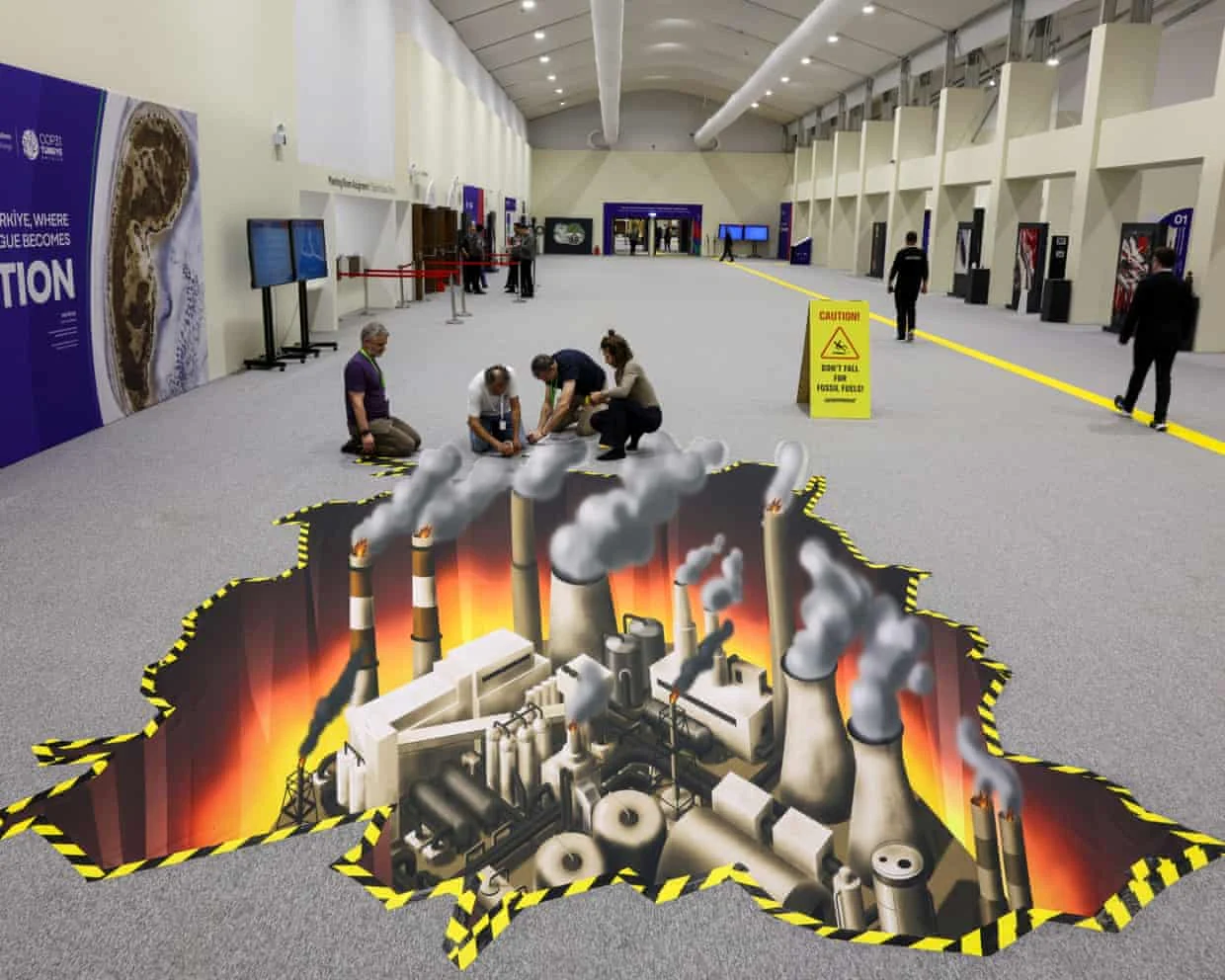
The obvious answer, which scientists (and fossil fuel companies) have known for decades, is to quickly stop burning coal, oil and gas. But while “fossil fuels” made it into the text of the draft deal published on Monday – words that first featured in the final outcome at the 26th iteration of these yearly climate talks – observers fear the Turkish and Australian co-hosts have not done the diplomatic groundwork for such wording to survive.
The world is “being held hostage by the petroleum mafia” and seems unable to break free, Panama’s environment minister, Juan Carlos Navarro, warned on Wednesday. “We are in love with our kidnappers,” he said. “We love the petroleum guys. We can’t live without them, and they are so smart they have convinced us that they are doing this for our own good.”
Electrification and the question of clean power
The bright spark, if there is one, is that the push to electrify the global economy is gaining momentum. The pledge to source 35% of the world’s final energy consumption from electricity by 2035 is understood to have the backing of scores of countries, though most of them are yet to formally sign on.
Electrification is a threat to the fossil fuel industry – swapping a gas boiler for a heat pump, or a combustion engine car for an electric vehicle, will inevitably mean less oil and gas gets burned. But it is an easier sell than measures that directly punish polluters. Indeed, even many climate-denying governments have built solar panels and batteries with gusto, while deriding “woke” green climate action.
However, how clean that electricity should be is still up for debate. Though the raw efficiency gains from electrification mean that even machines powered by a dirty power grid would be better for the planet than the status quo, campaigners fear not being more specific will leave the door open to new gas-fired power plants.
In just one of many examples of the murky world of climate negotiations, Wopke Hoekstra, the EU’s climate commissioner, expressed solid support for the pledge on Monday – “The more, the better. The quicker, the better. The cleaner, the better.” – but indicated that Europe was open to flexibility on the last point “if, to some degree, a bit of pragmatism is needed to bring others into the tent”.
Frequently asked questions
What does overshoot of the 1.5°C climate goal mean in these talks?
It means temperatures temporarily exceeding that level before potentially falling again after net-zero emissions. Small island states argue that any overshoot must be limited and brief because severe damage can occur during the intervening period. The Guardian
What electrification target was being discussed in COP31's final days?
A proposal sought to raise electricity's share of final energy consumption to 35% by 2035. Support for that proposal was not the same as a completed agreement, and the climate benefit also depends on how electricity is generated. The Guardian
Sources and editorial notes
This article compiles the linked reporting. Allegations, projections and research findings retain their original qualifications; this page does not represent independent field reporting or expert medical review.
- The Guardian (reporting)
November 23, 2026: Corrected section boundaries, removed extraction debris and repeated summary text where present, and clarified source attribution or image descriptions. This is an editorial repair of the cited reporting, not independent reporting, product testing or specialist fact-check certification. November 23, 2026: Added source-linked reader questions and answers based on the reporting already compiled in this article. These questions are editorial selections, not measured search queries.