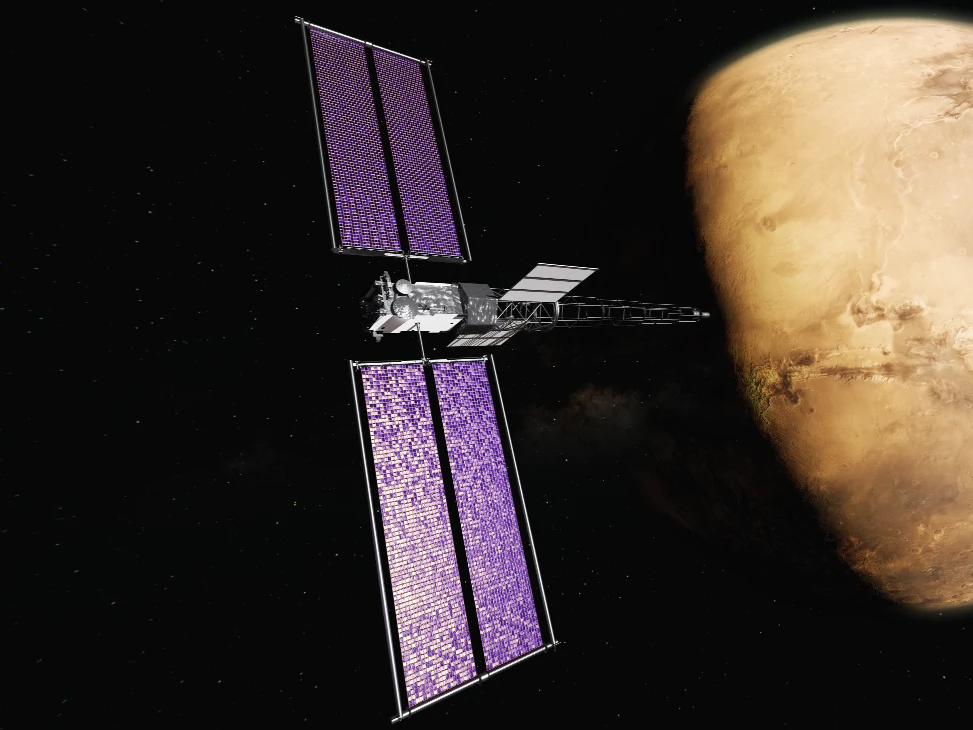
NASA says an October review fixed key architecture choices for SR-1 Freedom, its planned nuclear-electric spacecraft targeted for launch in late 2028. The design will combine nuclear and solar power to deliver SkyFall’s three helicopters to Mars. The reactor is planned to operate after leaving Earth orbit, shut down during solar-powered cruise and restart after delivery in Martian orbit. Radiator count, power levels and operating duration remain under evaluation, so the review is a design milestone rather than proof of launch readiness.
Key facts
The agency reported the October design review on November 24.
A shorter reactor boom and larger X-band antennas are among the defined changes.
SkyFall is a capsule carrying three helicopters for Mars exploration.
A $39.3 million award covers heat-rejection work, not the entire mission budget.
What did the design review settle?
NASA says teams from the agency, the Department of Energy and industry met at Glenn Research Center in October to define the SR-1 Freedom spacecraft more clearly. The November announcement describes movement from an early concept toward a defined design. NASA is targeting late 2028 for launch and a demonstration of nuclear electric propulsion in deep space.
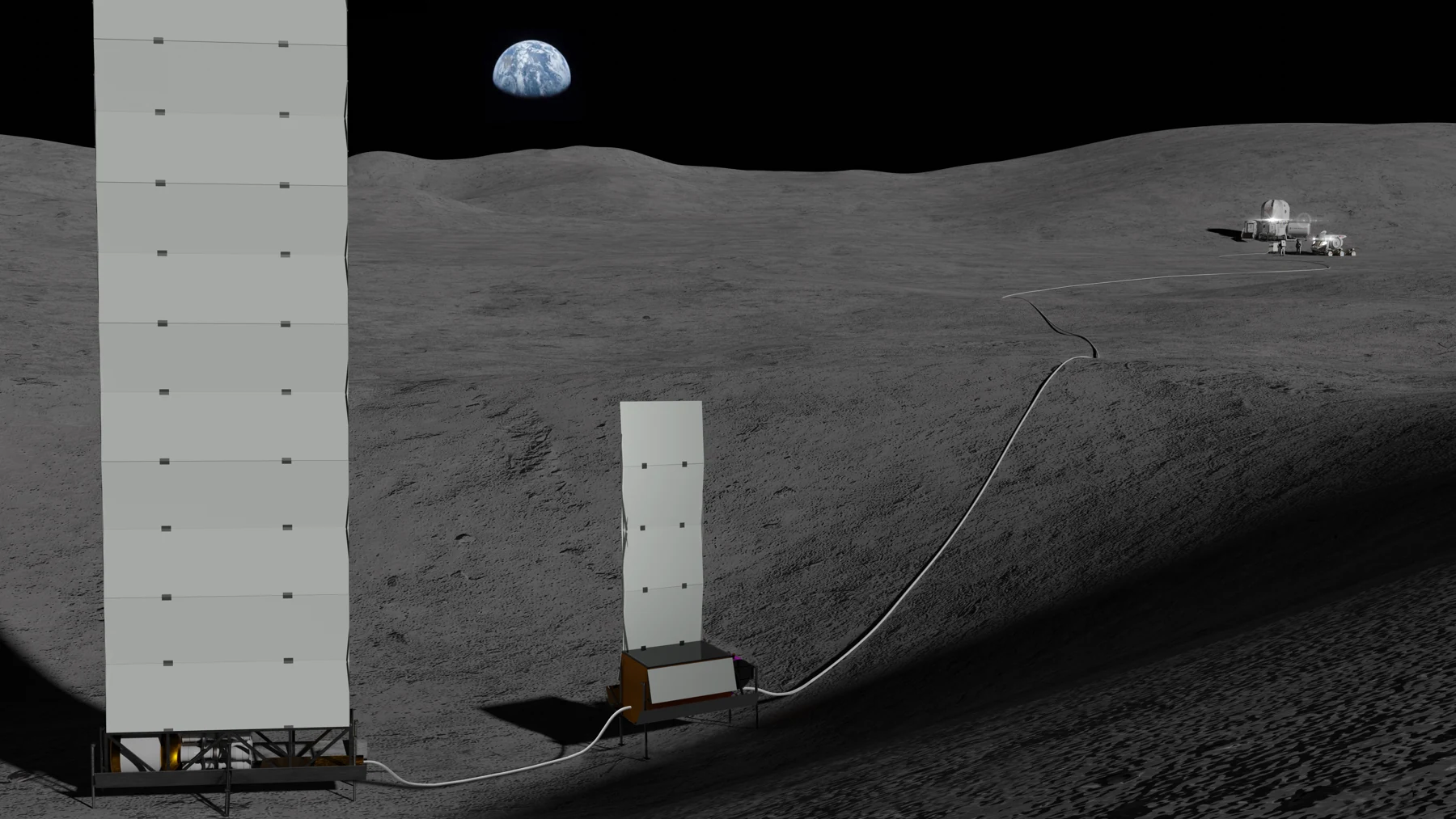
One significant change is a shorter boom between the reactor and the Power and Propulsion Element. NASA says improved shielding and spacecraft design allow the reactor to sit closer to the rest of the vehicle, reducing weight and simplifying assembly. An earlier concept illustration should therefore not be mistaken for a drawing of every final hardware choice.
Why the mission combines solar and nuclear power
The planned sequence does not keep the reactor running without interruption from launch to Mars. NASA says the spacecraft will activate and increase reactor power after leaving Earth orbit, operate for an initial period and send performance information home. It will then shut the reactor down and use solar arrays during cruise.
After delivering SkyFall to Martian orbit, SR-1 is to restart the reactor and collect further performance data in deep space. This gives the mission distinct operating phases. The announcement leaves the exact reactor operating duration under evaluation, so a precise burn schedule or continuous-power claim would overstate what has been settled.
What SkyFall is meant to deliver on Mars
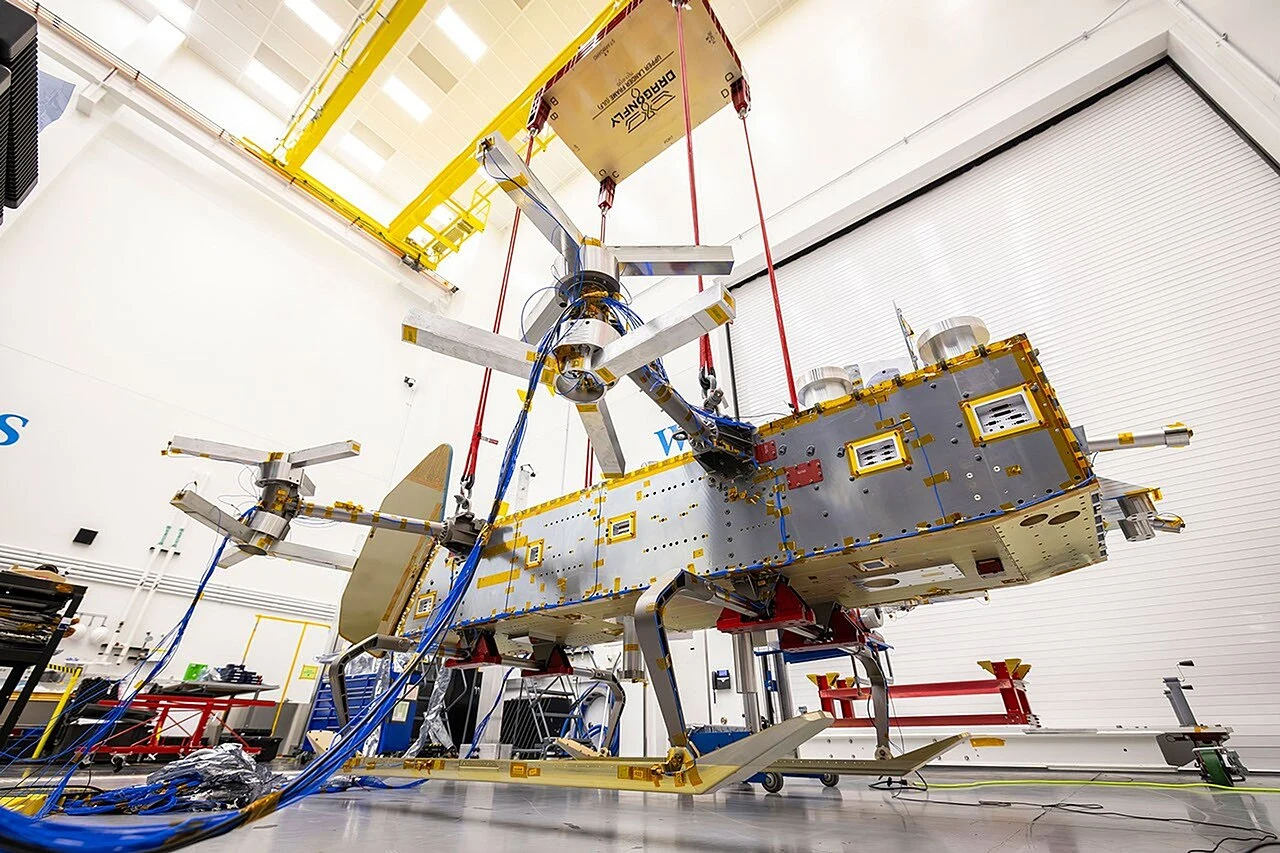
SkyFall is a capsule carrying three next-generation helicopters. NASA says they will investigate Martian geology and climate history, explore terrain and search for signs of subsurface ice. The spacecraft and helicopter package therefore serve related but different purposes: SR-1 demonstrates a transport and power architecture, while the delivered explorers would study Mars.
Those are mission objectives, not observations already made. The announcement does not report a helicopter landing or the discovery of ice. Keeping the planned science separate from achieved results helps explain why a review can be important without implying that the mission has already succeeded.
What the $39.3 million award covers
NASA awarded Johns Hopkins University’s Applied Physics Laboratory $39.3 million to develop the nuclear module’s heat-rejection system. The lab is working with Advanced Cooling Technologies on heat pipes and composite radiator technologies. The contract action includes design, construction, testing, evaluation and production of flight hardware for that system.
The amount is a defined subsystem award rather than a total price for SR-1. Heat rejection is an essential part of operating the nuclear power system, but the announcement also identifies other unfinished choices: the number of radiator panels, output power levels and operating duration. A funded subsystem does not settle every technical or schedule risk.
How to judge progress toward 2028
Larger X-band dishes are planned to support communications over the journey to Mars. NASA says further design maturation will concentrate on simplifying the vehicle, reducing risk and maintaining the schedule. Those commitments point to the work still required, rather than certifying that all integration, testing or launch preparations are complete.
SR-1 is also distinct from the agency’s proposed lunar surface reactor: one is a spacecraft demonstration and Mars delivery mission, the other concerns power on the Moon. The SR-1 announcement presents a possible foundation for later missions, but does not announce a completed lunar installation or a final launch-readiness approval.
Frequently asked questions
Is SR-1 Freedom ready to launch now?
No. NASA reports a design milestone and a late-2028 target. Radiator count, nuclear power levels and reactor operating duration are still being evaluated; a completed design review is not a launch-readiness certificate.
Will its reactor operate continuously all the way to Mars?
No. NASA describes initial operation after leaving Earth orbit, a shutdown with solar-powered cruise, then a restart after SkyFall is delivered in Martian orbit. The exact operating duration remains under study.
What is SkyFall intended to do?
SkyFall is to carry three helicopters to explore Mars’s geology, climate history, terrain and possible subsurface ice, according to NASA. These are planned investigations, not discoveries already made.
Is this the same project as NASA’s lunar surface reactor?
No. NASA describes a spacecraft using nuclear and solar power for a Mars mission. A lunar surface reactor is a separate power project, even though NASA sees connections between the technologies.
At a glance
| Stage or decision | NASA’s stated plan | Status |
|---|---|---|
| Architecture | Shorter boom and larger X-band antennas | Key choices defined after October review |
| Early deep-space operation | Activate reactor after leaving Earth orbit | Planned demonstration |
| Cruise and Mars delivery | Solar cruise; deliver three-helicopter SkyFall | Planned mission sequence |
| Reactor restart | Collect more data after delivery in Mars orbit | Operating duration still under evaluation |
Sources and editorial notes
This article compiles the linked reporting. Allegations, projections and research findings retain their original qualifications; this page does not represent independent field reporting or expert medical review.
- NASA (reporting)
Original English synthesis compiled on November 25, 2026 from the sources listed below. Source publication times are retained separately; statements, forecasts and unresolved questions remain attributed.