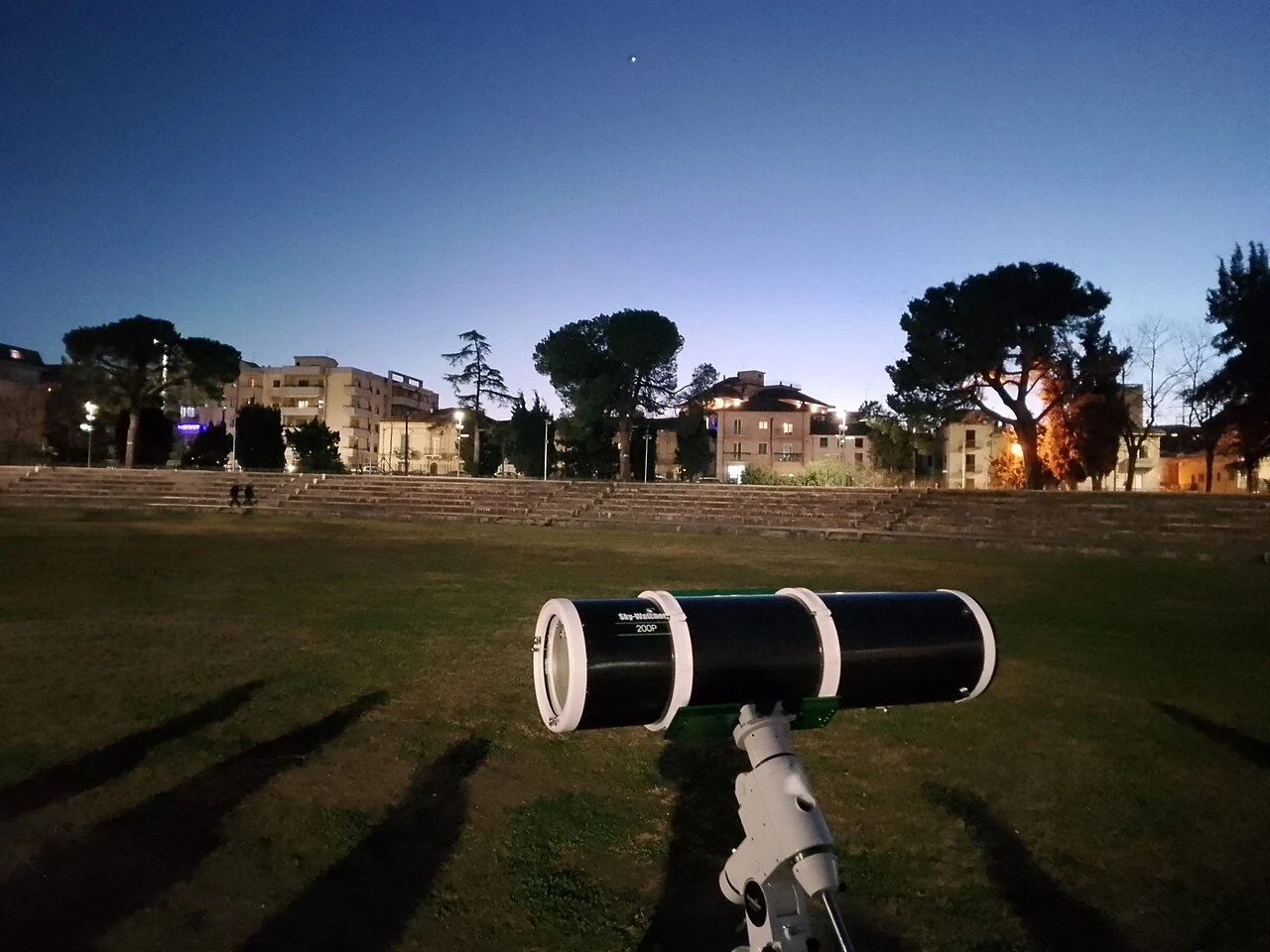
Kilonova Catcher invites amateur astronomers with access to camera-equipped telescopes to help follow brief cosmic events. NASA’s November 24 update describes the participation route broadly; the project website specifies access to a telescope eight inches or larger and offers help to beginners. Registration is through the project, including for people using shared equipment. Alerts prompt follow-up observations, but participation does not guarantee a detection, discovery or authorship.
Key facts
NASA reports more than 150 registered members on several continents.
Volunteers have contributed to more than 64 official General Coordinates Network reports.
The project website specifies a telescope eight inches or larger; NASA also requires a camera.
A kilonova can fade within days, making coordinated rapid follow-up valuable.
What would a volunteer actually contribute?
NASA Science invites telescope users to help observe fleeting light from events such as collisions between neutron stars. Gravitational-wave detectors or space telescopes can issue an alert, after which a distributed network searches for and follows the optical signal. Observations from multiple locations help extend what any single observatory could cover.
The task is more specific than browsing attractive astronomy images. Volunteers point an available telescope, record the event or candidate region and contribute observations through the project’s workflow. The network also follows gamma-ray bursts and other short-lived events, so an alert does not automatically mean a neutron-star collision has been confirmed.
What equipment and experience do the two sources specify?
NASA’s announcement says people need a telescope with a camera, or access to one. The project’s own website adds a more specific starting point: a telescope eight inches or larger. It explicitly includes temporary access and says that no experience is required, with members and leaders able to help newcomers.
These statements should be combined rather than flattened into an assumption that any camera or any small telescope is suitable. Before buying equipment, consult the project’s current guidance about the setup and observation process. The opened pages do not specify every camera, mount or software requirement, so they are not a complete procurement checklist.
How to register without owning an observatory
The registration route is the official Kilonova Catcher site, which is also the address linked by NASA. The project explicitly accepts people with time on a shared telescope, so participation is not restricted to private observatory owners.
Registration is the start of coordination, not a request to point at an arbitrary object and declare a discovery. The project describes working alongside the GRANDMA Collaboration, with professional astronomers and observatories contributing to the same response. Learning the alert, recording and submission process is part of making an observation useful to that network.
Why speed and repeated measurements matter
A kilonova is the short-lived light produced by a neutron-star merger, an event associated with the formation of heavy elements. NASA says the signal fades within days; the project describes transients lasting days to weeks. Both descriptions explain why delay can cost information, rather than establishing a fixed visibility period for every event.
Finding a candidate is only one part of the work. Following how its brightness changes can help researchers build the event’s light curve and interpret it alongside gravitational-wave or other observations. Geography, weather, equipment and the timing of an alert all affect what a particular observer can contribute.
What the participation record promises, and what it does not
NASA reports more than 150 registered members across several continents and contributions to more than 64 official reports through its General Coordinates Network. It also says some volunteer observations have earned coauthorship on peer-reviewed papers. These are examples of past contributions, rather than guaranteed rewards for each new member.
The network is preparing for follow-up alerts from the Nancy Grace Roman Space Telescope, according to NASA Science. That is a future observing opportunity, not a newly detected kilonova in this announcement. Likewise, the well-known 2017 event illustrated in NASA’s article is historical evidence of what coordinated observation can achieve, not a report of a new collision in November 2026.
Frequently asked questions
What equipment do I need to join Kilonova Catcher?
You need access to a telescope with a camera, according to NASA Science. The project website specifies a telescope eight inches or larger and says beginners can get help. Confirm current setup details with the project before purchasing equipment.
How do I register?
Use the registration route on the official project website, the same site linked by NASA Science. Temporary access or time on a shared telescope is explicitly accepted by the project.
Why do observers need to respond quickly?
The optical signal fades quickly: NASA Science says within days, while the project’s overview describes days to weeks. Prompt observations and repeated measurements help capture a changing event before it becomes too faint.
Does joining guarantee a discovery or a place on a scientific paper?
No. NASA Science reports past volunteer contributions to official notices and peer-reviewed papers. That track record does not guarantee a new member a detection, authorship or discovery; the observation must be useful to the scientific work.
At a glance
| Reader question | Evidence-based answer | Where the detail comes from |
|---|---|---|
| Equipment | Camera-equipped telescope; project specifies eight inches or larger | NASA announcement plus project site |
| Ownership | Shared or temporary telescope access accepted | Project site |
| Experience | Beginners can receive help | Project site |
| Recognition | Past reports and some coauthorship, not guaranteed | NASA participation update |
Sources and editorial notes
This article compiles the linked reporting. Allegations, projections and research findings retain their original qualifications; this page does not represent independent field reporting or expert medical review.
- NASA Science (reporting)
- Kilonova Catcher / GRANDMA (primary)
Original English synthesis compiled on November 25, 2026 from the sources listed below. Source publication times are retained separately; statements, forecasts and unresolved questions remain attributed.