Photo: Robert Owen-Wahl (Meditations) / Wikimedia Commons (CC0)
NASA is evaluating strawberries, cucumbers and lemon basil for future exploration menus, rather than announcing a finished Moon or Mars food supply. Its November 25 update shows why yield alone is insufficient: a productive wild strawberry also produced runners that consume valuable space. Lemon basil still has growth testing ahead, and Ohalo III is a separate technology demonstration intended to validate water delivery and efficient use of growing volume in microgravity.
Key facts
NASA identifies strawberries, cucumbers and lemon basil as candidates for future fresh-food variety.
The wild strawberry produced more reproductive structures but also too many space-consuming runners.
Lemon basil passed preliminary tests and seed sanitisation; plant-pillow growth assessment remains ahead.
Ohalo III aims to validate crop water delivery and volume optimisation, not supply a complete deep-space diet immediately.
What is being proposed for astronauts’ plates?
NASA Science describes candidate crops that could add fresh food, nutrition and variety during long missions. Strawberries bring a sweet fruit option, cucumbers could broaden the crop families available, and lemon basil could change the taste of packaged meals. These are different contributions to a menu rather than substitutes for every part of a food system.
The update discusses ongoing research on Earth and a planned space investigation. It should not be read as confirmation that all three crops are already being routinely harvested for crews on the Moon or Mars. Developing a crop and validating the equipment that supports it are related steps with different evidence.
Why the most productive strawberry did not automatically win
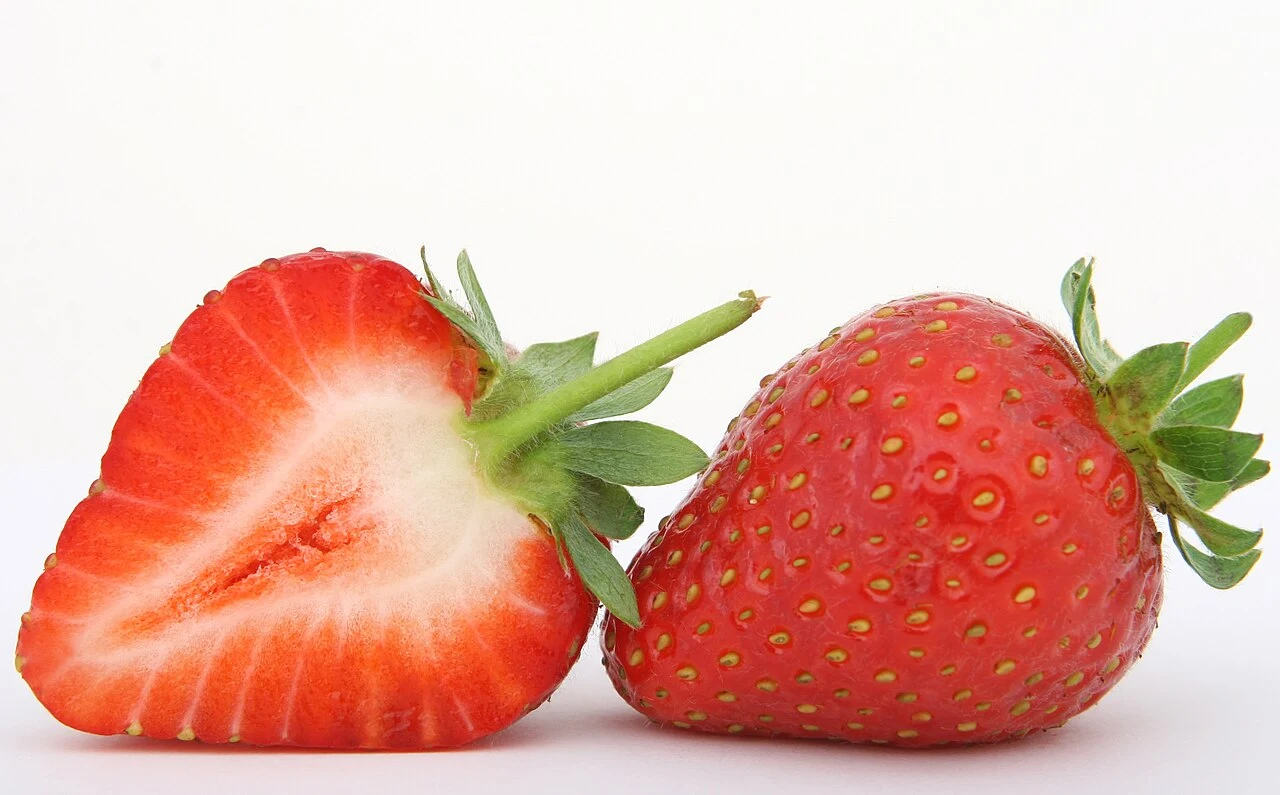
NASA reports a comparison of its leading strawberry candidate, Delizz, with a wild strawberry grown under simulated space conditions. The wild plant produced twice as many buds, flowers and fruit when grown from seed. Its small yellow fruit also differed from Delizz’s larger red fruit.
That did not make the wild plant the preferred spacecraft candidate. It produced too many runners, which would occupy scarce growing volume. Delizz retained its leading position in NASA’s account. The trade-off is useful beyond the fruit count: a plant has to fit the physical system as well as produce an edible crop. The comparison is not a completed demonstration of farming those varieties on Mars.
What remains to be shown for cucumbers and basil?
NASA’s summary of cucumber research describes enlarged leaves but continued production of edible fruit. It says extensive testing is needed before such crops can be grown and eaten in space. The article’s linked study was not accessible as full research text during this review, so the finding is attributed to NASA’s summary rather than presented as an independent paper assessment.
For lemon basil, the agency reports preliminary testing and successful seed sanitisation to remove microorganisms before flight. It identifies growth in plant pillows as a next step. Passing the sanitisation stage therefore does not mean the full cultivation process has been validated for every future habitat.
Why the growth chamber is a separate piece of the problem
NASA links the crop discussion to Ohalo III, a technology demonstration focused on water delivery and efficient use of growing volume in microgravity. Its objectives include addressing gaps in productivity, nutrition, safety and operational reliability. A promising seed variety is not enough if the growing system cannot supply water and support dependable cultivation.
The investigation page also identifies potential benefits for controlled-environment agriculture on Earth. Those are potential applications, not evidence that a particular commercial farm has already achieved the same results or that the system has solved long-duration food self-sufficiency.
How to read progress without turning it into a finished menu
The November update frames crop variety as a response to both nutrition and menu fatigue. Fresh herbs can make familiar packaged food more appealing, while different crop types offer resilience and variety. That does not establish a measured health improvement or a complete calorie supply from these particular candidates.
The next useful milestones are the outstanding growth tests and the system demonstration’s results. Distinguish the crop-selection question from the chamber-validation question, and both from routine food production on a future mission. Each can advance without proving that an autonomous farm is ready for deployment.
Frequently asked questions
Are these crops already approved as a complete Moon or Mars menu?
No. NASA Science describes candidate crops and testing, while Ohalo III is a technology demonstration. Neither page establishes a complete operational Moon or Mars menu.
Why did the higher-yield wild strawberry not replace Delizz?
Because its runners occupied too much growing space, despite producing more buds, flowers and fruit. That trade-off is described in NASA’s research summary; yield alone did not determine the choice.
Has lemon basil completed all its space-crop tests?
No. NASA Science says lemon basil passed preliminary testing and seed sanitisation, with assessment in plant pillows still ahead. That is progress through stages, not completion of all testing.
What will Ohalo III test?
NASA’s investigation page identifies plant water delivery and volume optimisation in microgravity, alongside gaps in productivity, nutrition, safety and reliability. These are demonstration objectives, not completed outcomes.
At a glance
| Candidate or system | Reported progress | What it does not establish |
|---|---|---|
| Strawberries | Delizz retained after a variety comparison | Largest fruit count alone is the best choice |
| Cucumbers | Edible fruit in research summarised by NASA | Routine harvests on Moon or Mars |
| Lemon basil | Preliminary testing and seed sanitisation | Completion of plant-pillow growth assessment |
| Ohalo III | Water and volume demonstration objectives | Complete crew food self-sufficiency |
Sources and editorial notes
This briefing synthesises the linked primary and reporting sources below. Allegations, forecasts and early research retain their stated scope and qualifications.
- NASA Science (reporting)
- NASA Ohalo III investigation (primary)
November 26, 2026: Original English synthesis of the sources linked here, with reader questions selected before drafting. Source publication dates are retained separately. This is an attributed compilation, not a claim of original interviews, on-scene reporting or specialist review. November 25, 2026: Added visible open-license photography credit beneath the article cover.