Photo: NASA / Wikimedia Commons (Public domain)
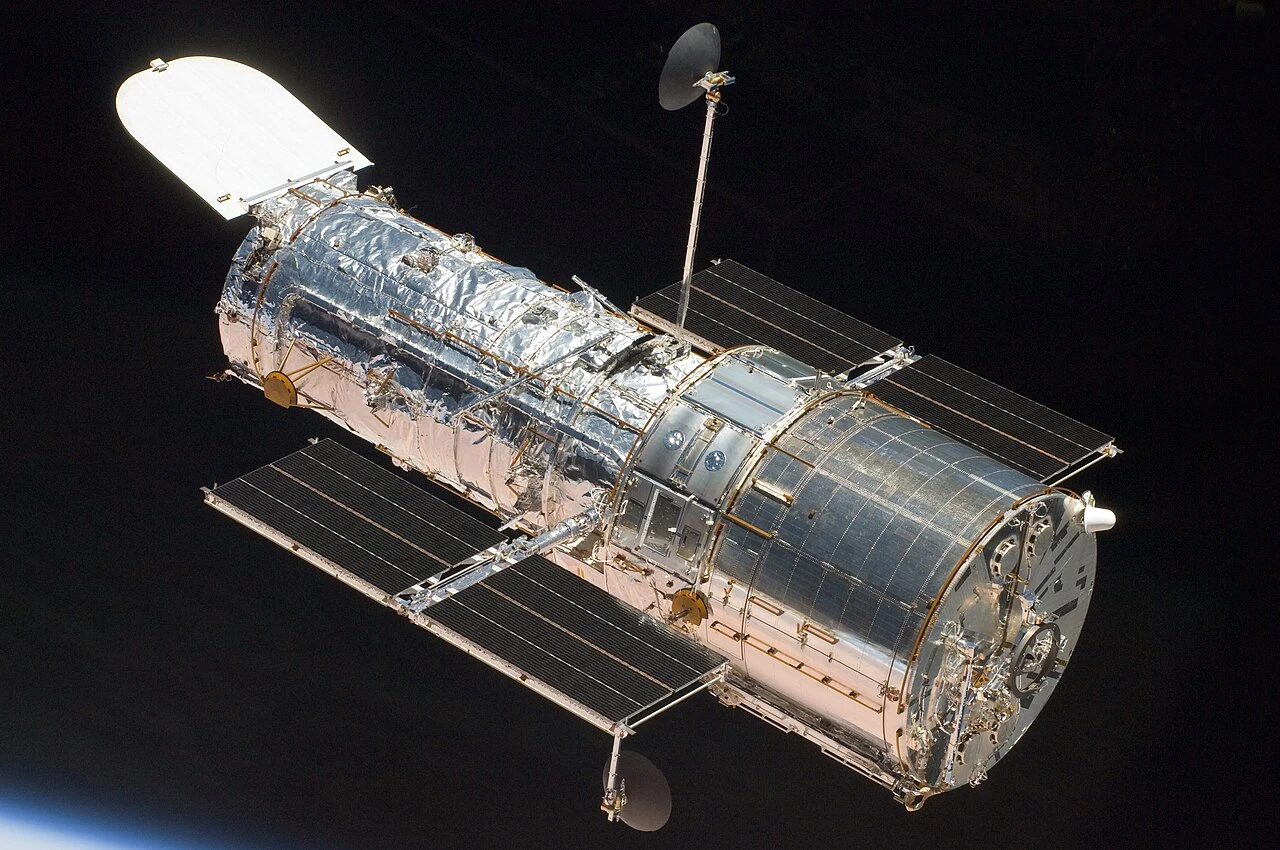
NASA’s new Hubble image release describes observations of the Milky Way’s crowded central bulge that will help interpret future Roman Space Telescope data. Hubble is measuring the stars in overlapping red and near-infrared wavelengths before possible microlensing events. Comparing that baseline with Roman’s later observations can help distinguish the stars and possible planetary companions involved. The release does not itself announce a new exoplanet detection.
Key facts
The survey concerns the Milky Way’s galactic bulge, which NASA says holds nearly a quarter of the galaxy’s stellar mass.
Hubble observed wavelengths overlapping Roman’s red-visible and near-infrared sensitivity.
The new images come from observing programme 17776, led by S. Terry.
Microlensing measures light magnified by foreground mass; a planet is one possible contributor to a signal.
Why map stars before a transient event happens?
The Hubble mission team’s November 25 release describes a dense part of the sky towards the Milky Way’s central bulge. Hubble’s resolution helps separate individual stars in a region where many sources crowd into the same view. Establishing what is present before a later event gives researchers a reference rather than forcing them to interpret every change without context.
The purpose is to support Roman’s future observations. If Roman records a microlensing event months or years later, astronomers can compare it with the earlier Hubble measurements. A visually striking star field is therefore also a practical data resource, not just an illustration of how crowded the galaxy looks.
What the overlapping wavelengths contribute
Hubble observes ultraviolet, visible and near-infrared light, while Roman’s observations include near-infrared and some visible wavelengths. For this survey, researchers used the red end of the visible spectrum and near-infrared bands that overlap Roman’s sensitivity. That makes the datasets more useful to compare than unrelated pictures taken in entirely different bands.
NASA says Hubble measurements can inform work on stellar brightness, age, composition and motion. These characteristics help researchers understand the objects within a future lensing event and the surrounding population. They do not mean that every coloured point in an image has already been assigned a complete physical history.
How microlensing differs from simply photographing a planet
The Roman mission guide explains that the gravity of a foreground object bends the path of light from a more distant source. With a sufficiently close alignment, the background star appears magnified. A planet associated with the foreground star can add a smaller feature to the signal.
Astronomers analyse that changing light rather than treating the event as a straightforward portrait of a planet. The new Hubble release describes how earlier information about stars can help with that interpretation. A brightening alone is not a complete planetary finding: the source, foreground mass and form of the event need to be assessed.
Why the Milky Way’s bulge is the target
NASA says the bulge holds nearly a quarter of the galaxy’s stellar mass and is close enough for individual stars to be studied in detail. Comparable dense regions in other galaxies are much harder to resolve. Studying our own central stellar population can therefore inform both planet searches and broader questions about galactic development.
The release places the new programme alongside Hubble’s earlier bulge surveys, including WFC3 work and the SWEEPS search that examined 180,000 stars. That older number is context for a legacy programme, not the number of new planets or a count of discoveries in the November images.
What this release establishes now
The observations come from programme 17776, designed to aid Roman’s searches for planets and other compact objects. What is available now is a Hubble survey and image release; the Roman comparisons and any conclusions from particular future events remain later work.
Neither the new release nor the supporting mission explanation provides a new discovery list for readers to count. The useful distinction is between better baseline information and an actual detection. The former can make the latter more interpretable, without guaranteeing how many planets a particular future survey will find.
Frequently asked questions
Do these images announce a newly discovered planet?
No. The NASA release describes Hubble observations intended to help interpret Roman’s future surveys. It does not announce a new planetary discovery list.
How will Hubble help Roman interpret future signals?
Hubble supplies earlier information about stars in overlapping wavelengths, allowing comparison with a later microlensing event. The mission team describes this as a way to make Roman data easier to interpret.
Does a brightening star automatically reveal a planet?
No. The Roman guide explains that foreground stars and other masses lens light, with planets potentially adding features to a signal. The event has to be analysed; a brightening alone is not a confirmed planet.
At a glance
| Stage | Evidence | Limit |
|---|---|---|
| Hubble baseline | Resolved stars in overlapping wavelengths | Not a new planet catalogue |
| Roman event | A changing microlensing signal | Future observation in this account |
| Comparison | Earlier star information versus later signal | Requires scientific interpretation |
| Possible planet | Features associated with planetary mass | Not every brightening has that explanation |
Sources and editorial notes
This briefing synthesises the linked primary and reporting sources below. Allegations, forecasts and early research retain their stated scope and qualifications.
- NASA Hubble Mission Team (reporting)
- NASA Roman microlensing guide (primary)
November 26, 2026: Original English synthesis of the sources linked here, with reader questions selected before drafting. Source publication dates are retained separately. This is an attributed compilation, not a claim of original interviews, on-scene reporting or specialist review. November 25, 2026: Added visible open-license photography credit beneath the article cover.