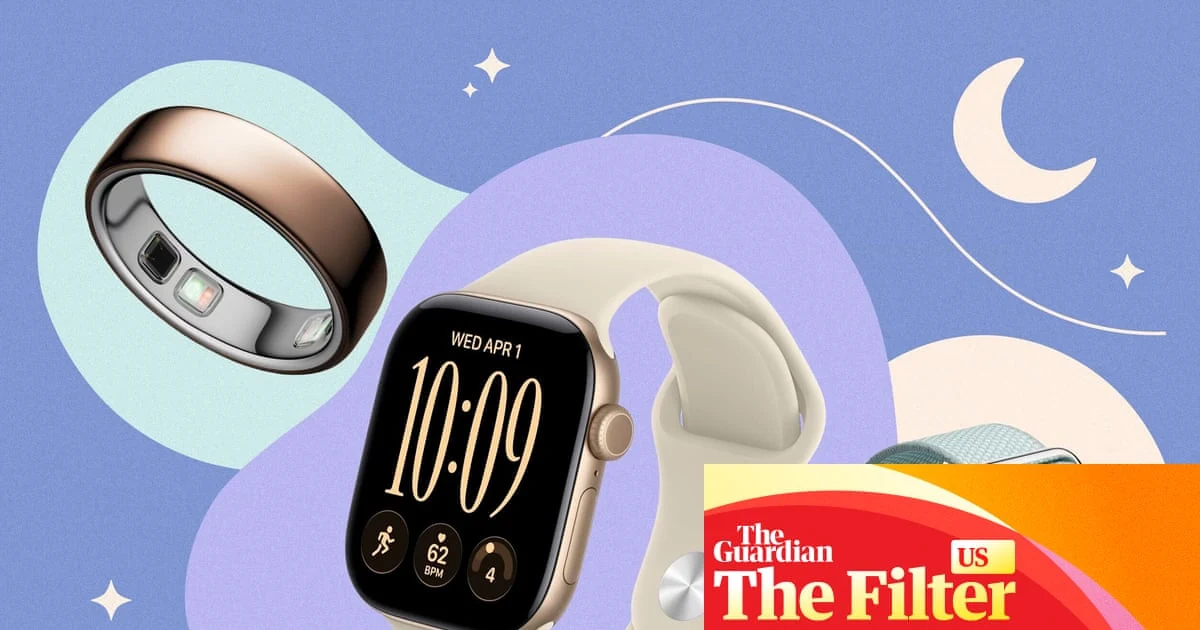
The Guardian’s comparison of 11 wearables found different trade-offs between rings, screen-free bands, smartwatches and earbuds. Its benchmark was another consumer tracker, not a clinical sleep study. This guide distinguishes the reviewer’s observations from the subscription, charging and compatibility choices a buyer needs to make; NewsCurrent did not conduct the tests. The Guardian review
Who tested the devices and what that comparison can establish
The Guardian reviewer compared 11 wearables, sometimes wearing two wrist devices, two rings and earbuds at once, for at least seven nights each. The review used the Oura Ring 5 as a comparison benchmark and also assessed overnight comfort, battery life, the app and the usefulness of the advice. NewsCurrent has not handled or tested these products. The observations below belong to the linked review.
A comparison with another consumer tracker is useful for spotting disagreement, but it is not the same thing as validating sleep stages against a clinical sleep study. If two devices disagree about light, deep or REM sleep, that alone does not establish which estimate is correct. The review is most useful as a guide to the practical trade-offs between designs, subscriptions and day-to-day use.
Oura Ring 5 and RingConn Gen 3: comfort versus subscription cost
The reviewer favoured the Oura Ring 5 for its slim design, readable app and the range of sleep information. Its app presents metrics such as sleep duration, efficiency and sleep debt, with an AI assistant offering additional explanations. The reported battery range was six to nine days. At the time of the review, access to the meaningful data required a subscription listed at $6 monthly or $70 annually.
RingConn Gen 3 was presented as an alternative for buyers who want a ring without that recurring fee. The review highlighted an approximately 14-day battery life, sleep-efficiency information and a comparatively thin design. It also found a substantial difference in recorded awake time compared with the Oura benchmark. That distinction matters: a device that counts quiet wakefulness as light sleep can make a night appear more restful than the wearer experienced. The reviewer also noted that its vibration alerts did not function as a wake-up alarm.
Fitbit Air and Garmin Cirqa: two approaches to a screen-free band
The Fitbit Air was praised for a thin, unobtrusive design and for recording several measures close to the Oura benchmark. Core information remained available without a subscription, while the detailed analysis and AI coaching used Google Health Premium, listed at $10 monthly or $100 annually. The review found the band less distracting than a smartwatch but noted that battery life and subscription value still need to be weighed against the features a buyer will actually use.
Garmin Cirqa took a different approach. The review described useful sleep, activity and vital-sign information without a mandatory sleep subscription, alongside battery life of up to 10 days. Its larger band may be less comfortable or attractive on a smaller wrist. The reviewer also found that awake time was less consistent with the benchmark than some other measures. The optional Connect+ subscription should not be confused with a requirement to access the core sleep data.
Apple Watch and Pixel Watch: phone compatibility and charging
The Apple Watch combined sleep information with notifications, fitness tracking and other iPhone features. The review found recurring differences from the benchmark in deep sleep and awake time, while noting the value of year-to-year comparisons for an existing owner. Its listed battery life of roughly a day means charging needs to be planned around overnight wear. It also requires an iPhone.
The Pixel Watch 5 offered a comparable all-purpose approach for Android users. The source review highlighted sleep and heart-rate-variability information, with some additional trends and coaching linked to Google Health Premium. Battery life varied by case size and mode; the source listed up to 40 hours for the larger model in normal use. For a buyer who already wants a smartwatch, these extra functions may be useful. Someone who only wants overnight tracking may prefer the longer gaps between charges offered by a ring or a simpler band.
Other bands and rings: assess the features you would pay for
The Whoop MG was described as comfortable, with a charging accessory that can be used while wearing the band and a battery lasting up to 14 days. The review nevertheless found its $359 annual membership hard to justify for sleep tracking alone. Its appeal was stronger for someone who also values the broader training and health features. The reviewer observed differences from the benchmark in several sleep stages despite broadly similar total sleep duration.
The Ultrahuman Ring Pro was praised for a useful charging case and contextual tags in the app, but criticised for its thickness and price relative to the alternatives. The Luna Band provided another option without a compulsory subscription and with a reported 10-day battery. The reviewer found its hardware less refined and its app slower to synchronise. These are practical judgements from one comparative review, rather than a universal ranking for every wrist, finger or sleeping position.
Sleep earbuds solve a different problem
The review did not put sleep earbuds among its leading choices for measuring sleep. Some pairs recorded longer sleep duration than the other wearables, and the absence of heart-rate data limited the comparison. That does not mean earbuds are useless: sound masking, noise cancellation, a choice of calming sounds and a private alarm may be the main reasons to buy them.
The source described the Ozlo SleepBuds 2 as offering room-noise and lighting information, a selection of more than 50 sleep sounds and an in-ear alarm. Those features address the sleeping environment rather than making the earbuds a direct substitute for a ring’s or watch’s physiological measurements. A buyer should decide which problem needs solving before comparing the products as though they perform the same job.
A decision checklist before buying
Compare the total cost over the period you expect to use the product, including any required subscription. Check whether the phone you own is compatible, whether the device can be worn comfortably overnight and whether its charging schedule fits your routine. Distinguish basic information available without a fee from the coaching or longer-term analysis behind a paid plan.
Use the review’s reported battery ranges and prices as a dated snapshot, then check the current manufacturer terms before buying. A consumer sleep score is an estimate, not a medical diagnosis. Persistent sleep problems need assessment on their own merits rather than a conclusion drawn solely from a wearable score. The linked Guardian review contains the reviewer’s complete testing account and product-by-product observations.
Frequently asked questions
Did NewsCurrent test the sleep trackers in this comparison?
No. The article summarises a Guardian review of 11 wearables. The review used another consumer tracker as a benchmark, not a clinical sleep study, so it cannot establish medical diagnostic accuracy. The Guardian
What should buyers compare besides a sleep tracker's purchase price?
Check ongoing subscriptions, battery life, charging habits, phone compatibility and which data require payment. The review describes different trade-offs for rings, screen-free bands, smartwatches and earbuds. The Guardian
Sources and editorial notes
This article compiles the linked reporting. Allegations, projections and research findings retain their original qualifications; this page does not represent independent field reporting or expert medical review.
- The Guardian (reporting)
November 23, 2026: Corrected section boundaries, removed extraction debris and repeated summary text where present, and clarified source attribution or image descriptions. This is an editorial repair of the cited reporting, not independent reporting, product testing or specialist fact-check certification. November 23, 2026: Added source-linked reader questions and answers based on the reporting already compiled in this article. These questions are editorial selections, not measured search queries.