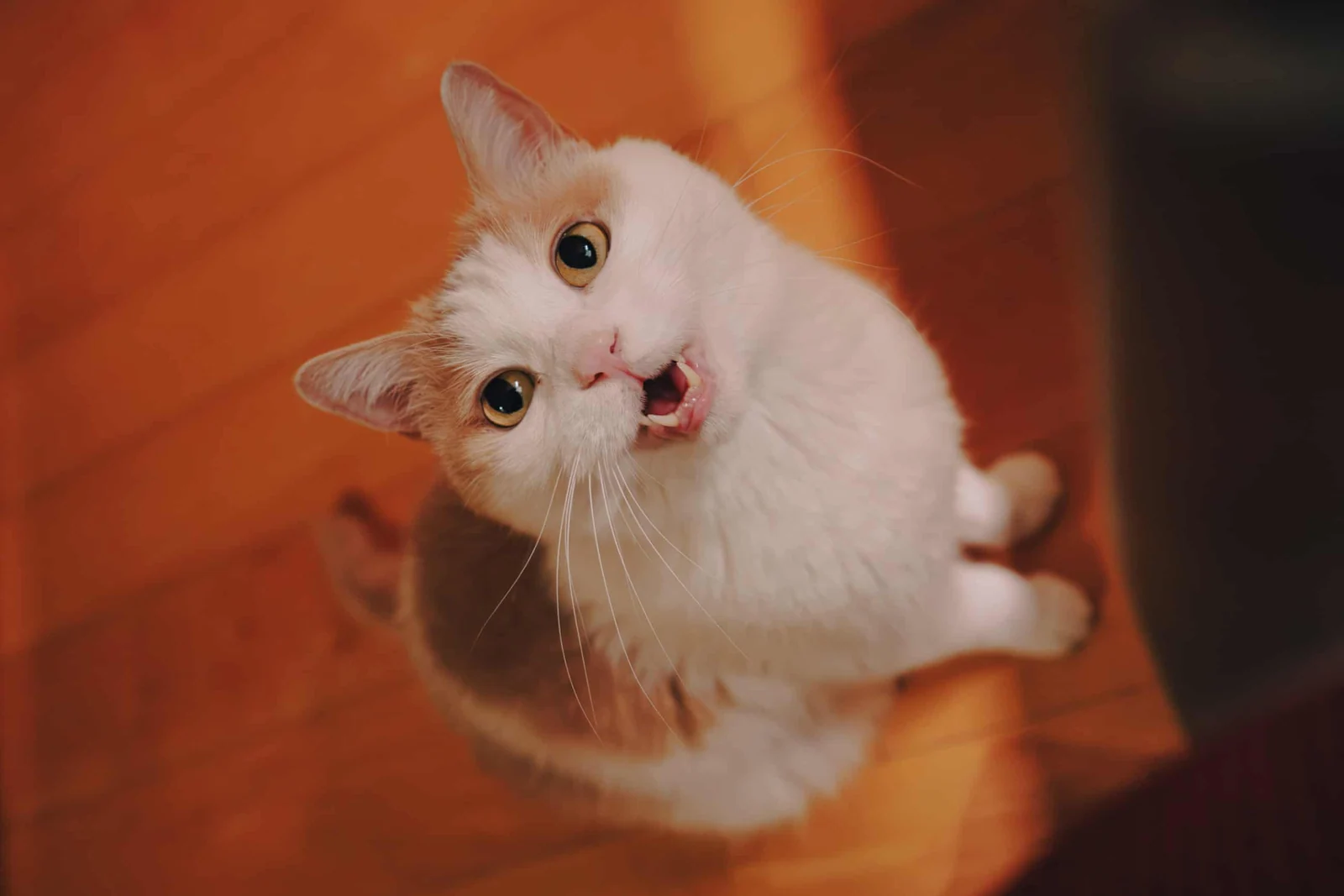
Feline behaviour specialists interviewed by the Guardian recommend interpreting posture, eyes, ears and movement together. A slow blink can signal relaxation and trust, while a tense body, flattened ears or attempts to hide may indicate discomfort. The Guardian
Key facts
Behaviour consultant Jessica Mockett describes cats treating people in some ways like other members of a social group, through grooming, kneading or sleeping nearby, and in other ways as caregivers. The Guardian
A comfortable cat may have a loose body, softly held ears and an upright tail when approaching. The Guardian
A study of shelter cats, available through PubMed Central, examined its relationship with human interaction and adoption outcomes. The Guardian
Cat communication extends beyond the meow
A Guardian feature asks feline-behaviour experts how to interpret the sounds and movements people often translate into imagined sentences. Their central advice is to observe several signals together and consider the situation. A cat's eyes, ears, tail, posture, movement and willingness to approach can all contribute information. No single sound or gesture acts as a perfect dictionary entry. The practical goal is to respond more accurately to comfort, interest or a desire for distance.
Relationships include both companionship and dependence
Behaviour consultant Jessica Mockett describes cats treating people in some ways like other members of a social group, through grooming, kneading or sleeping nearby, and in other ways as caregivers. That helps explain why an animal can seek company as well as food. The feature also challenges the familiar image of cats as fundamentally indifferent to their owners. Attachment and preference can be real without being expressed in the conspicuous ways a person expects from another species.
Look for combinations of relaxed or tense signals
A comfortable cat may have a loose body, softly held ears and an upright tail when approaching. Rubbing, settling nearby or initiating play can add to that picture. A crouched or tense posture, flattened ears, avoidance, growling or hissing points in another direction. Dilated pupils alone can reflect different kinds of arousal, including excitement or anxiety. Context prevents an owner from treating a visually striking detail as proof of either affection or aggression while overlooking the rest of the animal.
Slow blinking has a research background
The experts describe slow blinking as a possible sign of relaxation and trust. A study of shelter cats, available through PubMed Central, examined its relationship with human interaction and adoption outcomes. Such research gives the behaviour a more substantial basis than an internet translation chart, while still requiring care about what a particular study measured. A slow blink during a calm encounter is one signal in a broader exchange, not a guarantee that every cat wants to be touched immediately afterwards.
Different sounds do different work
The feature describes trills and chirps as friendly social sounds and chattering as associated with predatory excitement. Meowing is especially prominent in requests directed at people. Purring is more ambiguous: cats may purr when content but also when stressed or in pain. That ambiguity matters because an owner who treats purring as automatic reassurance could miss the surrounding signs of discomfort. A change from an individual cat's usual behaviour may deserve more attention than a generic description of the sound.
Recognition is different from understanding conversation
A published study found that domestic cats could distinguish their own names from other words under experimental conditions. That supports a specific ability to recognise a familiar sound pattern; it does not establish that cats understand human speech as people do. Other work explores associations between words and pictures. The useful everyday response is to make human behaviour predictable through a calm voice, gentle movements and consistent interactions, rather than assuming that a longer explanation will make an unwanted action acceptable to the cat.
Let the cat help decide when contact continues
The experts recommend offering a few gentle strokes around an area the cat prefers, often the cheeks or head, then pausing. Leaning in or rubbing against the hand can indicate interest in more. Turning away, disengaging or leaving is a reason to stop. A cat choosing to sit nearby may want company without petting, and rolling onto its back is not automatically an invitation to touch its belly. Watching the response turns contact into an exchange instead of relying on the person's original intention.
Reporting and further reading
pmc.ncbi.nlm.nih.gov: Slow Blink Eye Closure in Shelter Cats Is Related to Quicker Adoption
pmc.ncbi.nlm.nih.gov: Domestic cats ( Felis catus ) discriminate their names from other words
Sources and editorial notes
This article compiles the linked reporting. Allegations, projections and research findings retain their original qualifications; this page does not represent independent field reporting or expert medical review.
- The Guardian (reporting)
- Cat-behaviour study: Slow blink and adoption (primary)
- Cat-behaviour study: Recognition of own names (primary)
November 17, 2026: Replaced repeated summary and FAQ templates, added source attribution and image description, and clarified the distinction between source publication and site edits. This editorial update is not an independent fact-check certification.