Scientists analysing a 115-million-year-old Aratasaurus fossil say they found structures resembling red blood cells. The small carnivorous dinosaur lived in what is now north-eastern Brazil. The Guardian
Key facts
Electron microscope images revealed small rounded structures inside channels once occupied by blood vessels. The Guardian
Research leader Professor Kliti Grice of Curtin University suggested that hausmannite, a manganese compound found in and around the structures, may have helped stabilise them before fossilisation. The Guardian
Professor Mary Schweitzer of North Carolina State University, known for work on dinosaur soft-tissue remnants, was not convinced that the rounded structures were red blood cells. The Guardian
Dinosaur bone offers a disputed glimpse of ancient blood
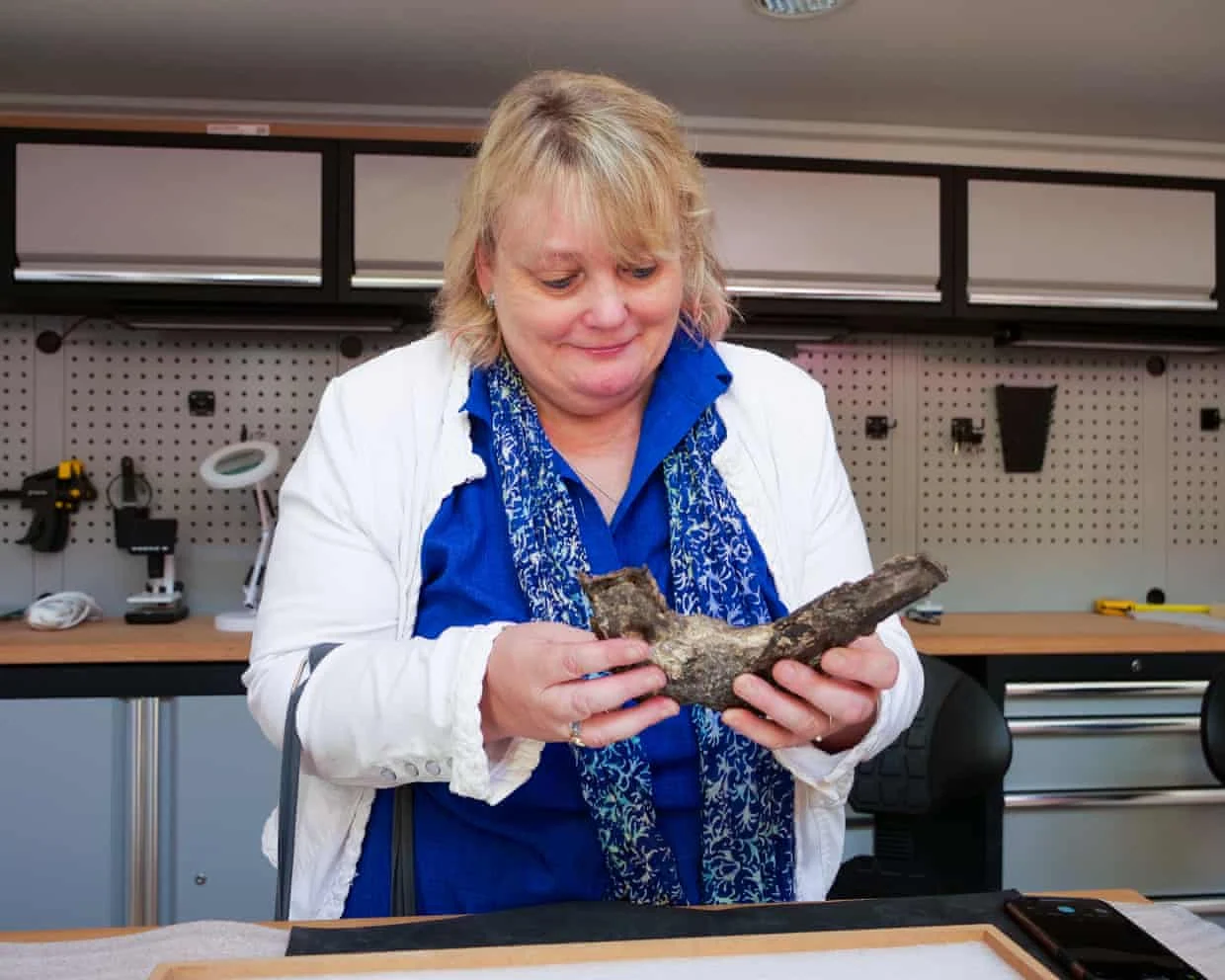
The Guardian reports that scientists examining a 115-million-year-old dinosaur fossil say they have found structures resembling red blood cells alongside chemical traces associated with blood. The material came from the hind leg of Aratasaurus, a small meat-eating dinosaur that lived in what is now north-eastern Brazil.
The fossil was discovered in a mine in 2008 and is held by Brazil's National Museum. The research, published in Proceedings of the National Academy of Sciences, uses modern microscopy and chemical analysis to investigate what biological information might survive deep geological time. Reporting context: The Guardian
Shape and chemistry provide different clues
Electron microscope images revealed small rounded structures inside channels once occupied by blood vessels. Chemical tests identified heme, the compound that helps haemoglobin carry oxygen, as well as breakdown products associated with it.
The team also reported amino acids that are building blocks of collagen. These findings do not amount to intact circulating blood or a preserved living cell. The claim concerns mineralised structures and molecular remnants within fossilised bone.
How such traces might survive
Research leader Professor Kliti Grice of Curtin University suggested that hausmannite, a manganese compound found in and around the structures, may have helped stabilise them before fossilisation. The team proposes that mineral chemistry created conditions favourable to preservation.
This is important because ordinary biological material generally degrades quickly. A plausible preservation mechanism helps explain why an exceptional fossil might retain information missing from others, while still leaving the identification of each structure open to testing.
A specialist challenges the cell interpretation
Professor Mary Schweitzer of North Carolina State University, known for work on dinosaur soft-tissue remnants, was not convinced that the rounded structures were red blood cells. Dinosaur cells would be expected to retain a central nuclear bulge, she told the Guardian, whereas the reported shapes appeared concave.
She was more persuaded by the chemical evidence for heme and collagen-related amino acids. Her response separates two questions that can be blurred in headlines: whether ancient biological compounds remain and whether a particular microscopic shape is a fossilised blood cell.
No route to dinosaur cloning
Grice cautioned that the results do not show that large biological molecules such as DNA or complete proteins survive in these fossils. Identifying a chemical remnant cannot provide the genome required to recreate an extinct animal.
The potential scientific value is different. Genuine traces could contribute to questions about dinosaur physiology, metabolism and activity, especially when combined with the anatomy and geological setting of the specimen. Those possibilities depend on identifying the material reliably.
Museum collections become a research resource
The specimen had already spent years in a collection before these analyses were undertaken. That suggests new instruments and questions may reveal information in fossils that have long been available to researchers, without requiring an entirely new excavation.
The immediate result is a productive disagreement about evidence and interpretation. Further work can compare the structures, check alternative explanations and investigate the preservation chemistry, building a clearer account of what remains of an animal that lived more than a hundred million years ago.
More tests can strengthen a case without ending debate
In NPR's account, Grice said the sample underwent about 30 analytical techniques. Swedish organic geochemist Sandra Siljeström found parts of the chemistry convincing while remaining cautious about the cell interpretation.
That reaction reinforces the importance of combining methods. A microscopic resemblance can suggest an explanation, while chemical evidence tests whether the material is compatible with it. Agreement on the presence of certain molecules can coexist with disagreement about the exact structures that contain them.
Questions readers ask
Does the fossil finding make dinosaur cloning possible?
No. The claim concerns disputed mineralised structures and chemical traces in an ancient fossil. It is not evidence of living cells or recoverable dinosaur DNA. The Guardian
Sources and editorial notes
This article compiles the linked reporting. Allegations, projections and research findings retain their original qualifications; this page does not represent independent field reporting or expert medical review.
- The Guardian (reporting)
- NPR's account (reporting)
November 17, 2026: Replaced repeated summary and FAQ templates, added source attribution and image description, and clarified the distinction between source publication and site edits. This editorial update is not an independent fact-check certification.