Joana Vasconcelos's Wedding Cake pavilion at Waddesdon Manor is to be dismantled after problems with its ceramic tiles raised safety concerns. Installed in 2023, the 12-metre structure was intended as a permanent addition to the Buckinghamshire estate's gardens. Dezeen
Key facts
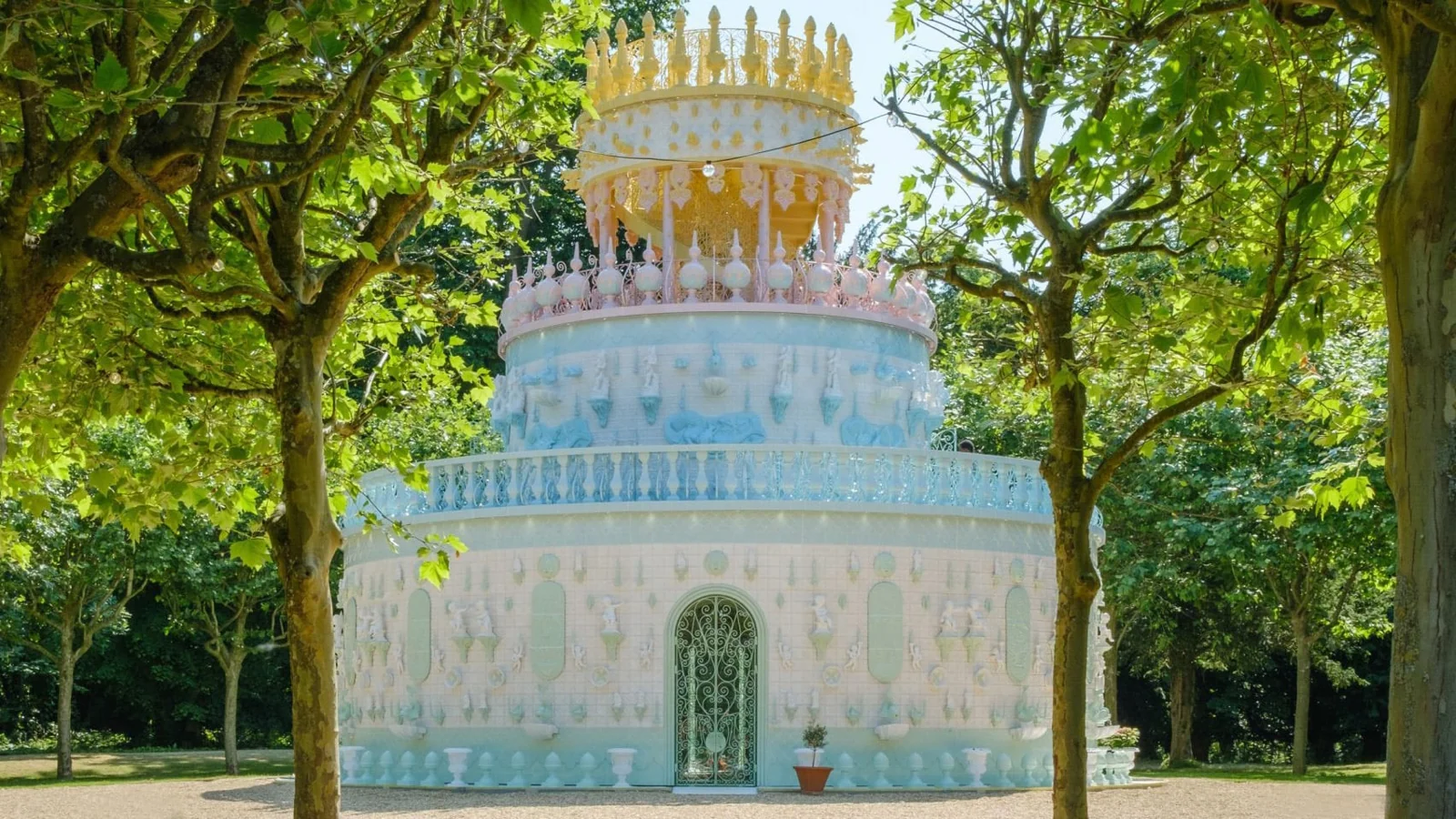
The pavilion has three tiers covered in glazed pastel tiles made by historic Portuguese manufacturer Viúva Lamego. Dezeen
A report on the council's planning portal included photographs of damaged tiles, and a council officer found that no viable repair solution had been identified. Dezeen
Waddesdon Manor is Grade I-listed, and its grounds are protected, so removing the sculpture requires consent. Dezeen
Waddesdon's Wedding Cake will be dismantled
The 12-metre Wedding Cake pavilion at Waddesdon Manor in Buckinghamshire is to be removed after faults in its ceramic tiles led to closure over safety concerns. Dezeen reports that Buckinghamshire Council has approved a change to the listed building consent allowing dismantling. Designed by Portuguese artist Joana Vasconcelos and installed in 2023, the structure was intended as a permanent garden pavilion. Its planned removal comes after a much shorter period of public use than the estate had expected.
An elaborate structure built around ceramic units
The pavilion has three tiers covered in glazed pastel tiles made by historic Portuguese manufacturer Viúva Lamego. Their colours and forms were intended to resemble cake icing. The standard 14-by-14-centimetre tile module helped determine the whole structure's dimensions: an 11-metre diameter was the smallest achievable within the design. This connection between an individual manufactured component and the size of the pavilion makes the tile faults particularly consequential. The ceramic surface is central to the project's form, rather than a minor decorative addition. Reporting context: Dezeen
The underlying failure has not been publicly explained
A report on the council's planning portal included photographs of damaged tiles, and a council officer found that no viable repair solution had been identified. However, the root cause has not been publicly stated. The available reporting therefore supports the conclusion that the faults created an unresolved safety problem, but not a specific accusation about manufacturing, installation or maintenance. Establishing why material failed would require evidence beyond the fact that the surface is damaged and the pavilion has been closed.
Protected grounds require a formal removal process
Waddesdon Manor is Grade I-listed, and its grounds are protected, so removing the sculpture requires consent. The revised permission requires removal no later than January 2036, but the Rothschild Foundation, which manages the estate, wants it taken down as soon as possible. The distant date is a legal deadline, not a statement that the pavilion will remain until then. The surrounding landscape must also be returned to grass within six months after the structure is removed. Reporting context: Dezeen
Vasconcelos challenged a hierarchy of materials
When completed, the artist described Wedding Cake as her most ambitious project. Its ceramics and textile-like effects reflected an interest in questioning the elevated status of materials such as marble in grand architectural settings. It was her fourth project for Waddesdon, an estate built in the 1870s by Baron Ferdinand de Rothschild to entertain guests and display collections that included ceramics. That context gave the pavilion's tile-based extravagance a relationship to the house's history, even though its material performance has now forced a different outcome. Reporting context: Dezeen
Outdoor commissions will continue
The estate says it intends to keep commissioning art for its landscape, including a contemporary sculpture trail planned to open in July 2027. Wedding Cake's removal therefore does not signal an announced end to the wider programme. The case brings together artistic ambition, the durability of exposed materials and the obligations of managing a protected site. The immediate decision is settled, but the public account still leaves the origin of the tile defects and the precise dismantling schedule unresolved. Reporting context: Dezeen
Sources and editorial notes
This article compiles the linked reporting. Allegations, projections and research findings retain their original qualifications; this page does not represent independent field reporting or expert medical review.
- Dezeen (reporting)
November 17, 2026: Replaced repeated summary and FAQ templates, added source attribution and image description, and clarified the distinction between source publication and site edits. This editorial update is not an independent fact-check certification.