The unique manuscript depicts comets, floods and strange weather through 167 paintings, revealing how early modern Europe recorded fear and curiosity about extreme events. The Guardian
Key facts
The images were made in a culture that often interpreted unusual weather as a divine warning, but the effort to record where and when events happened also resembles an early form of evidence gathering. The Guardian
Christie’s specialist Eugenio Donadoni describes German wonderbooks as sensational media that circulated reports of unusual events. The Guardian
The scenes were painted in watercolour and gouache, yet their surreal combinations of human fear and cosmic spectacle can look contemporary. The Guardian
A book of disasters becomes a market sensation
A unique sixteenth-century manuscript filled with visions of storms, floods, comets and strange creatures is expected to sell for between £700,000 and £1m. The Book of Miracles contains 167 painted scenes and will be auctioned in London on 10 December. The Guardian reports that the public will be able to see it for six days before the sale.
Its images mix warning with observation
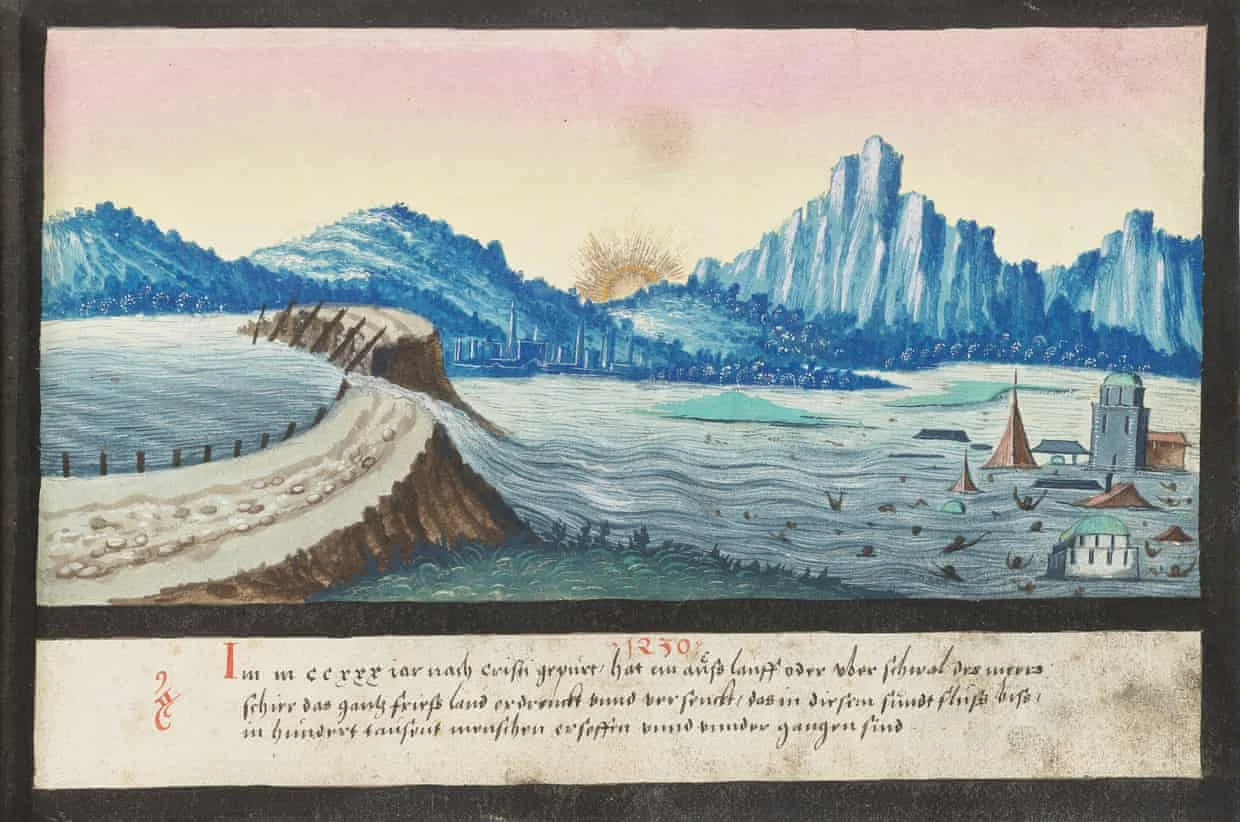
The book depicts five suns over Leipzig, blood rain in Rome and hail striking Dordrecht. Its captions identify places and dates, while scholars believe other images record events such as a plague of locusts, a flooded North Sea coast and what may have been an aurora. The images were made in a culture that often interpreted unusual weather as a divine warning, but the effort to record where and when events happened also resembles an early form of evidence gathering.
The manuscript disappeared from scholarship
For centuries scholars did not know the manuscript existed. It was found in a small baroque castle in southern Germany almost 20 years ago and sold at auction with the castle’s furniture in 2008 for just over £100,000. It later entered the collection of US contemporary-art collector Mickey Cartin. The new sale reflects both its rarity and the attention generated by its visual language. Reporting context: The Guardian
Wonderbooks were a form of mass media
Christie’s specialist Eugenio Donadoni describes German wonderbooks as sensational media that circulated reports of unusual events. Lutheran theologians used them to support religious arguments, but the dated captions and geographical references also encouraged readers to catalogue phenomena. The manuscript therefore sits between art, journalism, theology and the history of science rather than belonging neatly to one category.
The paintings still feel unexpectedly modern
The scenes were painted in watercolour and gouache, yet their surreal combinations of human fear and cosmic spectacle can look contemporary. Some show dragons that scholars think may represent northern lights; others turn weather into a stage filled with signs. That visual quality attracts modern-art collectors as well as buyers of medieval and Renaissance manuscripts, widening the audience beyond specialists in early books.
Auction value is not the same as public meaning
A high estimate reflects scarcity, condition, provenance and demand. It does not determine the manuscript’s historical importance. The Book of Miracles remains valuable because it preserves how people made sense of uncertainty: they recorded what they saw, placed it inside religious stories and worried about what it meant for the future. The auction will decide ownership, but the exhibition offers a rare chance to read those anxieties as a shared visual archive.
Sources and editorial notes
This article compiles the linked reporting. Allegations, projections and research findings retain their original qualifications; this page does not represent independent field reporting or expert medical review.
- The Guardian (reporting)
November 17, 2026: Replaced repeated summary and FAQ templates, added source attribution and image description, and clarified the distinction between source publication and site edits. This editorial update is not an independent fact-check certification.