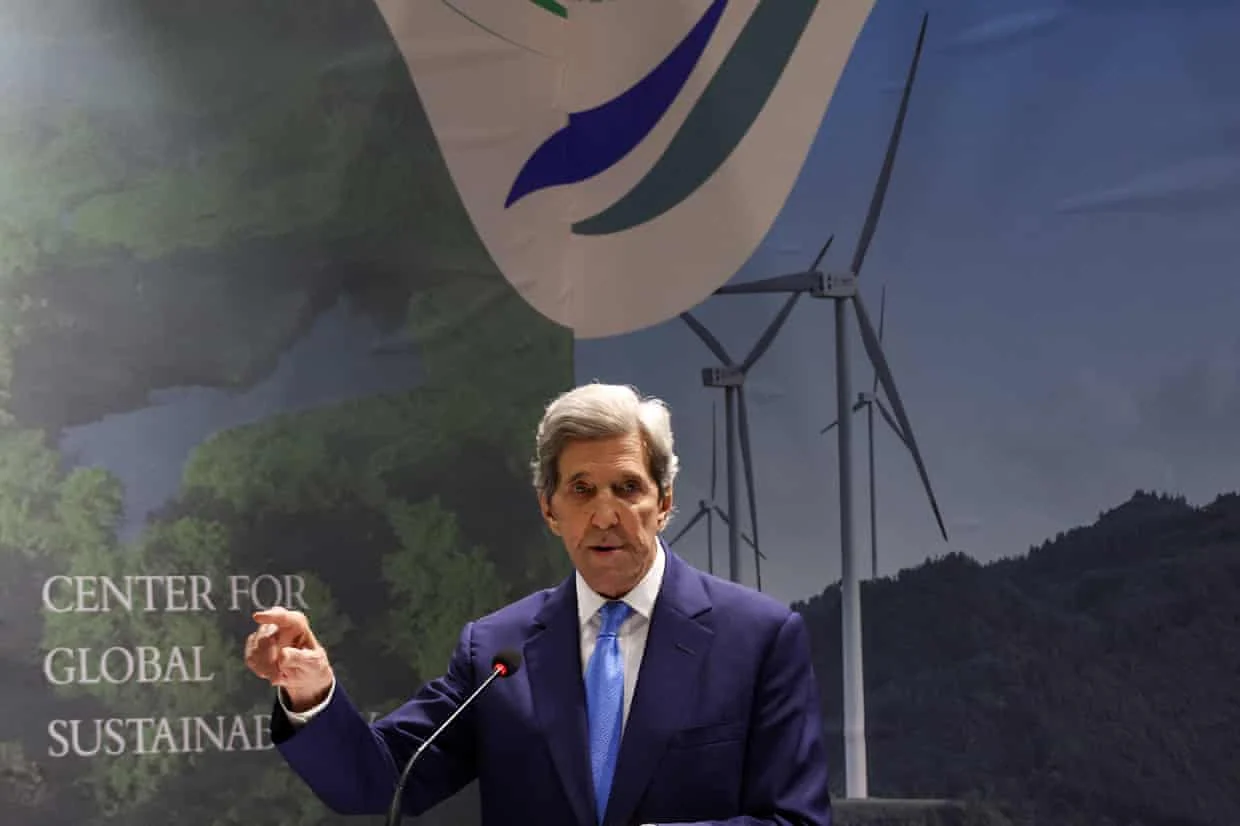
Former US secretary of state John Kerry used COP31 to criticise Donald Trump's decision to withdraw from international climate cooperation. He argued that abandoning clean-energy policies gives China an economic advantage. The Guardian
Key facts
The Trump administration sent no delegation to the summit, unlike almost every other country participating in the annual UN climate process. The Guardian
Under Joe Biden, the United States introduced tax incentives intended to expand clean-energy and electric-vehicle manufacturing. The Guardian
Kerry has repeatedly urged other countries to recognise China's progress in renewable power and clean technology. The Guardian
Kerry frames climate policy as industrial competition
Former US secretary of state John Kerry used COP31 in Antalya to criticise Donald Trump's retreat from international climate cooperation. Speaking to the Guardian, Kerry argued that abandoning support for clean technologies also sacrifices an opportunity for American manufacturers and supply chains.
His intervention placed economic competition alongside the familiar emissions debate. China, he said, is gaining a stronger position in technologies that other countries will continue to buy, regardless of Washington's political position on climate change.
Washington is absent from the talks
The Trump administration sent no delegation to the summit, unlike almost every other country participating in the annual UN climate process. The White House dismissed the meeting and argued that aggressive climate policies damage economies.
Kerry's response was explicitly political. He portrayed the absence as a strategic mistake, while the administration sees its approach as a rejection of policies it considers harmful. Those are competing judgments about policy, not two scientific measurements of the same outcome.
Manufacturing incentives are part of the dispute
Under Joe Biden, the United States introduced tax incentives intended to expand clean-energy and electric-vehicle manufacturing. The Guardian reports that Republicans removed most of that support, while Trump promoted fossil fuels and assistance for struggling coal plants.
Kerry argued that this leaves factories, investment and production networks to competitors. His case is that industrial policy and climate policy overlap: encouraging domestic output can influence where the equipment used in the energy transition is made.
China provides the comparison
Kerry has repeatedly urged other countries to recognise China's progress in renewable power and clean technology. The country has a central role in production and deployment, making it a benchmark for the competitiveness argument he raised at the summit.
That does not settle the wider climate challenge. Expanding clean generation can limit new fossil-fuel demand, but reducing global emissions fast enough also requires decisions about existing energy systems, industry, transport and land use.
Fossil-fuel negotiations remain difficult
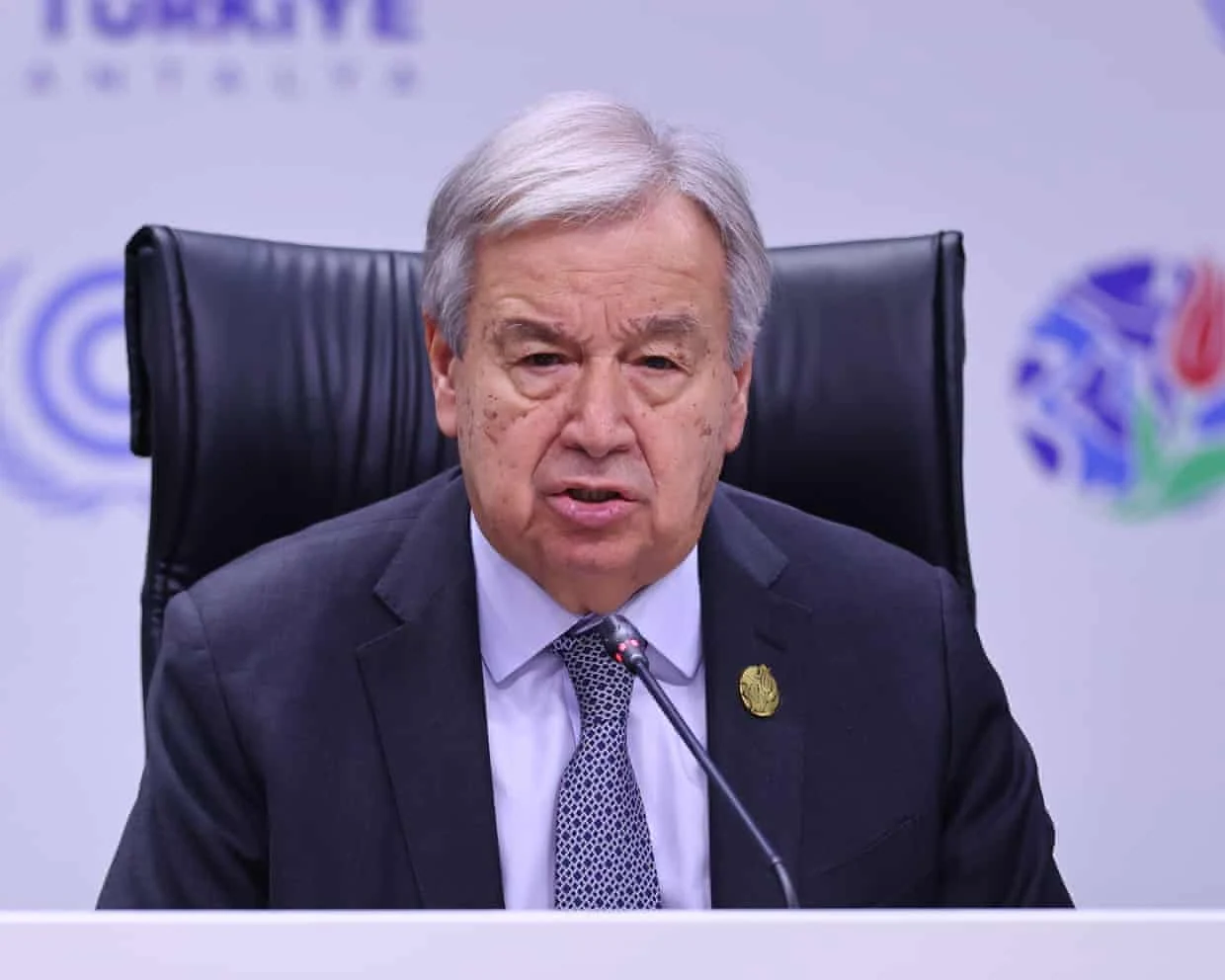
UN secretary-general António Guterres urged countries at COP31 to move beyond fossil fuels. The Guardian's report also describes frustration among campaigners at the pace of progress, with Greta Thunberg sharply criticising the summit process. Reporting context: The Guardian
Kerry acknowledged that negotiations can move slowly. The gap between repeated calls for action and agreement on implementation remains central to the credibility debate, especially when countries face domestic pressure over energy prices and industrial employment.
Climate politics includes household costs
Kerry argued that climate concerns overlapped with energy affordability in the recent US midterm elections and contributed to Democratic gains. That is his interpretation of voter priorities, rather than proof that a single issue determined the result.
His broader message was that politicians need to connect emissions policy with goods, jobs and bills. For countries still negotiating in Antalya, America's absence does not remove those decisions. It changes the diplomatic and industrial setting in which they will pursue them, with future US participation remaining a political question.
Sources and editorial notes
This article compiles the linked reporting. Allegations, projections and research findings retain their original qualifications; this page does not represent independent field reporting or expert medical review.
- The Guardian (reporting)
November 17, 2026: Replaced repeated summary and FAQ templates, added source attribution and image description, and clarified the distinction between source publication and site edits. This editorial update is not an independent fact-check certification.