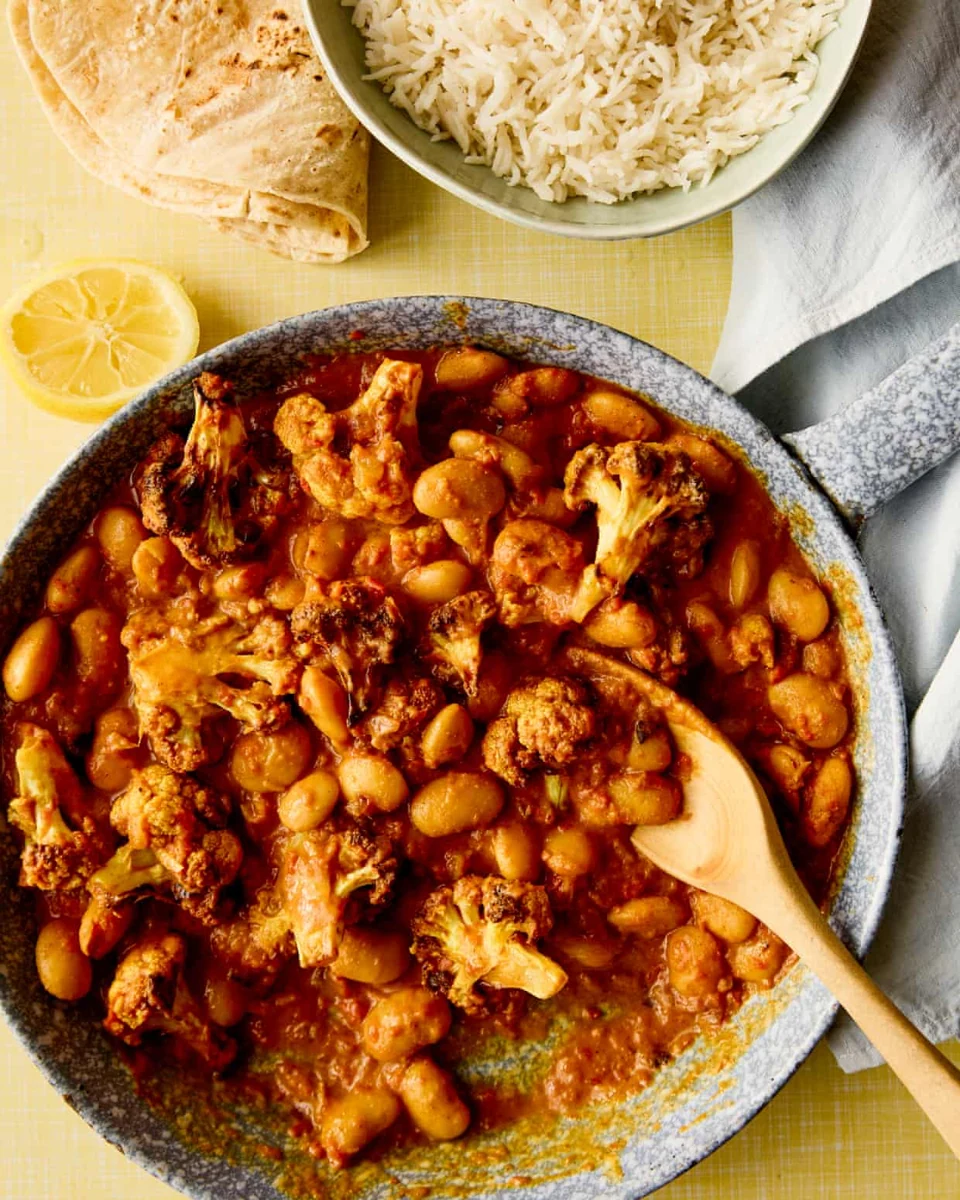
Rukmini Iyer's cauliflower and butter bean curry starts by roasting the cauliflower with spices before adding it to a creamy tomato sauce. The beans make the dish substantial enough for a meal with rice, parathas or flatbreads. The Guardian
Key facts
The cauliflower florets are coated in oil, turmeric, cumin and salt, then roasted until golden and just cooked through. The Guardian
Turmeric, cumin, crushed chilli, black pepper and cinnamon then cook gently before chopped tomatoes and beans are added. The Guardian
The cream and roasted cauliflower enter near the end, followed by lemon juice after the pan leaves the heat. The Guardian
One curry, more than one meal
Rukmini Iyer's Guardian recipe combines roasted cauliflower and butter beans in a creamy tomato sauce, with a second meal built into the plan. The published quantity is intended to feed two people now and two the following day. Its flexibility comes from separating a flavourful base sauce from the vegetable and bean components. That structure supports changes in ingredients and serving style without requiring the cook to invent an entirely new dish from leftovers.
Roast the cauliflower before it meets the sauce
The cauliflower florets are coated in oil, turmeric, cumin and salt, then roasted until golden and just cooked through. Iyer gives a 220C conventional oven, or 200C fan, and also provides an air-fryer alternative cooked in a single layer. The separate roasting stage matters because it creates browned surfaces before the cauliflower enters the wetter sauce. Simply boiling raw florets in the tomato mixture would be a different preparation with a different texture. Reporting context: The Guardian
Build the sauce while the oven works
Onion is cooked until golden, followed briefly by grated garlic and ginger. Turmeric, cumin, crushed chilli, black pepper and cinnamon then cook gently before chopped tomatoes and beans are added. Iyer uses jarred butter beans with their liquid rather than draining them. She notes that tinned beans can also work but may benefit from another ten minutes of simmering to absorb flavour. The parallel preparation makes the oven time useful rather than leaving the cook waiting for one component to finish.
Cream and lemon finish different jobs
The cream and roasted cauliflower enter near the end, followed by lemon juice after the pan leaves the heat. Iyer emphasises tasting for both salt and acidity. That is a specific finishing instruction: a rich sauce can need brightness as well as stronger seasoning. The original recipe allows more dried chilli for people who prefer extra heat, while rice, parathas or flatbreads provide different ways to serve the same curry. The cook can choose the accompaniment without altering the sauce's basic method.
The next day can become a filled wrap
One proposed use for the remaining curry is a paratha filled with the mixture, lettuce and finely sliced red onion. Iyer also suggests briefly blanching the onion and then dressing it with lime juice and salt to create a quick, bright accompaniment. The sharper onion and fresh leaves provide a different contrast from the first day's bowl of curry and rice. The result uses the existing cooked food as its centre rather than treating the second meal as a completely unrelated recipe.
Puff pastry offers another direction
The alternative is a small pie, with the leftover curry placed in an ovenproof dish and topped with puff pastry. A vent, sealed edges and an egg wash complete the preparation before baking. The original method gives 20 to 25 minutes at the same stated oven temperature, while requiring the filling to be piping hot. This is a useful distinction: browned pastry alone does not establish that a refrigerated filling has heated through. The recipe's practical instruction covers both exterior and centre. Reporting context: The Guardian
Substitutions follow the structure of the dish
Chickpeas can replace butter beans, and peas can add another vegetable. Iyer also proposes using the sauce for a matar-paneer-style version, replacing the cauliflower and beans with seasoned roasted or fried paneer. Her related reader Q&A develops the same interest in manageable everyday cooking. These variations make sense because the sauce and the principal ingredients are prepared as identifiable components. The complete published recipe provides quantities; the repeatable lesson is to plan the second meal when cooking the first, while making changes that preserve the balance of sauce, seasoning and texture.
Reporting and further reading
Sources and editorial notes
This article compiles the linked reporting. Allegations, projections and research findings retain their original qualifications; this page does not represent independent field reporting or expert medical review.
- The Guardian (reporting)
- www.theguardian.com: âHow do we get out of our midweek menu rutâ? â Feastâs Rukmini Iyer answered your cooking questions (reporting)
November 17, 2026: Replaced repeated summary and FAQ templates, added source attribution and image description, and clarified the distinction between source publication and site edits. This editorial update is not an independent fact-check certification.