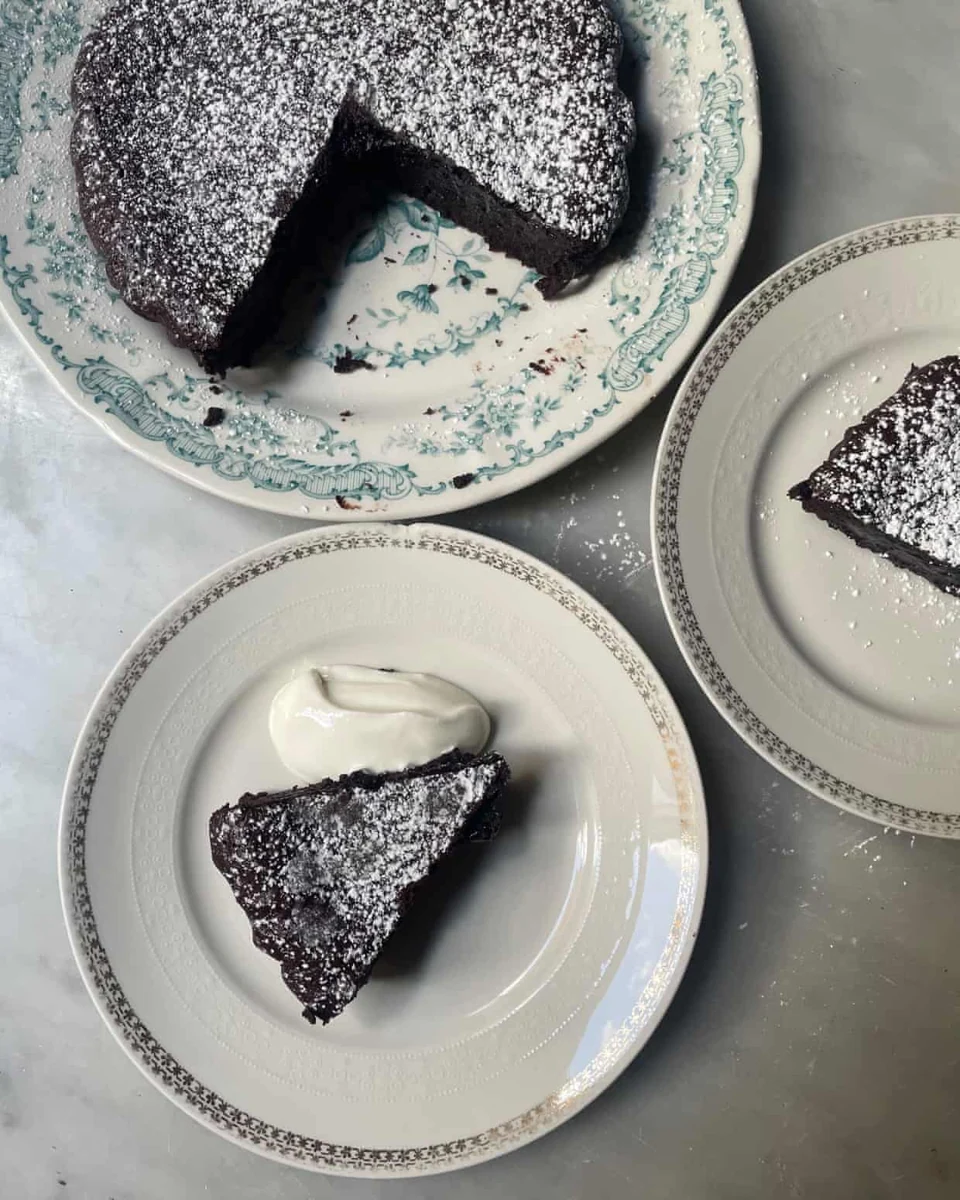
‘Little tender one’: Rachel Roddy’s torta tenerina . Photograph: Rachel Roddy/The Guardian.
Rachel Roddy's Guardian column turns to torta tenerina, a chocolate cake associated with Ferrara in Emilia-Romagna. Chocolate, butter and eggs give it a dense interior, while a small quantity of flour keeps the structure closer to a pudding than a lofty sponge. The Guardian
Key facts
Roddy explains that Ferrara recipes commonly use tins around 24 to 26 centimetres across, producing a shallow cake with a lightly cracked top and sticky interior. The Guardian
The column connects the smaller cake with Elizabeth David's chocolate gâteau in French Provincial Cooking, published in 1960. The Guardian
The chocolate and butter form the rich base, while separated eggs allow the yolks and whites to do different jobs. The Guardian
A Ferrara cake with a pudding-like centre
Rachel Roddy's Guardian column turns to torta tenerina, the rich chocolate cake associated with Ferrara in Emilia-Romagna. She encountered it during the city's Internazionale journalism festival and uses its texture, rather than a disputed origin story, as the starting point. The attraction is a cake that can sit close to a pudding: set at the surface, soft within and markedly different after a night in the refrigerator. The bake is small in ingredients but sensitive to proportion and time.
The tin changes the kind of cake
Roddy explains that Ferrara recipes commonly use tins around 24 to 26 centimetres across, producing a shallow cake with a lightly cracked top and sticky interior. Her version uses a 16-centimetre tin with a similar quantity of mixture, creating a deeper, softer result. That is a practical distinction rather than an incidental serving choice. Changing the diameter changes the depth through which heat must travel, so the same ingredients do not necessarily produce the same texture in another tin. Reporting context: The Guardian
An English cookbook offers a useful comparison
The column connects the smaller cake with Elizabeth David's chocolate gâteau in French Provincial Cooking, published in 1960. Roddy distinguishes that recipe from David's better-known chocolate-and-almond cake. The comparison explains why the dish can be treated as a pudding rather than as a tall, airy sponge. A very small amount of flour holds the mixture together without shifting the balance away from chocolate, butter and eggs. The reference is about structure and texture, not a claim to have settled the cake's historical ownership. Reporting context: The Guardian
Separate eggs create the lift
The chocolate and butter form the rich base, while separated eggs allow the yolks and whites to do different jobs. The yolks are incorporated with the sugar and other ingredients; the whisked whites are folded in gently so their air is not immediately lost. The final method specifies soft peaks. Vigorous stirring at this stage would undermine the lift the cook has just created. There is no need to imagine the cake behaving like a heavily raised sponge: its tenderness depends on a comparatively delicate structure.
The finish should still have movement
Roddy's method uses a 180C conventional oven, or 160C fan, for about 25 minutes in the specified tin. The surface should be set while the middle retains a visible wobble. Her account of once overbaking it reinforces the usefulness of setting a timer, then assessing the actual centre. Melting the chocolate can be done carefully in a microwave or in a bowl above simmering water, with the bowl kept clear of the water itself. Reporting context: The Guardian
Serving time determines the final character
One to three hours after baking, the cake is at its softest pudding-like stage. Refrigeration overnight makes it firmer and more fudgy, offering a different result from the same bake. Roddy suggests a generous dusting of icing sugar and thick cold cream. Her flour alternative of ground nuts changes the flavour while keeping a similar tender character, although ingredients must still suit the people eating it. The complete recipe supplies quantities; the essential decisions are tin size, gentle folding and stopping the bake before the centre becomes dry.
Sources and editorial notes
This article compiles the linked reporting. Allegations, projections and research findings retain their original qualifications; this page does not represent independent field reporting or expert medical review.
- The Guardian (reporting)
November 17, 2026: Replaced repeated summary and FAQ templates, added source attribution and image description, and clarified the distinction between source publication and site edits. This editorial update is not an independent fact-check certification.