Two vegetarian recipes use tamarind, vinegar, roasted vegetables and creamy beans to build rich flavour without a long list of difficult techniques. The Guardian
Key facts
One portion of the beans cooks with softened leek, stock, paprika, garlic and vinegar until it thickens. The Guardian
Mitchell roasts quartered heads in oil, turning them so both cut sides brown, then adds white balsamic. The Guardian
Mustard seeds, curry leaves and diced onions begin the base, with the onions cooked for 10 to 15 minutes so they soften and colour. The Guardian
Sweet and sour is the organising idea
Marie Mitchell’s recipes use acidity to keep comforting vegetarian dishes lively. White balsamic vinegar brings sharpness to whipped cannellini beans and roasted radicchio, while tamarind gives a squash and chickpea curry a darker sweet-sour edge. The Guardian presents both as food for evenings when the cook wants depth without spending all night in the kitchen.
The bean dish builds two textures
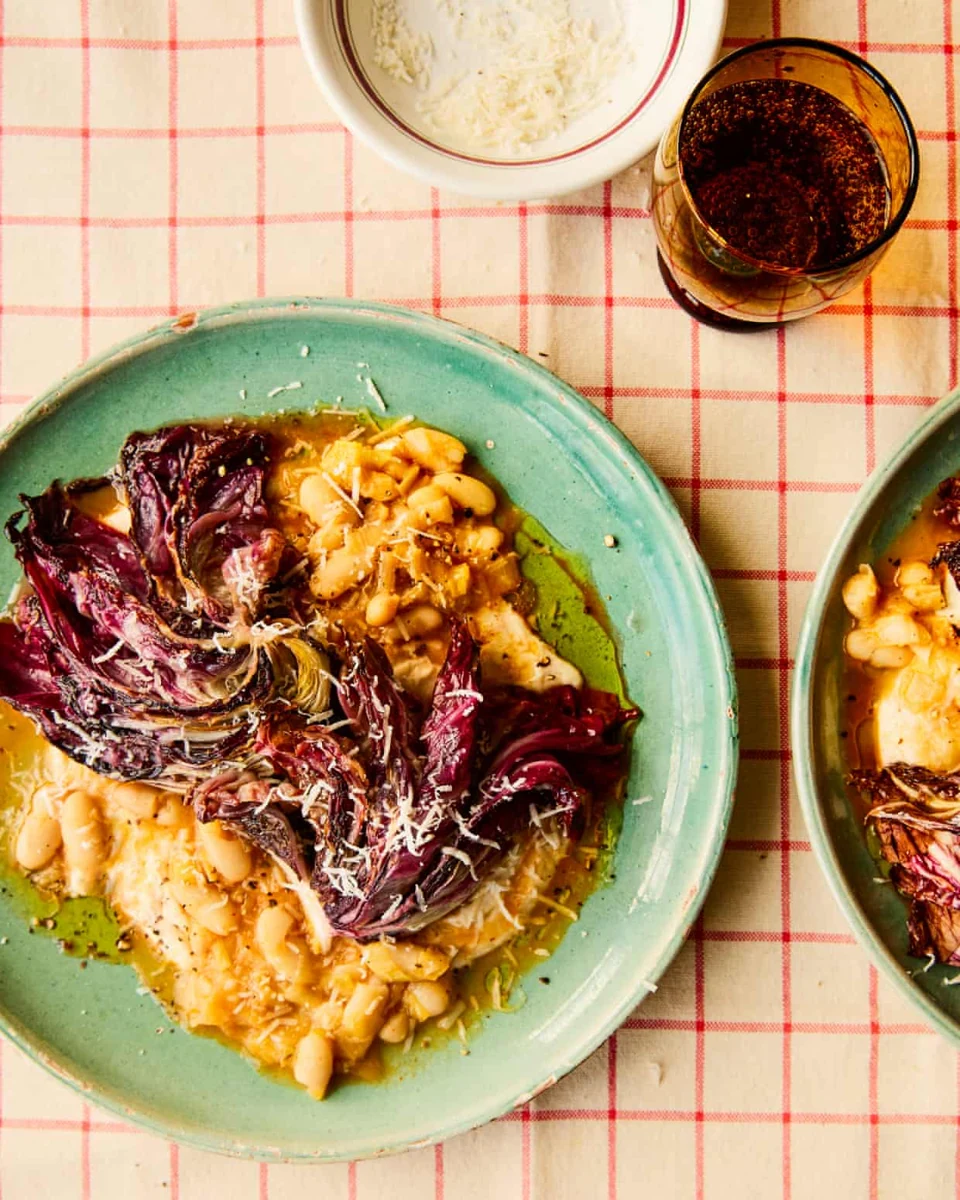
The cannellini recipe serves two generously and takes about 40 minutes. One portion of the beans cooks with softened leek, stock, paprika, garlic and vinegar until it thickens. The rest is blended with tahini, lemon juice and garlic into a smooth base. Roasted radicchio adds bitterness and browned edges, while parmesan finishes the plate. The contrast between creamy puree, whole beans and charred leaves is more important than a complicated garnish. Reporting context: The Guardian
Roasting radicchio changes its character
Radicchio can taste sharply bitter when raw, but heat brings sweetness and a softer texture. Mitchell roasts quartered heads in oil, turning them so both cut sides brown, then adds white balsamic. Keeping the stem attached helps the quarters hold together. The method is useful beyond this dish: a bitter leaf can become a main component when it receives enough heat, fat and acid.
The curry starts with patient onions
The squash and chickpea curry serves four and takes about 75 minutes. Mustard seeds, curry leaves and diced onions begin the base, with the onions cooked for 10 to 15 minutes so they soften and colour. Garlic, ginger, chilli and ground spices follow. The timing matters because the aromatics need to become fragrant before coconut cream and chickpeas dilute the mixture. Reporting context: The Guardian
Roast the squash separately
Mitchell cuts butternut squash into small pieces and roasts it while the curry base develops. The oven heat gives the squash browned edges and keeps it from dissolving completely into the sauce. Adding the roasted pieces later creates a clearer texture. Tamarind is added to taste, so the cook can adjust the balance after the coconut cream has softened the spices.
The recipes are adaptable without losing their logic
Both dishes can be adjusted for what is available, but their structure should remain: a creamy element, a browned vegetable and a deliberate sour note. Beans can be cooked from dried stock if planned ahead, and the curry can be made milder by reducing chilli rather than removing the tamarind. The recipes show that satisfying vegetarian food comes from managing texture and acidity as carefully as from adding more ingredients. They also reward advance preparation: the beans can be blended while the radicchio roasts, and the curry base can be made before the squash is folded through at the end.
Sources and editorial notes
This article compiles the linked reporting. Allegations, projections and research findings retain their original qualifications; this page does not represent independent field reporting or expert medical review.
- The Guardian (reporting)
November 17, 2026: Replaced repeated summary and FAQ templates, added source attribution and image description, and clarified the distinction between source publication and site edits. This editorial update is not an independent fact-check certification.