Chefs interviewed by the Guardian recommend spreading festive preparation across the weeks before Christmas. Tom Childs of Kerridge's argues that organising the kitchen in advance leaves more time with guests when several dishes need attention at once. The Guardian
Key facts
Martyn Wilson of Edinburgh's Timberyard recommends roasting poultry bones and wings until well browned, then simmering them with vegetables, herbs and water to make stock. The Guardian
Chris McClurg of Belfast's Regency House proposes a tomato-and-spice mixture for bloody marys, with lemon, Worcestershire sauce, Tabasco, black pepper and celery salt. The Guardian
Kelly Cullen of London's Cornus suggests a no-churn frozen dessert made with a parfait-style base, cream, Greek yoghurt and clementines. The Guardian
A Christmas menu can begin well before Christmas
A Guardian feature gathers chefs' suggestions for preparing festive food in advance, from gravy and drinks to flavoured butter and frozen dessert. The premise is practical: the busiest cooking day also brings limited refrigerator space and guests who would prefer the host to join them. The writer tested the suggestions, but those tests are the original author's experiences. The broader lesson is to identify preparations that improve with time or can be portioned ahead, rather than moving every task to the same morning.
Concentrate the gravy base before the roast
Martyn Wilson of Edinburgh's Timberyard recommends roasting poultry bones and wings until well browned, then simmering them with vegetables, herbs and water to make stock. Reducing the strained liquid produces a more concentrated base. On the day, roasting juices and a little water can turn that preparation into the final gravy. The division of labour matters: extracting flavour takes hours, while adjusting a prepared concentrate takes much less time when the oven and hob are already occupied.
Batch the drink base and finish each glass
Chris McClurg of Belfast's Regency House proposes a tomato-and-spice mixture for bloody marys, with lemon, Worcestershire sauce, Tabasco, black pepper and celery salt. Alcohol is added to individual servings, making the same prepared base useful for guests who prefer a virgin mary. Sandia Chang offers another route through gin infused overnight with toasted Sichuan peppercorns and then strained. These ideas reduce repeated measuring during service, while retaining the ability to vary the finished drink rather than committing every guest to one strength.
Let the freezer take part in dessert
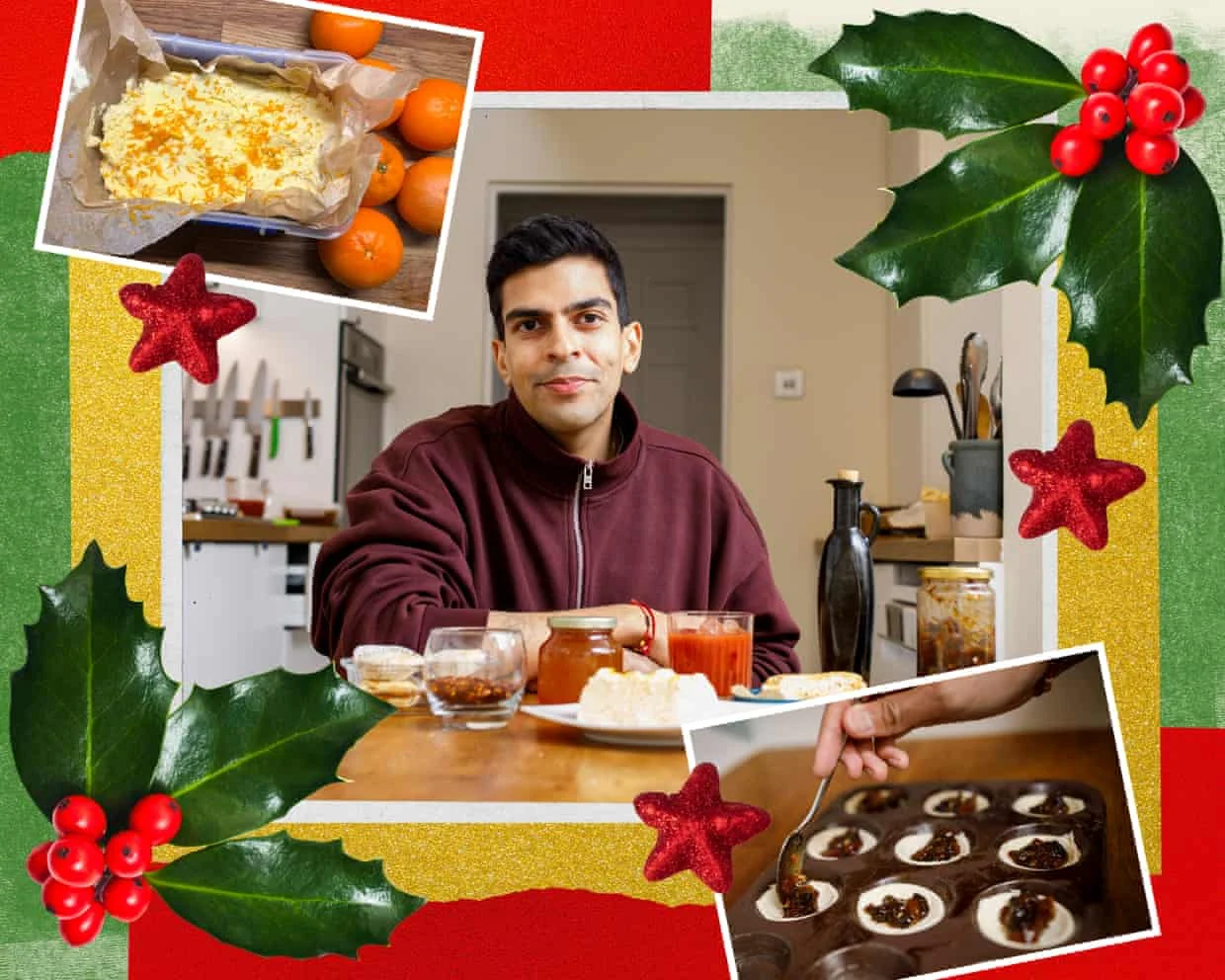
Kelly Cullen of London's Cornus suggests a no-churn frozen dessert made with a parfait-style base, cream, Greek yoghurt and clementines. The original method includes a precisely heated sugar syrup and gelatine, so the published quantities and temperature deserve attention if following it. A lined loaf tin makes the dessert easy to serve in slices after a brief period out of the freezer. The advance work is the point: the final meal does not need another pudding competing for oven time.
Dry spice and flavoured butter solve different problems
Sebby Holmes of Farang combines toasted whole spices and dried chillies in a northern Thai-inspired prik laap blend. It can season meat before cooking or give leftovers a different direction. Ruhi Parmar Amin of Firangi instead uses tempered spices and curry leaves to make a flavoured butter. Cooling the spices before incorporating them into whipped butter preserves the intended mixture. One preparation supplies concentrated dry seasoning; the other carries flavour in fat that can melt into eggs, meat or a sandwich.
Preserves can work beyond one festive dish
Tom Childs's mincemeat combines soaked dried fruit with apple, peel, spice, butter and sugar, with dark chocolate suggested as a richer variation. The feature treats it as useful beyond mince pies, including with ice cream. Mat Appleton of Fink's proposes blood-orange marmalade balanced with lemon and verjus. These are distinct preparations with their own storage and handling requirements. A general promise that every homemade mixture will keep for weeks would erase important differences between preserves, dairy-based preparations and fresh juice.
Flavouring the cupboard takes care as well as time
James Aikman of Skua suggests woodland-inspired honey and a mushroom-infused oil. The article's detailed methods should be consulted before attempting either. Tree identification is not something to guess from a brief description, and an infused oil should not be assigned a blanket room-temperature shelf life from this overview. The useful menu-planning principle is narrower: a small prepared condiment can change the flavour of several dishes without creating another large item that needs reheating during the main meal.
Choose a few preparations that fit the actual meal
There is little benefit in preparing all eight categories if the finished menu needs only two. A host serving roast poultry might prioritise stock and a butter, while someone with limited refrigerator space may favour a dry spice blend and a freezer dessert. The complete Guardian feature provides the chefs' methods. Its strongest idea is to work backwards from serving: decide what must be cooked fresh, then give earlier days the tasks that genuinely release time and equipment on the day.
Sources and editorial notes
This article compiles the linked reporting. Allegations, projections and research findings retain their original qualifications; this page does not represent independent field reporting or expert medical review.
- The Guardian (reporting)
November 17, 2026: Replaced repeated summary and FAQ templates, added source attribution and image description, and clarified the distinction between source publication and site edits. This editorial update is not an independent fact-check certification.