Ranie Saidi's Guardian recipes bring leeks into a chicken gulai and potato croquettes. Having moved from Malaysia to London, Saidi connects the vegetable's gentle sweetness with the banana shallots familiar from his earlier cooking. The Guardian
Key facts
Saidi distinguishes gulai, where coconut is central in his experience, from kari, where spices take the leading role. The Guardian
Saidi uses water to collect the remaining marinade from its bowl before adding that liquid to the sauce. The Guardian
The second dish begins with floury potatoes boiled and mashed, then mixed with cooked leeks, peas and chopped herbs. The Guardian
Leeks connect two Malaysian-inspired dishes
Ranie Saidi's Guardian recipes use leeks in a chicken gulai and vegetable bergedil, drawing on the Malaysian cooking he grew up with and the ingredients he now uses in London. He compares their gentle sweetness with banana shallots. The pairing is practical as well as personal: the same vegetable melts into a coconut-based main dish and provides flavour in crisp potato patties. The recipes are presented as his own adaptations rather than a claim that every Malaysian household makes them this way.
Coconut leads the gulai
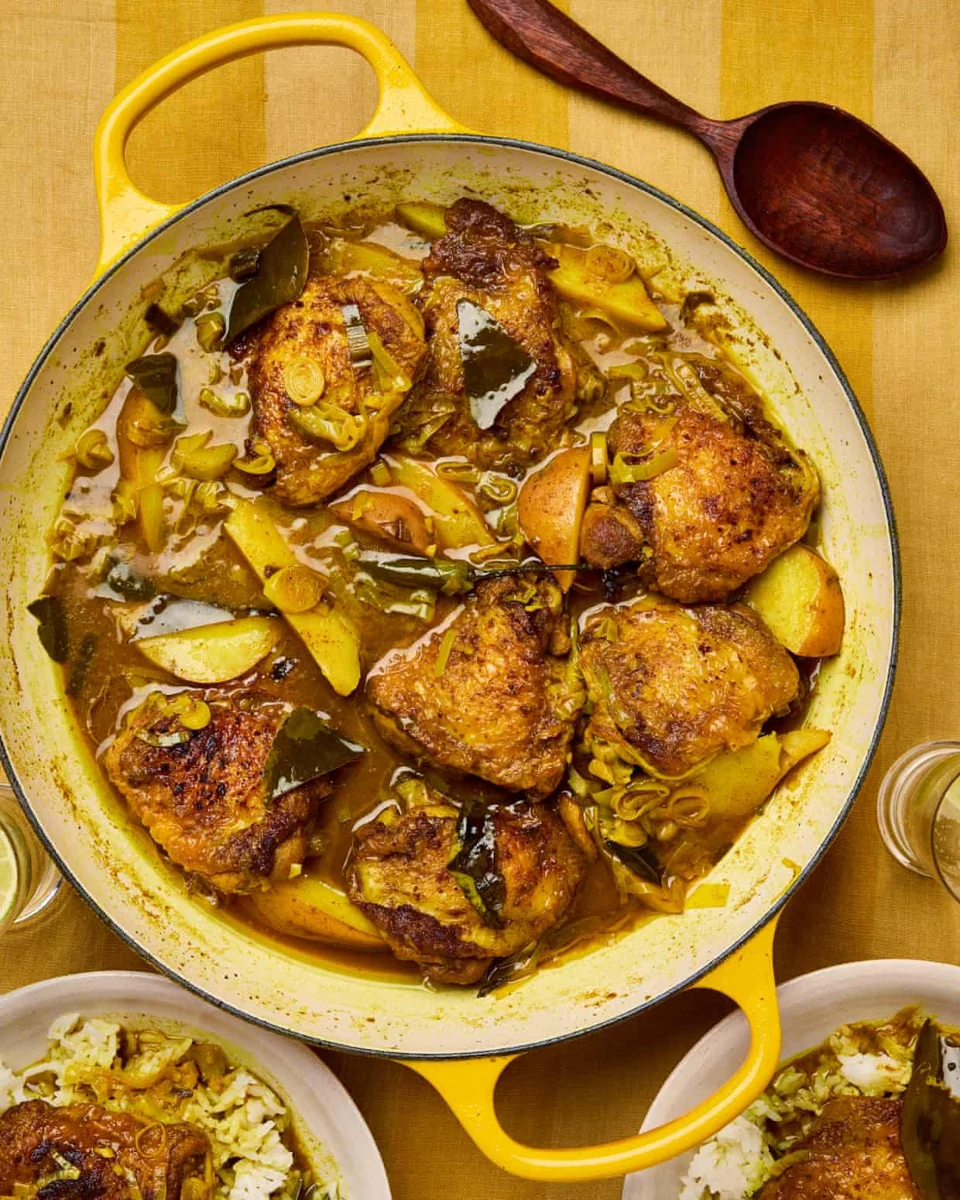
Saidi distinguishes gulai, where coconut is central in his experience, from kari, where spices take the leading role. His version uses skin-on, bone-in chicken thighs, coconut cream, tamarind, turmeric, ginger, makrut lime leaves and bird's-eye chillies. A brief marinade coats the chicken with coriander, turmeric and curry powder before it reaches the pan. Potatoes make the sauce a more substantial accompaniment to rice, while the tamarind supplies acidity against the richness of the coconut.
Browning and simmering are separate stages
The chicken is browned skin-side down before being turned and removed. The rendered fat then cooks the sliced leek, ginger, lime leaves and chillies. Saidi uses water to collect the remaining marinade from its bowl before adding that liquid to the sauce. Because it has contacted raw chicken, it belongs in the cooking stage, not as an uncooked finishing dressing. The chicken returns with the potato wedges for a covered simmer until both are cooked through.
Bergedil give potato a crisp exterior
The second dish begins with floury potatoes boiled and mashed, then mixed with cooked leeks, peas and chopped herbs. Saidi notes that versions across Malaysia, Singapore and Indonesia often include minced meat; his uses vegetables instead. Coriander, mint and dill create several herbal notes rather than relying on one dominant flavour. The patties are shaped from the cooled mixture, which makes this a useful component to prepare before guests arrive rather than assembling everything while the frying oil heats.
The coating is light but deliberate
The formed patties receive a dusting of cornflour followed by beaten egg before shallow frying. Cooking them in small batches prevents the pan becoming crowded and allows space for turning. The source suggests four or five at a time and gives a target oil temperature of 180C. The coating is therefore not a thick breadcrumb shell: the thin egg exterior turns golden around the softer potato centre. Draining the finished patties completes that contrast before they are arranged for serving. Reporting context: The Guardian
A separate dip keeps the seasoning flexible
Orange juice, sweet soy sauce, garlic, chilli, coriander and reserved cooked leeks are blended for the dip, with Greek yoghurt stirred through afterwards. Keeping it alongside the patties allows people to choose how much heat and acidity they add. Saidi describes the patties as suitable on their own for children, with the dip creating a more assertive accompaniment. Serving them with rice or noodles can turn the snack into part of a broader meal rather than requiring a separate complicated course.
Plan the two dishes around their resting points
The gulai can be served generously over steamed rice once the chicken and potatoes are ready. For the patties, Saidi gives a make-ahead option: cool the shaped mixture completely, freeze it for up to two months, and defrost thoroughly in the refrigerator before frying. His published recipes supply the complete quantities. The most useful organising principle is to treat marinating, cooling and shaping as real stages in the schedule, leaving the final simmer and batches of frying enough space to be finished properly.
Sources and editorial notes
This article compiles the linked reporting. Allegations, projections and research findings retain their original qualifications; this page does not represent independent field reporting or expert medical review.
- The Guardian (reporting)
November 17, 2026: Replaced repeated summary and FAQ templates, added source attribution and image description, and clarified the distinction between source publication and site edits. This editorial update is not an independent fact-check certification.