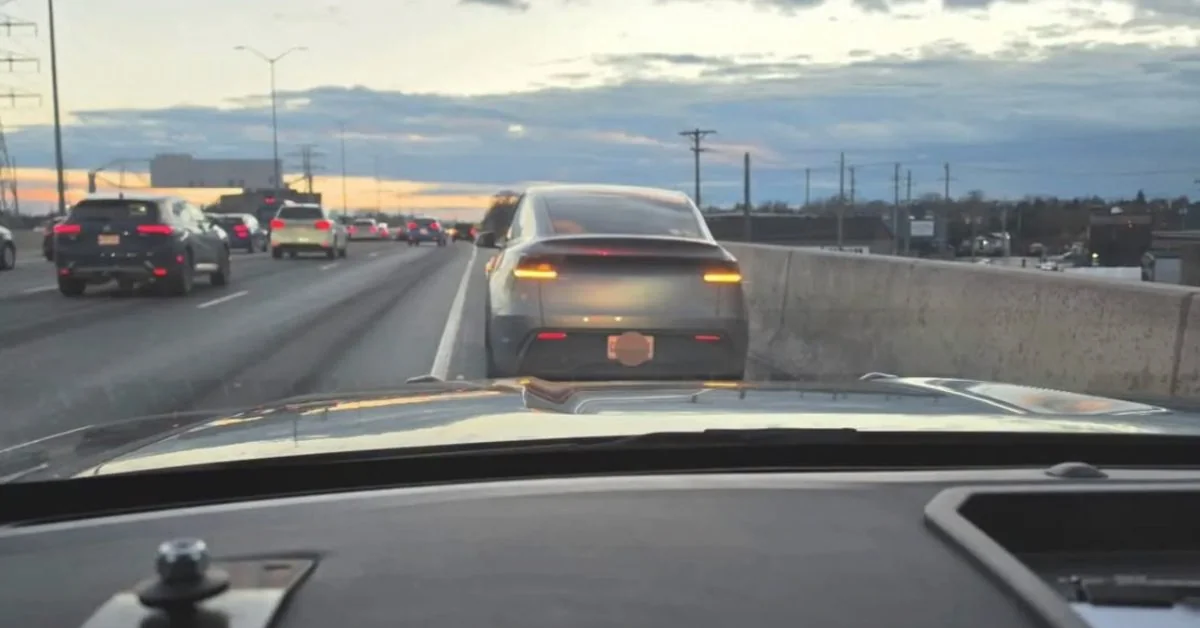
Ontario Provincial Police have charged a driver with careless driving after an officer observed the person asleep in traffic on Ottawa's Highway 417. A police photograph showed a Tesla Model Y. Electrek
Key facts
Ontario Provincial Police charged a driver after an officer observed closed eyes and hands away from the wheel on Highway 417 during rush hour. Electrek
The report gives a set fine of C$490 and six demerit points on conviction for careless driving. Electrek
Level 2 assistance can control aspects of steering and speed while still depending on a person to monitor the road and intervene. Electrek
A rush-hour stop renews the driver-attention debate
A driver on Ottawa's Highway 417 faces a careless-driving charge after police said the person appeared asleep in moving traffic during Tuesday's rush hour. Electrek reports that Ontario Provincial Police shared the incident the following morning.
The stop has prompted renewed discussion of how driver assistance affects attention. The basic legal point remains direct: the person at the wheel must continue to monitor the road and exercise due care.
Police describe a specific Ottawa incident
Ontario Provincial Police charged a driver after an officer observed closed eyes and hands away from the wheel on Highway 417 during rush hour. The published photograph showed a Tesla Model Y, although the police statement did not establish which assistance system was active. That distinction prevents a documented driving allegation from becoming an unsupported technical diagnosis of the vehicle's software. Reporting context: Electrek
A charge is not a conviction
The report gives a set fine of C$490 and six demerit points on conviction for careless driving. More serious penalties can be available through court proceedings, but those should not be described as punishments already imposed in this case. The driver had not been named in the reporting, and the available evidence does not provide a complete account of the eventual legal outcome. Reporting context: Electrek
Supervision cannot be delegated to a name
Tesla's driver-assistance features do not remove the human driver's duty to pay attention. Level 2 assistance can control aspects of steering and speed while still depending on a person to monitor the road and intervene. A product name containing self-driving does not alter that responsibility. Sleeping makes the required supervision impossible even if the vehicle continues to follow its lane for a time. Reporting context: Electrek
Long uneventful stretches create a human problem
A system that performs smoothly can make monitoring feel unnecessary precisely when an unusual situation may still require intervention. Electrek connects the repeated sleeping-driver reports with this supervision problem. That is a broader human-factors concern, not evidence that every incident has the same cause. The Ottawa officer's observation establishes inattentiveness in that event, while system logs would be needed for a fuller technical reconstruction.
Monitoring and enforcement serve different roles
Driver-facing cameras, steering-wheel prompts and escalating warnings are intended to detect or discourage loss of attention. Police enforcement addresses the behaviour when officers encounter it. Neither changes the fact that an assisted-driving system has operating limits. The practical response to drowsiness is to stop driving safely and rest, rather than assume that improved assistance makes a sleeping driver an acceptable part of the control system.
Other reports put the incident into a wider pattern
Electrek identifies earlier Canadian cases and a 2020 Alberta case in which police laid a dangerous-driving charge after a Tesla driver was reported asleep at 150 km/h. Those incidents involve different evidence and legal processes; they are context for the attention problem rather than a finding about this Ottawa driver's history. Reporting context: Electrek
In the current stop, the officer reportedly moved close enough to document the driver's closed eyes and hands away from the wheel before intervening. That observation is stronger evidence of the person's behaviour than speculation about which software version was installed. It also leaves an important limit: an image of the vehicle and a police account do not reveal every warning, setting or control input that preceded the stop. The legal case and any technical analysis would need their own supporting records.
Sources and editorial notes
This article compiles the linked reporting. Allegations, projections and research findings retain their original qualifications; this page does not represent independent field reporting or expert medical review.
- Electrek (reporting)
November 17, 2026: Replaced repeated summary and FAQ templates, added source attribution and image description, and clarified the distinction between source publication and site edits. This editorial update is not an independent fact-check certification.