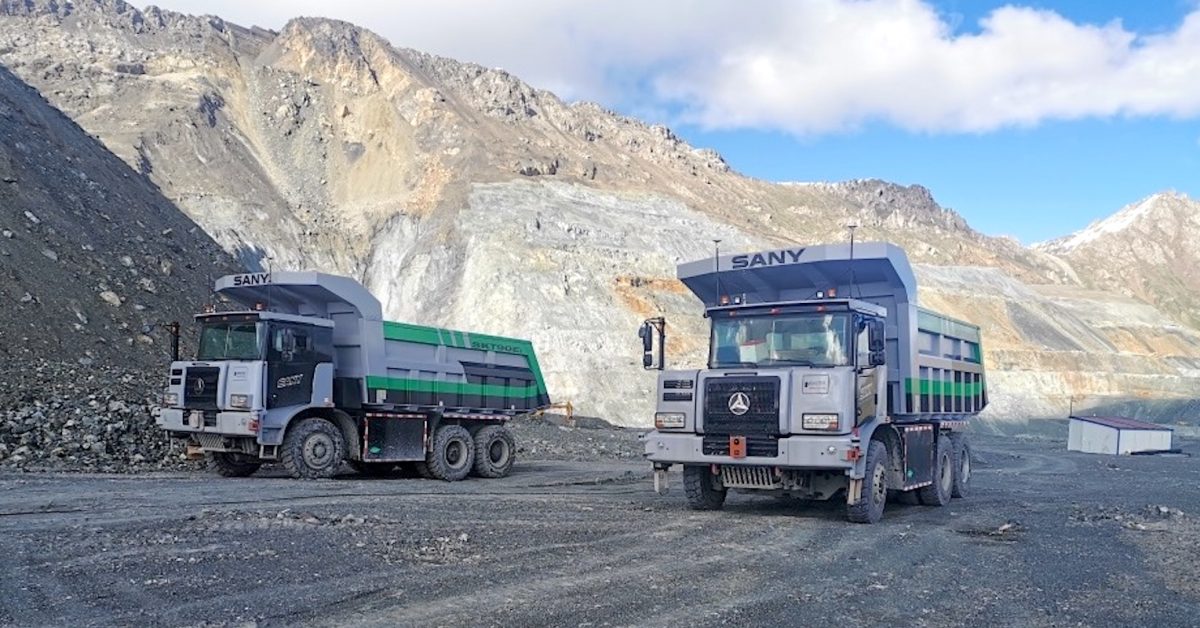
SANY has deployed 70-tonne battery-electric haul trucks with Eacon’s autonomous system at the Zhibula Copper Mine, where altitude and oxygen deprivation make driver safety a major challenge. Electrek
Key facts
Instead of putting a driver in every truck, a central team can supervise the fleet and intervene when needed. Electrek
Electrek reports that versions of the truck offer battery packs ranging from 423 to 642 kilowatt-hours and can charge from 20 to 90 percent in under an hour, depending on configuration. Electrek
Eacon cites research from high-altitude mines in the Andes in which many workers experienced periods of low overnight oxygen saturation. Electrek
A mine at 17,700 feet tests the limits of heavy equipment
Electrek reports that SANY has deployed 60 of its 70-tonne SKT105ED battery-electric haul trucks at the Zhibula Copper Mine in Tibet. The mine sits at roughly 17,700 feet in the Gangdese Mountains. At that elevation, cold, steep terrain and reduced oxygen make long shifts difficult for human operators, while the mine still needs continuous haulage between the pit and processing areas. Reporting context: Electrek
Automation changes where people work
The system was developed with Perth-based Eacon Mining Technology. Its approach combines vehicle sensors, ground infrastructure, adaptive controls and machine learning. Instead of putting a driver in every truck, a central team can supervise the fleet and intervene when needed. Eacon’s technical paper describes the possibility of managing operations from lower-altitude integrated operations centres, reducing the time workers spend in the most punishing conditions.
Electric power is part of the engineering story
The SKT105E platform uses dual permanent-magnet motors and regenerative braking. Electrek reports that versions of the truck offer battery packs ranging from 423 to 642 kilowatt-hours and can charge from 20 to 90 percent in under an hour, depending on configuration. The exact specification of the Tibetan deployment was not disclosed, so those figures describe the broader platform rather than a confirmed configuration at Zhibula. Reporting context: Electrek
The safety case is stronger than the novelty
Eacon cites research from high-altitude mines in the Andes in which many workers experienced periods of low overnight oxygen saturation. That does not prove every Tibetan operator would face the same exposure, but it explains why autonomy has a clear operational rationale here. Removing drivers from a dangerous environment can be a safety intervention, provided remote supervision, emergency procedures and maintenance are designed with equal care.
A new workforce model follows
Eacon says its technology is operating on more than 3,100 autonomous trucks across more than 40 large-scale mines. The long-term question is less whether one truck can steer itself than how mines retrain and redeploy workers. Autonomy can reduce driving jobs while increasing demand for dispatchers, technicians, remote operators and safety specialists. The transition will be judged by reliability, energy use and the quality of the work that replaces driving. Source: Electrek
Sources and editorial notes
This article compiles the linked reporting. Allegations, projections and research findings retain their original qualifications; this page does not represent independent field reporting or expert medical review.
- Electrek (reporting)
November 17, 2026: Replaced repeated summary and FAQ templates, added source attribution and image description, and clarified the distinction between source publication and site edits. This editorial update is not an independent fact-check certification.