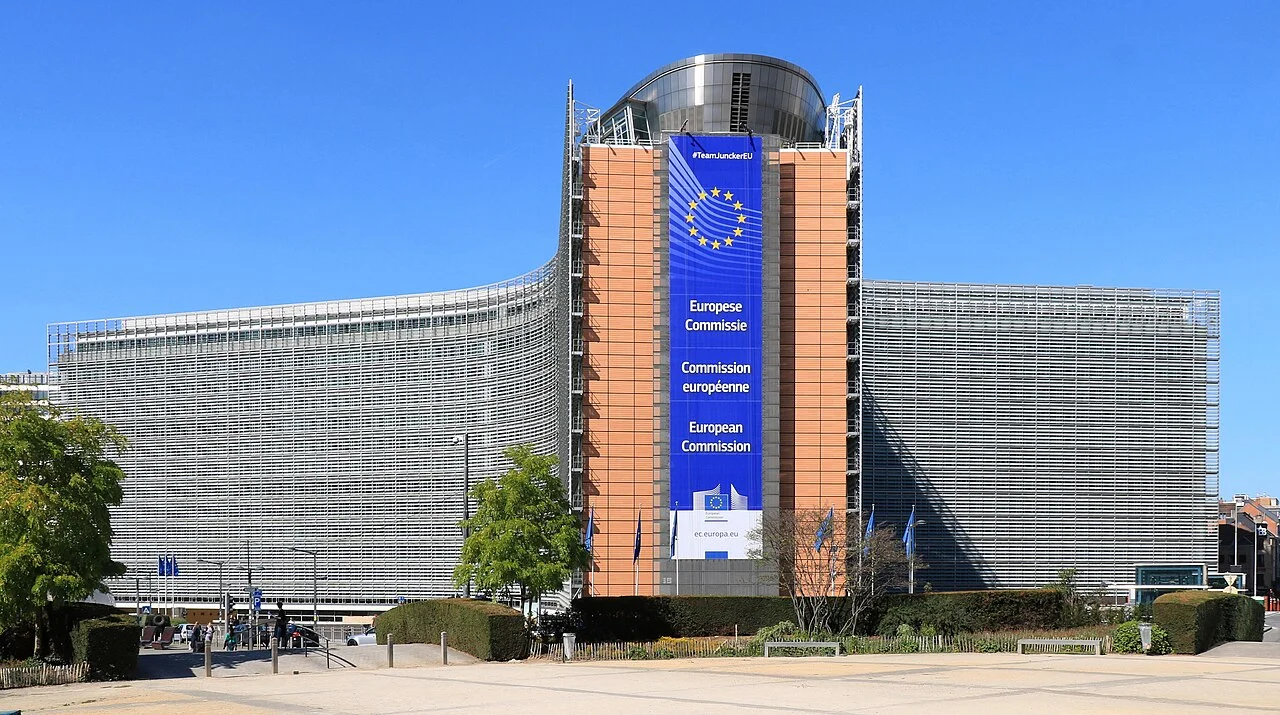
On November 25, 2026, the European Commission proposed the EU Quantum Act and legal groundwork for a Sovereign Tech Equity Fund aimed at turning European quantum research into industrial capacity by 2030. The draft links research networks, shared EuroHPC access, Union-controlled procurement rules, and post-quantum cryptography tenders for NIS2 public administrations. It is not yet law and fixes no standalone budget; final rules require approval by the European Parliament and Council alongside 2028–2034 EU budget talks.
Key facts
Commission data cited by Quantum Computing Report shows EU quantum startups raised €1.1 billion in 2025 (about 5% of global private investment), versus €7 billion in the United States.
The proposed Sovereign Tech Equity Fund targets up to €50 billion across quantum, AI, semiconductors, cloud, cybersecurity and biotech, while EU quantum financing needs for 2028–2034 are estimated at €12.9 billion to €18.1 billion.
Staged Quantum Grand Challenges run through the EuroHPC Joint Undertaking aim for roughly 100 logical, error-corrected qubits per machine by 2030 alongside 50 km urban quantum links.
NIS2 public-administration procurement rules for post-quantum cryptography would begin six months after the adopted regulation enters into force and apply to new procurements rather than forcing immediate replacement of legacy IT.
Why Brussels paired a quantum bill with a broad equity vehicle
The European Commission proposed the Quantum Act on November 25, 2026 alongside legal groundwork for a Sovereign Tech Equity Fund designed to close Europe’s commercial scale-up gap by 2030. Presented by Executive Vice-President Henna Virkkunen, the draft regulation builds on the July 2025 Quantum Europe Strategy to move quantum hardware, software and communications out of research labs and into European industry.
Europe’s core hurdle is private growth capital rather than early scientific output. Commission figures cited by Quantum Computing Report show that roughly a third of all quantum enterprises globally operate inside the European Union, backed by an estimated €8.6 billion in cumulative public spending through 2025. Yet European quantum startups attracted only €1.1 billion in private funding (roughly 5% of global private investment) in 2025, compared to €7 billion in the United States—prompting Brussels to pair policy coordination with direct equity investment.
An enabling framework rather than a single funding check
Brussels structured the Quantum Act as an enabling framework with no fixed standalone budget, leaving actual Union spending to the 2028–2034 budget negotiations. In its official policy Q&A, the European Commission stresses that the bill aligns existing European and national bodies under an umbrella Quantum Europe Framework Initiative rather than creating an intrusive regulatory regime for early-stage hardware.
While the proposed Sovereign Tech Equity Fund is reported to target up to €50 billion across quantum computing, artificial intelligence, semiconductors, cloud infrastructure, cybersecurity and biotechnology—and the Commission’s impact assessment identifies €12.9 billion to €18.1 billion in European quantum financing needs for 2028–2034—the draft does not appropriate a dedicated spending line today. Final Union contributions depend on negotiations over the 2028–2034 Multiannual Financial Framework and the proposed European Competitiveness Fund, with the EU participating as a shareholder alongside Member States, the European Investment Bank Group and private co-investors.
Research milestones and shared industrial infrastructure
To overcome fragmentation across 27 national programmes, the proposal links laboratories via a Union-wide Quantum Excellence Network and routes milestone-based Quantum Grand Challenges through the EuroHPC Joint Undertaking. Quantum-chip fabrication remains entrusted to the Chips Joint Undertaking (or its post-2027 successor), avoiding institutional duplication.
Reported technical milestones under those staged challenges aim for machines delivering around 100 logical, error-corrected qubits by 2030—expanding into the thousands by 2035—paired with navigation hardware able to operate without satellite signals by 2030 and urban quantum links spanning 50 kilometres. For industry and public users, a federated European Quantum Service Platform would provide a single interface to simulators, emulators and physical processors, while each Member State would designate at least one national competence and acceleration centre guiding startups and small businesses toward testing, skills and financing.
Post-quantum cryptography explained—and who faces procurement rules
The draft pairs quantum investment with targeted cybersecurity procurement rules—without forcing organisations to rip out existing IT systems. Post-quantum cryptography refers to mathematical encryption algorithms designed to run on ordinary classical hardware while resisting attacks from both conventional and quantum computers. Because adversaries can harvest encrypted traffic today for decryption years later, the Commission argues migration planning must begin well before fault-tolerant quantum computers exist.
Under the proposal, new public-sector digital tenders by administrations covered by the NIS2 Directive—the EU’s baseline cybersecurity law for essential and important entities—would have to include post-quantum cryptographic or crypto-agile solutions. Crucially, the Commission’s Q&A clarifies that the obligation applies only to future procurements; where mature solutions are not yet available, public buyers must instead document a migration roadmap, while Brussels gains authority to set binding transition milestones later if national transitions lag.
Supply-chain sovereignty compared to blanket local-content bans
Public quantum tenders would prioritise Union-controlled suppliers without imposing a blanket EU-manufacturing rule on every individual part. Access to strategic infrastructures, cross-border Strategic Projects and public quantum procurement would be restricted to Union-controlled entities and authorised partners covered by international reciprocity agreements—mirroring broader Western efforts to tighten strategic technology supply chains alongside measures such as US semiconductor export restrictions.
Even so, the Commission notes that the draft is not a blanket local-content mandate covering every component. Instead, it authorises critical-component monitoring—including a supply-chain digital twin—so Brussels can pinpoint bottlenecks and mandate European sourcing selectively. Trade groups including the European Quantum Industry Consortium, representing over 240 organisations, welcomed the roadmap while urging lawmakers to clarify State aid rules for quantum foundries and secure multi-year public purchase commitments.
What happens before any rule takes legal effect
Nothing in the Quantum Act is binding law yet: the draft regulation (COM(2026) 965) now goes to the European Parliament and the Council of the European Union under the ordinary legislative procedure. That co-decision process—similar in political complexity to multilateral technology talks such as the UN push for global AI oversight—requires both institutions to agree on an identical amended text before adoption.
Policy debate continues at the European Quantum Technologies Conference in Dublin, while financing figures remain tied to 2028–2034 EU budget talks. Should co-legislators adopt a final text and publish it in the EU Official Journal, the regulation would take legal effect 20 days after publication, with a further six-month grace period before public-sector post-quantum procurement mandates apply. Public IT buyers and vendors should therefore track parliamentary amendments and future implementing acts rather than treat November’s proposal as final law.
Frequently asked questions
Does the EU Quantum Act force companies to replace existing encryption systems right away?
No. The proposal is still a draft awaiting approval by the European Parliament and Council, and the European Commission’s Q&A specifies that its post-quantum procurement rules apply to future public-administration tenders under the NIS2 Directive starting six months after entry into force—not as a blanket order to replace existing IT infrastructure.
Is the €50 billion Sovereign Tech Equity Fund exclusively for quantum computing?
No. According to the Commission’s explainer and Quantum Computing Report, the fund is designed as a multi-sector equity vehicle spanning quantum technologies, artificial intelligence, chips, cloud infrastructure, cybersecurity and biotechnology, with Union contributions depending on 2028–2034 budget negotiations.
At a glance
| Component | Proposed mechanism | Key figure or timeline | Current status |
|---|---|---|---|
| Sovereign Tech Equity Fund (STEF) | Public-private direct equity vehicle with EIB Group, Member States and private investors | Targets up to €50B across quantum, AI, chips, cloud, cyber and biotech | Legal groundwork proposed; budget tied to 2028–2034 MFF |
| Quantum Grand Challenges & R&I | Quantum Excellence Network and stage-gated challenges via EuroHPC JU and Chips JU | ~100 logical qubits by 2030; 50 km metro quantum networks | Draft proposal awaiting Parliament and Council review |
| Industrial scale-up & user access | European Quantum Service Platform, Strategic Projects and national competence centres | At least one competence centre per Member State; EuroQCI by 2031 | Draft proposal; national centres may build on existing bodies |
| Post-quantum cryptography & supply chain | NIS2 public-procurement rules, Union-controlled supplier checks and supply-chain digital twin | PQC procurement starts 6 months after entry into force | Not yet binding; technical rules to follow via implementing acts |
Sources and editorial notes
This briefing synthesises the linked primary and reporting sources below. Allegations, forecasts and early research retain their stated scope and qualifications.
- European Commission: Commission proposes Quantum Act and Sovereign Tech Equity Fund (reporting)
- European Commission: The Quantum Act explained (Q&A) (primary)
- Quantum Computing Report: European Commission Proposes EU Quantum Act and Sovereign Tech Equity Fund (reporting)
November 26, 2026: Original English synthesis of the primary European Commission publications and trade reporting linked here, with reader questions selected before drafting. Source publication dates are retained separately. This is an attributed compilation, not legal advice or a claim of original interviews or field reporting.