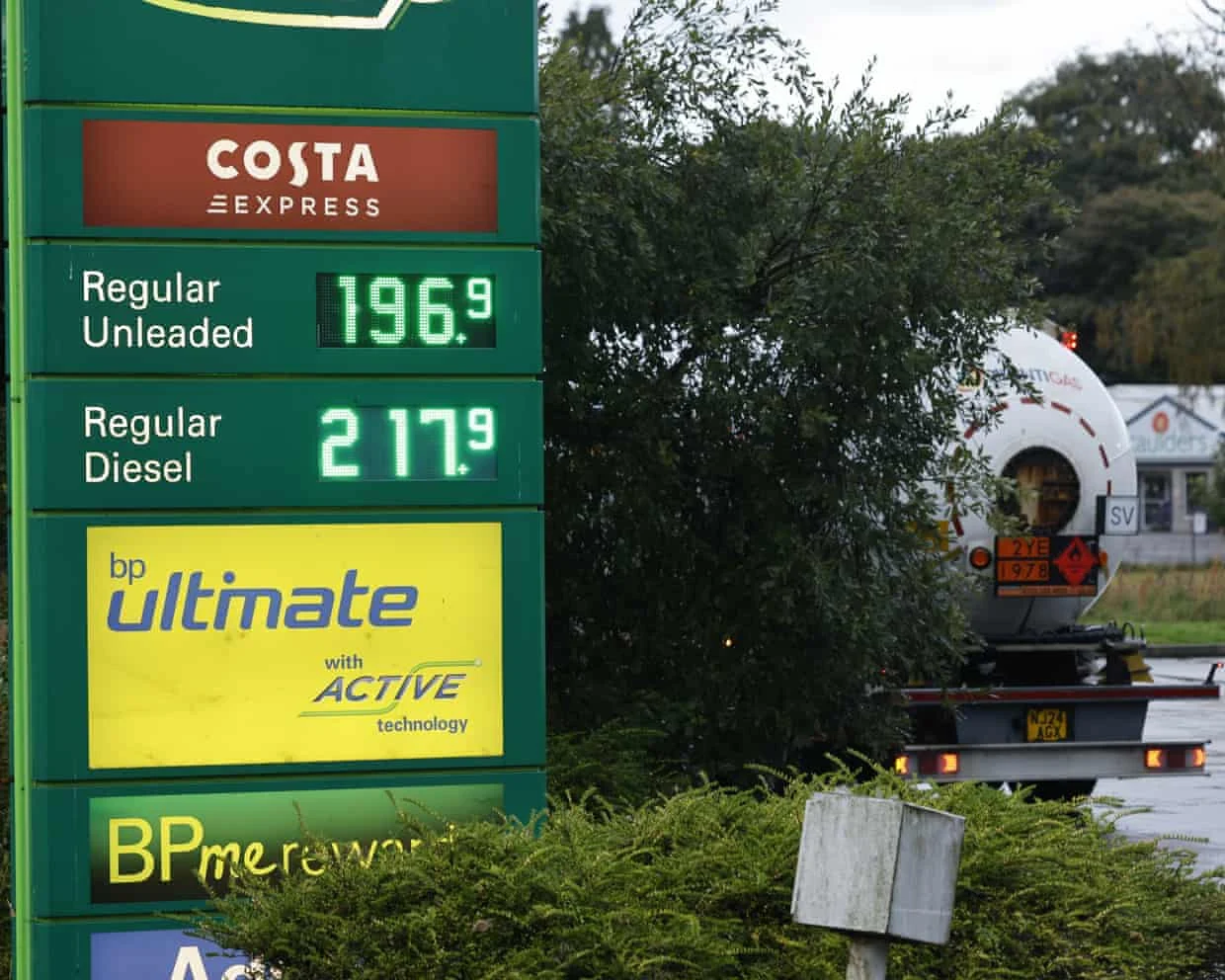
The AA says UK diesel averages about 197p a litre, still close to October's £2 peak despite a decline in oil prices. Petrol has fallen more noticeably, to around 168p from 174.7p earlier in October. The Guardian
Key facts
Federal Reserve governor Christopher Waller told a London conference that shipping through the Strait of Hormuz carries additional costs associated with insurance and transfers between vessels. The Guardian
The UK report does not attribute every penny of the diesel price to one constraint, but identifies a supply chain facing multiple pressures. The Guardian
The AA says the wholesale cost of unleaded declined from 77p a litre to 68p during the second half of October and subsequently moved below 62p. The Guardian
Diesel remains near its record price
British drivers are paying an average of 197p a litre for diesel despite a decline in crude oil prices. The Guardian reports AA figures showing only a small reduction from October's record level of approximately £2. Petrol has fallen more noticeably, to 168p from an early-October peak of 174.7p. The difference illustrates why a fall in the price of oil does not necessarily produce the same reduction, at the same speed, in every refined fuel.
Crude oil is only the start of the chain
Fuel must be transported, refined and delivered before it reaches a forecourt. Federal Reserve governor Christopher Waller told a London conference that shipping through the Strait of Hormuz carries additional costs associated with insurance and transfers between vessels. He said those arrangements were reportedly adding $20 to $30 a barrel. Restoring tanker movements therefore does not mean returning to the pre-conflict cost structure. A route can be functioning while the risks and practical work needed to use it remain substantially more expensive. Reporting context: The Guardian
Refining bottlenecks weigh particularly on diesel
Waller also pointed to constraints on diesel production, including limited refining capacity. His comments about the US market suggested diesel prices would not fall as readily as crude in a more peaceful Middle East. That distinction helps explain the wider issue: the price of a finished product reflects the availability of facilities that can make it as well as the cost of its raw material. The UK report does not attribute every penny of the diesel price to one constraint, but identifies a supply chain facing multiple pressures.
Petrol has more room to fall
The AA says the wholesale cost of unleaded declined from 77p a litre to 68p during the second half of October and subsequently moved below 62p. Its analysis suggests another 10p could come off retail petrol prices. This is an estimate of potential room for adjustment, rather than a promise about a particular station's next price change. Wholesale diesel had fallen only around 4p a litre since mid-October, leaving a smaller immediate basis for reductions at diesel pumps. Reporting context: The Guardian
Location makes a difference to the bill
AA spokesperson Luke Bosdet said government fuel-finder information showed some petrol available below 160p in parts of northern England, Wales and Scotland. He criticised other forecourts for remaining close to earlier peaks and noted the absence of similar bargains in London and the south-east. For a typical 55-litre tank, each 5p reduction saves £2.75 on a fill. That straightforward calculation shows why relatively small differences between stations matter to regular drivers and businesses buying fuel repeatedly. Reporting context: The Guardian
A lower oil price is not a complete reset
The report presents both a reason for further relief and an explanation for its uneven arrival. Falling wholesale petrol costs can support reductions, while diesel remains exposed to a tighter production picture. Continued conflict-related transport costs add another obstacle. The unresolved question is how quickly those savings and constraints change at different stages of the market. For households and firms, the relevant figure remains the forecourt price they actually pay, not simply the latest international crude quotation.
Sources and editorial notes
This article compiles the linked reporting. Allegations, projections and research findings retain their original qualifications; this page does not represent independent field reporting or expert medical review.
- The Guardian (reporting)
November 17, 2026: Replaced repeated summary and FAQ templates, added source attribution and image description, and clarified the distinction between source publication and site edits. This editorial update is not an independent fact-check certification.