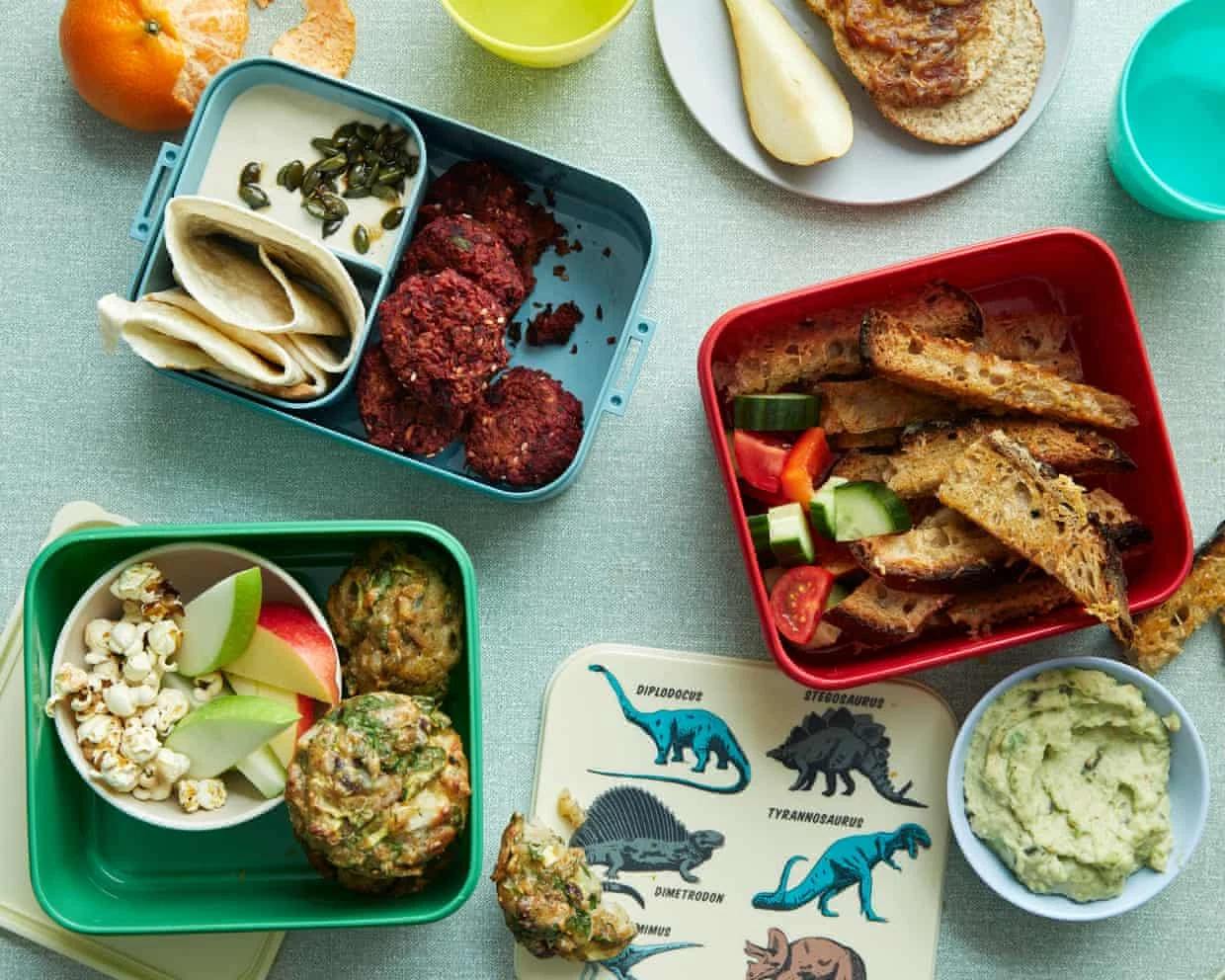
Cookbook author Claudine Boulstridge recommends building packed lunches from a few repeatable components. In the Guardian's Kitchen Aide column, she combines fruit, vegetables, protein and a small snack, using a compartmented bento box to keep textures separate. The Guardian
Key facts
For an actual school lunch, the choices also need to fit that school's allergy policy and the child's ability to handle the food, rather than assuming every suggested ingredient is suitable in every classroom. The Guardian
The article suggests simple cuts, small moulds and colourful accessories to give familiar food a different presentation. The Guardian
Roast chicken, pasta, frittata and sausages provide examples of foods that can cross from one meal to the next. The Guardian
A lunchbox needs a repeatable plan
A Guardian Kitchen aide column asks chefs and family-food writer Claudine Boulstridge how to make children's packed lunches more varied. Their answer starts with a manageable routine rather than a different miniature feast every morning. Boulstridge has packed lunches for three children over 15 years and favours a bento-style box with separate compartments. That recommendation is about organising several familiar foods so they remain distinct and visually inviting, not requiring specialist cooking skills before school.
Four components reduce the daily decisions
Boulstridge's formula combines fruit, vegetables, protein and a homemade snack. Her examples range from kiwi and orange to cucumber, cooked sweet potato, cheese, chicken and hummus. The point is the pattern, not a compulsory shopping list. A parent can rotate within one component while leaving the others familiar. For an actual school lunch, the choices also need to fit that school's allergy policy and the child's ability to handle the food, rather than assuming every suggested ingredient is suitable in every classroom.
Shape can introduce change without a new flavour
The article suggests simple cuts, small moulds and colourful accessories to give familiar food a different presentation. That approach can be useful when the main challenge is monotony rather than a lack of ingredients. Carrot batons, a divided portion of fruit or a small baked item can look more inviting while keeping the same tastes a child already accepts. The food remains the central decision; decorative picks or complicated arrangements are optional rather than another daily obligation for the person packing lunch.
Dinner can supply tomorrow's main component
Paul Ainsworth recommends looking at leftovers when planning a sandwich or another lunch. Roast chicken, pasta, frittata and sausages provide examples of foods that can cross from one meal to the next. The useful habit is to reserve an appropriate portion while dinner is being organised, rather than hoping something convenient will be left in the morning. Perishable foods still need suitable cooling and lunchbox storage; being a leftover does not remove the need to keep them in good condition until lunch.
Change one familiar element at a time
Aji Akokomi of Akoko and Akara proposes beginning with food children already enjoy and changing a small detail. His example uses gently spiced cooked chicken in a soft wrap with lettuce and plain yoghurt, accompanied by fruit and other sides. Curry powder, thyme or pepper can create a variation without introducing an entirely different meal. That is a suggestion for controlled experimentation, not proof that every child will welcome the same spice level or combination on the first attempt.
Batch cooking should serve the whole household
Boulstridge suggests savoury muffins, crustless quiches, sausage rolls and other items that can be made in a batch. Fruit-based cupcakes or muffins provide another option for a snack. Some of these preparations can also become an adult lunch, reducing the need for separate cooking projects. Ainsworth encourages involving children in making the food. Their participation may increase interest, but it is best understood as one practical tool alongside familiarity and choice, not a guarantee that an untouched lunchbox will never return home.
Start with the part that is hardest each morning
The column's ideas are most useful when applied to the actual bottleneck. If choosing the main food takes too long, a four-part formula can help. If the main issue is repetition, changing a filling or the shape of a familiar vegetable may be enough. If mornings are rushed, a prepared baked item or reserved dinner portion can remove a task. Variety then comes from a small set of reliable choices, leaving room to notice which foods the child actually eats and adjust the next lunch accordingly.
Sources and editorial notes
This article compiles the linked reporting. Allegations, projections and research findings retain their original qualifications; this page does not represent independent field reporting or expert medical review.
- The Guardian (reporting)
November 17, 2026: Replaced repeated summary and FAQ templates, added source attribution and image description, and clarified the distinction between source publication and site edits. This editorial update is not an independent fact-check certification.