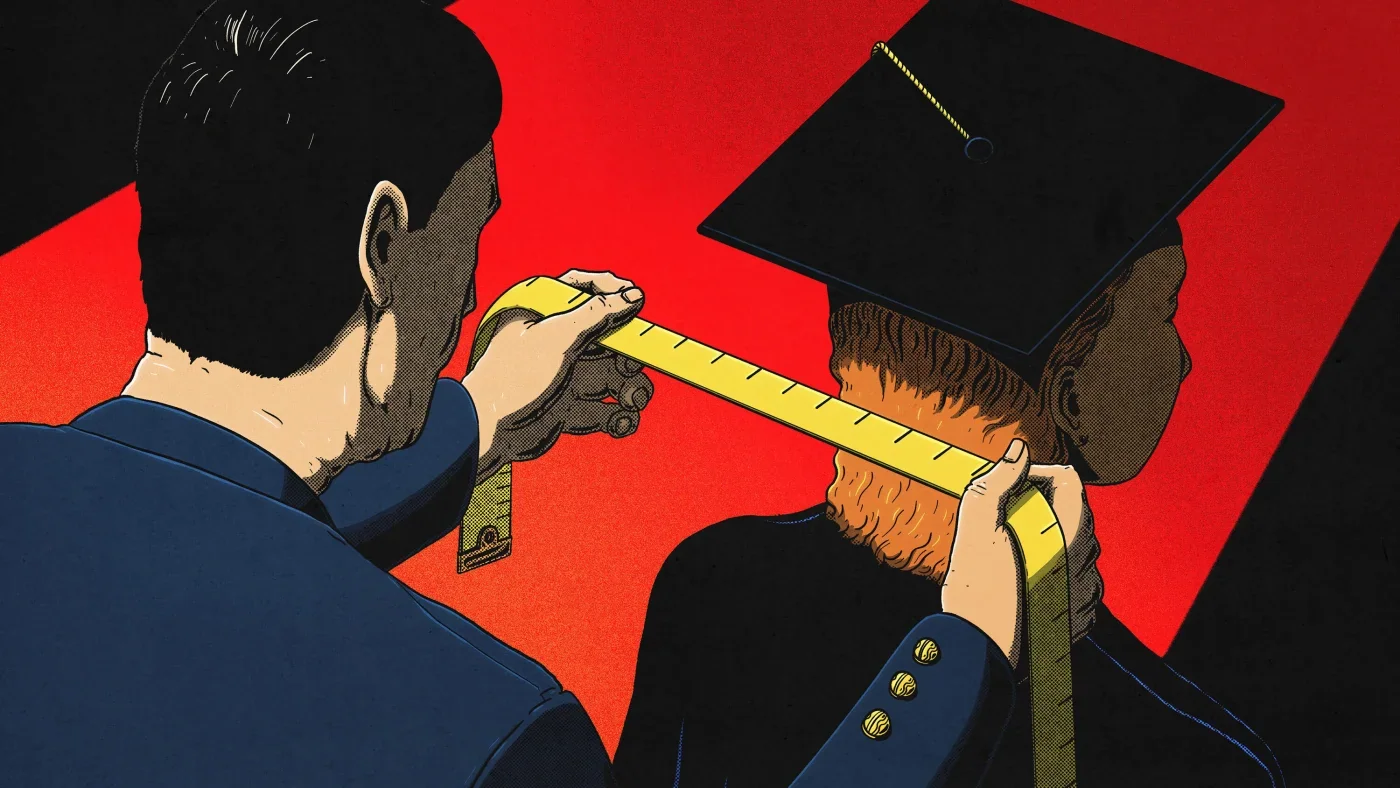
The US Education Department has finalised a rule changing the college accreditation system, a mechanism Donald Trump highlighted during his presidential campaign. NPR reports that the change is due to take effect in July. NPR
Key facts
Colleges pay membership dues to independent nonprofit accreditors, which examine matters including curriculum, faculty qualifications, facilities and financial soundness. NPR
The new rules require accreditors to evaluate institutional policies on intellectual diversity and students' exposure to differing viewpoints. NPR
Education Department spokesperson Ellen Keast told NPR that the rules neither prescribe particular campus policies nor authorise the department to police speech. NPR
Accreditation becomes a federal policy battleground
The Trump administration's changes to college accreditation are due to take effect in July 2027, ahead of the 2027–28 academic year. The policy turns a system generally associated with institutional quality checks into a major argument over political influence and student protection. NPR traces the overhaul to a 2023 campaign pledge by Donald Trump to use accreditation to reshape higher education. Its practical significance comes from the connection between recognised accreditation and access to federal student loans and grants.
How the existing gatekeeping system works
Colleges pay membership dues to independent nonprofit accreditors, which examine matters including curriculum, faculty qualifications, facilities and financial soundness. Federal law requires assessment in certain broad areas, while accreditors establish the standards used to judge institutions. Congress designed these agencies to operate outside government, although the Education Department oversees their recognition. This arrangement makes accreditation both an educational quality review and a safeguard against public money flowing to institutions that fail to provide worthwhile degrees.
The dispute over intellectual diversity
The new rules require accreditors to evaluate institutional policies on intellectual diversity and students' exposure to differing viewpoints. Former Obama administration official Bob Shireman argues that this could give federal officials a route to pressure universities through the agencies that approve them. PEN America has also raised concerns about freedom of teaching and research. The possible financial consequence is central: a college that ultimately loses recognised accreditation can also lose access to federal student aid.
The administration's response
Education Department spokesperson Ellen Keast told NPR that the rules neither prescribe particular campus policies nor authorise the department to police speech. The department presents the change as support for open debate, lower costs and innovation. Conservative higher education analyst Beth Akers supports much of the reform agenda but also questions how government officials can judge the appropriate mix of ideas at a college. The disagreement therefore extends beyond a simple division between supporters and opponents of the administration.
Outcomes and a more competitive market
Another element places greater weight on student results, including graduation, retention, earnings and professional licensing performance. That approach attracts support from analysts across political lines. The overhaul also makes creating new accreditors and switching between them easier. Florida has promoted the Commission for Public Higher Education after disputes with its longstanding accreditor; university systems in Georgia, North Carolina, South Carolina, Tennessee and Texas have also said they will switch to the new body.
Innovation versus weaker oversight
Supporters believe more choice can let colleges experiment with teaching methods, credit hours and time spent in classrooms. Critics see a risk that institutions encountering difficult questions will move to a more accommodating reviewer. That creates a structural tension because accreditors depend on the institutions they assess for membership income. The coming implementation will test whether competition improves educational approaches without diluting scrutiny, and whether a broad intellectual-diversity requirement can operate without turning federal recognition into a tool for directing campus political debate.
Sources and editorial notes
This article compiles the linked reporting. Allegations, projections and research findings retain their original qualifications; this page does not represent independent field reporting or expert medical review.
- NPR (reporting)
November 17, 2026: Replaced repeated summary and FAQ templates, added source attribution and image description, and clarified the distinction between source publication and site edits. This editorial update is not an independent fact-check certification.