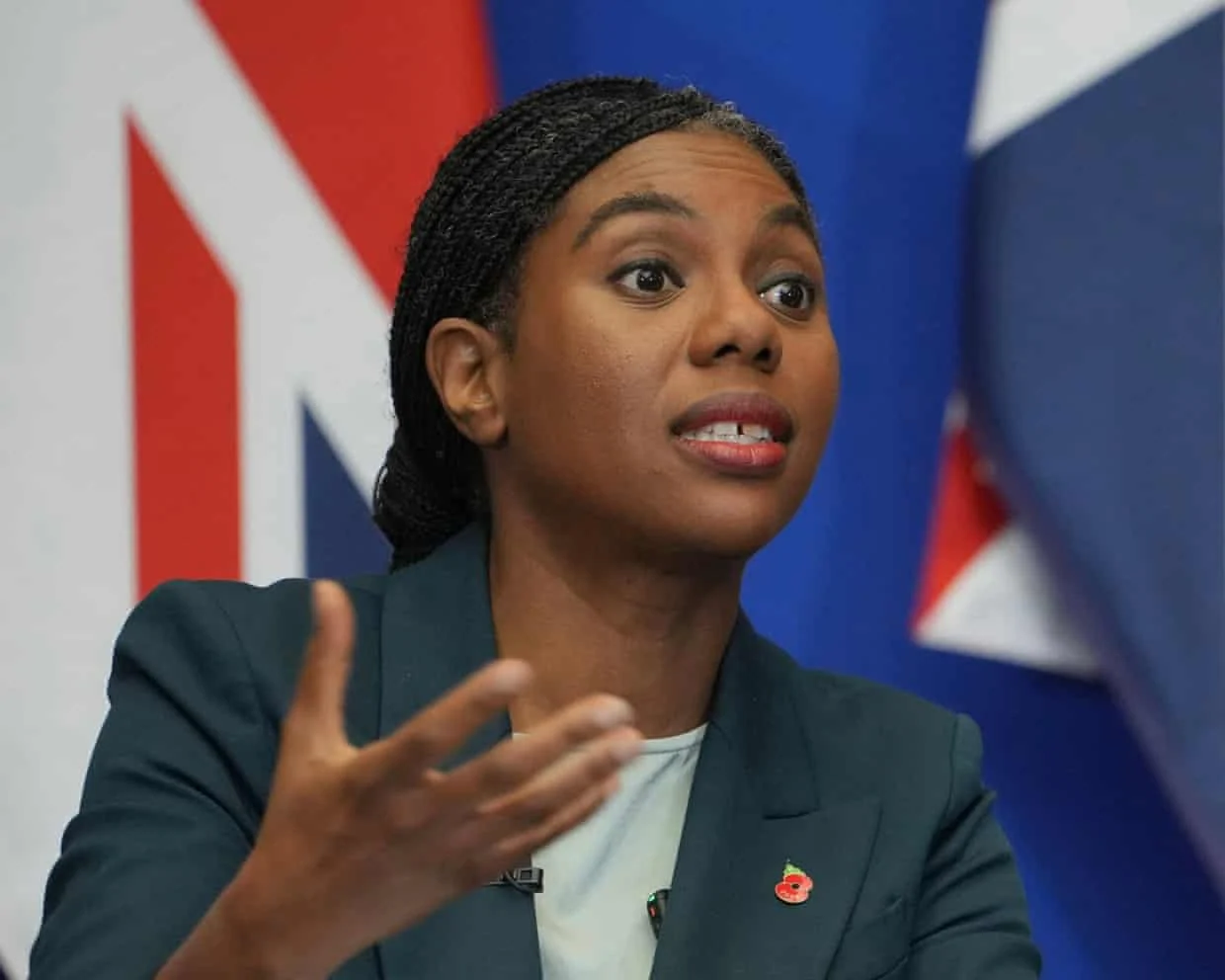
Conservative party leader Kemi Badenoch Photograph: Kin Cheung/AP
Treasury minister Torsten Bell claims that retaining an unreformed state-pension triple lock would eventually force a Conservative government to raise pension age above 70. His remarks are a disputed political warning, not an announced change to the retirement age. The Guardian
Key facts
The triple lock increases the state pension annually by the greatest of earnings growth, inflation or 2.5%. The Guardian
Under the announced reform, due in the next parliament, the pension would rise by the higher of inflation or 2.5%. The Guardian
Bell points to Conservative governments accelerating pension-age increases in the 2010s, including changes in 2011 and 2014. The Guardian
A pension-age warning enters the triple-lock debate
Treasury minister Torsten Bell says the Conservatives could be driven to raise the state pension age above 70 if they preserve the existing triple lock without other changes. The Guardian reports the claim amid disagreement over Labour's planned reforms. The warning is Bell's political and fiscal argument, not an announced Conservative policy or a newly legislated retirement age. The currently expected increase is to 68 between 2044 and 2046, with the pension age under review.
What the current promise does
The triple lock increases the state pension annually by the greatest of earnings growth, inflation or 2.5%. Its supporters value protection against rising prices and a deterioration relative to wages. The fiscal concern is that repeatedly selecting the highest of three measures can increase costs over time. Bell cites government estimates putting the cost of an unreformed policy at £50 billion by 2050. That is a long-term projection used in the debate, rather than a bill falling due immediately. Reporting context: The Guardian
Labour would change the earnings element
Under the announced reform, due in the next parliament, the pension would rise by the higher of inflation or 2.5%. Earnings growth would apply only if pension value had fallen behind recent wage growth. The initial savings are intended for Prime Minister Andy Burnham's national care service. This would retain a price-linked floor and minimum percentage increase while altering how earnings feed into the calculation. The disagreement is therefore about the structure and affordability of continuing increases, rather than whether pensions should stop rising altogether. Reporting context: The Guardian
Bell argues that postponing reform moves the pressure elsewhere
Bell points to Conservative governments accelerating pension-age increases in the 2010s, including changes in 2011 and 2014. His argument is that a government rejecting adjustments to annual increases would eventually seek savings by making people wait longer for eligibility. That is a prediction about likely choices under financial pressure. It does not establish that changing the triple lock and increasing pension age are the only possible budget options, nor that the precise age he mentions has been adopted by his opponents. Reporting context: The Guardian
Opposition exposes political sensitivities
Conservative leader Kemi Badenoch has attacked Labour's reform and defended the existing promise. Bell argues that this position is inconsistent with her earlier suggestion of means testing and former chancellor Jeremy Hunt's criticism of the policy's fiscal effect. The debate follows the political backlash over an earlier attempt to withdraw winter fuel payments from most pensioners, which was abandoned. That history helps explain why changes to retirement support can carry political consequences even when presented as necessary for long-term sustainability.
Future retirees are part of the argument
Bell says the government's forthcoming ten-year plan should also address the retirement prospects of today's private-sector workers. The plan may be delayed until the new year, and the report does not supply a complete package of measures. The central questions remain how much protection current pensioners receive, how costs are shared across generations and how much notice people receive before major changes. Those choices should be assessed against actual proposals, keeping political warnings about opponents separate from confirmed policy.
Reporting context: The Guardian
Related coverage: How a chat with ‘auntie’ helped a young worker bag free money in a UK pensions scheme.
Sources and editorial notes
This article compiles the linked reporting. Allegations, projections and research findings retain their original qualifications; this page does not represent independent field reporting or expert medical review.
- The Guardian (reporting)
November 17, 2026: Replaced repeated summary and FAQ templates, added source attribution and image description, and clarified the distinction between source publication and site edits. This editorial update is not an independent fact-check certification.