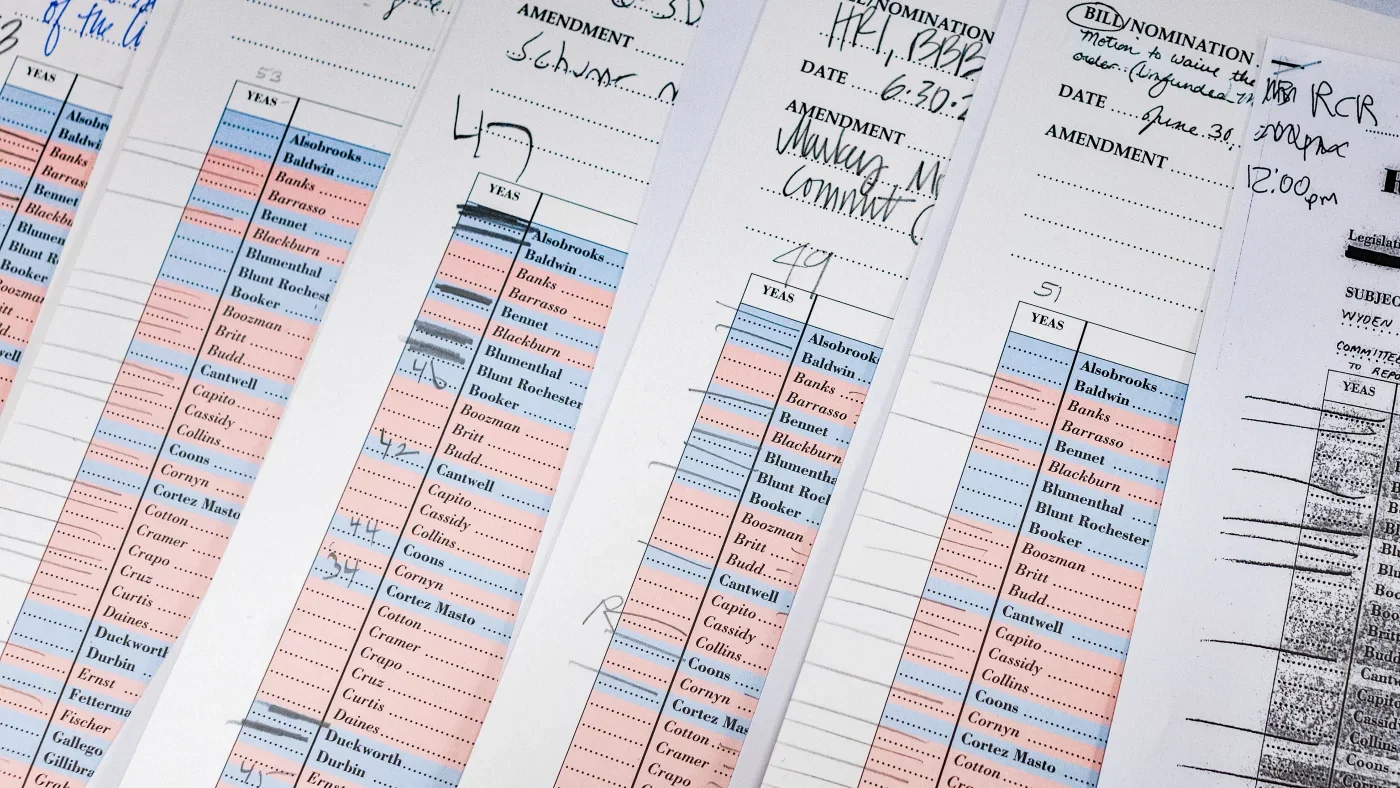
Open-government advocates are asking Senate leaders to publish legislation and amendments online as soon as senators receive them. NPR reports that members sometimes vote before the public can inspect the exact wording. NPR
Key facts
The Congressional Record preserves legislative proceedings, but it is published after the legislative day ends. NPR
The American Governance Institute and Foundation for American Innovation are among the organisations behind the request. NPR
The letter argues that groups connected to Senate offices can obtain information that remains unavailable to others. NPR
Senators can vote before the public sees the wording
A crosspartisan group of open-government advocates wants the Senate to publish bills and amendments online as soon as senators receive them. NPR reports that the text under consideration is not always available publicly before a vote. Watching live proceedings can reveal debate and procedural moves without providing the exact language being decided. The campaign therefore concerns access at the moment it can inform scrutiny, not simply whether a document eventually becomes part of the historical record.
Later publication leaves a real timing gap
The Congressional Record preserves legislative proceedings, but it is published after the legislative day ends. A measure introduced and voted on during that day may consequently become accessible only after the decision. Publication later is useful for accountability, yet cannot allow outside specialists or constituents to identify a problem before senators act. The distinction is particularly important for amendments, where a short change in wording can materially alter a larger bill even if the surrounding subject has already received extensive public discussion.
Internal improvements create an opening
The American Governance Institute and Foundation for American Innovation are among the organisations behind the request. Foundation fellow Luke Hogg says work to improve the Senate's internal systems has given staff more reliable access to pending text. The next step, advocates argue, is extending comparable access to the public. Their demand concerns documents already supplied to members for consideration, rather than requiring every preliminary negotiation to happen in public. The proposal is intended to make live legislative business inspectable at the same time as it becomes actionable inside the institution.
Relationships can determine who learns the details
The letter argues that groups connected to Senate offices can obtain information that remains unavailable to others. The imbalance can affect journalists, citizens and support bodies such as the Congressional Research Service and Government Accountability Office. Connected outsiders may therefore understand a live debate more fully than people relying on official public sources. Earlier disclosure would not guarantee agreement about a bill, but it would reduce the extent to which meaningful scrutiny depends on personal access to someone within the chamber.
The House provides a practical comparison
The House generally publishes proposed legislative text and amendments online before consideration, with rare exceptions. Advocates point to that practice as evidence that Congress can operate with more timely disclosure. American Governance Institute director Daniel Schuman also cites the 2013 rollback of congressional financial-disclosure provisions as a warning about inadequate public visibility. That historical example supports his argument for scrutiny; it does not prove that every late-published Senate measure contains concealed wrongdoing. The case for transparency applies whether a particular proposal is controversial or routine. Reporting context: NPR
The next Congress has not adopted the change yet
Supporters hope the Senate will act in January. An aide to Senator Alex Padilla, expected to chair the Rules Committee, said he was open to ideas for transparency and improved congressional functioning. Republican leader John Thune did not respond to NPR's request for comment. Those responses show an opportunity for discussion, not a completed agreement or implementation date. The eventual test will be straightforward: whether people outside Senate offices can retrieve the operative language online before lawmakers vote on it.
Sources and editorial notes
This article compiles the linked reporting. Allegations, projections and research findings retain their original qualifications; this page does not represent independent field reporting or expert medical review.
- NPR (reporting)
November 17, 2026: Replaced repeated summary and FAQ templates, added source attribution and image description, and clarified the distinction between source publication and site edits. This editorial update is not an independent fact-check certification.