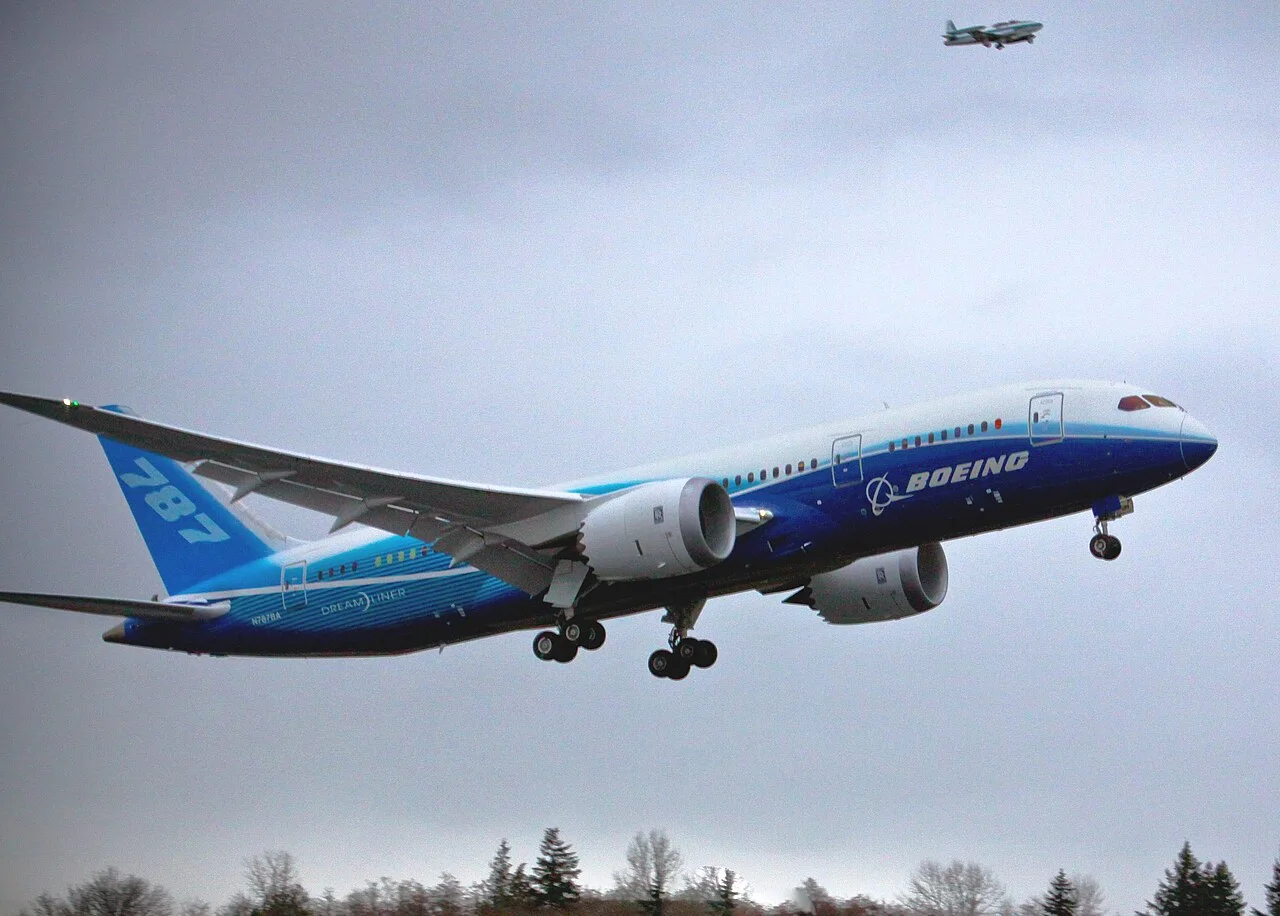
Malaysia Aviation Group and Boeing announced on November 25, 2026 a commitment for 10 Boeing 787-10 Dreamliners plus options for six more, powered by GE Aerospace GEnx-1B engines. Scheduled for delivery between 2032 and 2035 in a 319-seat three-class layout, the jets will make Malaysia Airlines Malaysia’s first 787 operator and gradually replace its seven Airbus A350s on long-haul routes to Europe and Asia-Pacific once contracts are finalised.
Key facts
The November 25, 2026 Kuala Lumpur deal covers 10 base Boeing 787-10 aircraft plus six options, described by Boeing as a commitment pending contract finalisation.
Deliveries are planned for 2032–2035 in a 319-seat three-class cabin powered by GE Aerospace GEnx-1B engines, replacing seven existing Airbus A350 aircraft.
Planned markets include London, Paris, Sydney, Melbourne, Tokyo, Osaka and Seoul, alongside renewed GE Fuel Insight and FlightPulse software agreements.
Malaysia Airlines separately holds a 55-jet Boeing 737 order book (43 737-8s and 12 737-10s across direct orders and leases) slated for delivery through 2030.
What Malaysia Aviation Group and Boeing actually signed
Malaysia Aviation Group (MAG) and Boeing unveiled a Kuala Lumpur agreement on November 25, 2026 for 10 Boeing 787-10 Dreamliner jets plus options for six more, though the two companies describe its contractual status differently. Attended by Malaysian Prime Minister Anwar Ibrahim, Deputy Transport Minister Datuk Haji Hasbi bin Haji Habibollah and Khazanah Nasional Berhad managing director Amirul Feisal Wan Zahir, the deal centres on a widebody aircraft, which refers to a twin-aisle jet engineered for high-capacity, long-range international flying.
In its media release, Malaysia Aviation Group described the agreement as a direct acquisition of 10 Dreamliners with six options—where an option refers to a contractual right to purchase extra aircraft later without an immediate firm purchase obligation. Boeing’s press release, by contrast, framed it as a commitment pending contract finalisation, stating that the 10-jet purchase and six-jet opportunity take effect once finalised. Neither statement disclosed negotiated purchase prices.
Why the 787-10 marks a return to Boeing widebodies
Once finalised, the order will make Malaysia Airlines Malaysia’s first 787 Dreamliner operator and mark the carrier’s return to Boeing widebodies after years flying Airbus twin-aisle flagships. Malaysia Airlines historically operated Boeing 747 and 777 aircraft before transitioning its long-haul fleet to Airbus widebodies.
The 787-10 is the largest variant in the three-model Dreamliner family. Boeing states the aircraft can hold up to 375 passengers in dense configurations and uses 25% less fuel compared to the older generation of airplanes it typically replaces. Malaysia Aviation Group did not publish an independent route-level fuel comparison against its current Airbus jets, focusing instead on cabin comfort, larger-gauge capacity and long-haul operating economics.
Gradual replacement of seven Airbus A350s between 2032 and 2035
Deliveries will not begin until 2032 through 2035, timed directly to the gradual retirement of Malaysia Aviation Group’s seven existing Airbus A350 widebodies. According to Malaysia Aviation Group’s announcement, the six-to-nine-year lead time synchronises new arrivals with the phase-out of the current long-haul fleet.
Replacing seven A350s with 10 base 787-10s (and up to 16 if all options are exercised) represents net long-haul growth rather than a one-for-one swap. MAG plans a 319-seat three-class layout—well below Boeing’s 375-seat maximum—signalling a premium-weighted cabin built for long-sector trunk routes rather than high-density leisure flying.
Target markets across Europe and Asia-Pacific
Malaysia Aviation Group plans to deploy the 787-10s across seven core European and Asia-Pacific gateways: London, Paris, Sydney, Melbourne, Tokyo, Osaka and Seoul, subject to future network planning. Pairing ultra-long-haul European destinations with dense regional hubs allows larger-gauge twin-aisle jets to absorb traffic at slot-constrained airports.
Boeing framed the expansion within rapid regional growth, citing data showing long-haul flying to and from Southeast Asia climbed more than 50% over the past decade and projecting demand for nearly 5,000 new jets in Southeast Asia through 2045, including more than 850 widebodies—part of a wider wave of international fleet and transport transitions tracked in NewsCurrent’s mobility coverage.
GE Aerospace engines and software deepen the supplier tie-up
GE Aerospace will supply GEnx-1B turbofan engines for every Malaysia Airlines 787-10 under the deal while renewing a five-year flight-efficiency software partnership. GE Aerospace chief commercial sales and customer officer Jason Tonich joined Boeing Southeast Asia president Travis Sullivan and MAG chief executive Captain Nasaruddin A. Bakar at the Kuala Lumpur signing, extending a supplier relationship approaching three decades.
Alongside the engines, Malaysia Aviation Group renewed agreements for GE Aerospace’s Fuel Insight and FlightPulse analytics tools to support operational fuel management. Boeing also highlighted its wholly owned Boeing Composites Malaysia facility, which operates with an all-Malaysian workforce building composite subassemblies across Boeing’s commercial lines, including the 787 programme.
Reconciling the carrier’s narrowbody 737 numbers
Published Boeing and MAG figures for Malaysia Airlines’ single-aisle 737 order book diverge—30 jets versus 55 jets—solely because MAG counts leased deliveries alongside direct factory orders. Boeing’s fact sheet lists an active fleet of 38 Next-Generation 737s and 19 737-8s, with 30 direct airplanes on order (18 737-8s and 12 737-10s).
Malaysia Aviation Group’s release, in contrast, reports more than 37 Next-Generation 737s plus 19 737-8s in service and a 55-aircraft Boeing 737 order book (43 737-8s and 12 737-10s) combining direct orders with lessor commitments, with remaining narrowbodies due by 2030. Combined with the 787-10 commitment, the numbers point to a predominantly Boeing core fleet over the next decade.
What remains unsettled before 2032
Before the first 787-10 enters Malaysia Airlines service in 2032, definitive purchase contracts must still be finalised and option exercises remain undecided. Until definitive agreements close, the 10 base jets remain a commitment rather than a firm Boeing backlog addition, and MAG will judge later whether traffic justifies converting any of the six options.
Exact cabin interiors, route launch order and individual Airbus A350 exit dates have also not yet been announced. For the next six years, Malaysia Airlines’ existing Airbus A350s will continue anchoring flagship routes including London and Paris.
At a glance
| Fleet segment | Aircraft count | Role & timeline | Source framing |
|---|---|---|---|
| Boeing 787-10 Dreamliner (GEnx-1B) | 10 base + 6 options | 319-seat 3-class long-haul flagship; deliveries 2032–2035 | Commitment pending finalisation (Boeing) / acquisition (MAG) |
| Airbus A350 (current widebody) | 7 aircraft | Existing long-haul flagship; gradual phase-out 2032–2035 | Confirmed in MAG fleet modernisation release |
| Boeing 737 active narrowbody fleet | 37–38 Next-Gen 737 + 19 737-8 | Current regional and short-haul backbone | 38 NG in Boeing fact sheet; >37 NG in MAG release |
| Boeing 737 order book | 55 total (43 737-8, 12 737-10) | Remaining narrowbody deliveries through 2030 | 30 direct orders in Boeing sheet; 55 including leases in MAG release |
Sources and editorial notes
This briefing synthesises the linked primary and reporting sources below. Allegations, forecasts and early research retain their stated scope and qualifications.
- Boeing MediaRoom: Malaysia Aviation Group Commits to Order up to 16 Boeing 787 Dreamliner Jets (reporting)
- Malaysia Aviation Group: MAG Acquires 10 Boeing 787 Dreamliners for Fleet Renewal (primary)
November 26, 2026: Original English synthesis of the November 25, 2026 primary press releases from Boeing and Malaysia Aviation Group linked here, with reader questions selected before drafting. This is an attributed compilation, not financial analysis or a claim of independent interviews.