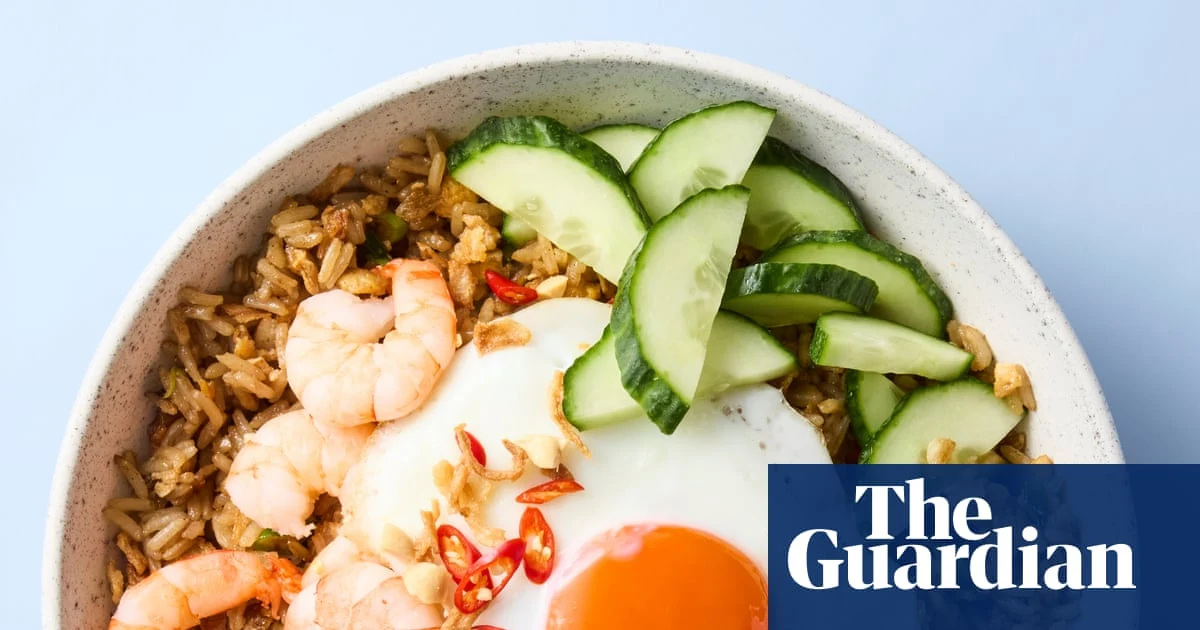
The Guardian’s nasi goreng method builds flavour in stages: cook and cool the rice, prepare the shallot-based spice paste, then stir-fry quickly with sweet soy sauce. Ingredient substitutions and toppings change the result. This page explains the sequence; the linked recipe remains the place to check the complete measured ingredient list. The Guardian
How to use this method guide
This is a guide to the cooking sequence described in the Guardian recipe, not a complete ingredient checklist. The imported ingredient extract was incomplete, so it has been removed rather than presented as a measured recipe. Open the full Guardian recipe to check quantities, portions and substitutions before starting.
Why the spice paste matters
Unless you’ve had the admirable foresight to prepare the spice paste in advance, thus turning this into just a quick assembly job, nasi goreng is not a fried rice that you whip up in five minutes from last night’s leftovers. Neither, however, is it particularly complex, and the richly savoury, shallot-sweet base gives it a depth of flavour that more than justifies the modest investment of time.
Cooking and cooling the rice
Should you happen to have cooked and cooled long-grain rice ready to use, start at step 3; the amount suggested above is fairly elastic, and the recipe easily scaled up or divided. If you’re cooking rice (preferably jasmine, but any long-grain variety will do) specially, put it in a pan with 400ml boiling water, then bring to a simmer, stirring once.
Cover the pan tightly and turn the heat right down. Cook for 15 minutes, then take off the heat and place on a damp tea towel or cloth for five minutes. Fluff the rice with a fork, then spread it on a baking tray and put in the fridge to cool and dry out, ideally overnight, or for up to two hours in the freezer.
Making the aromatic base
If you can’t find small, fiery Asian shallots, use 75g of the larger round ones instead, to compensate for their milder flavour. Peel and roughly chop the shallots and garlic. Trim the chilli (remove and discard the pith and seeds if you’re nervous of heat, or use a milder variety instead), then roughly chop and put in a mortar or mini chopper.
Add the oil and terasi (Malaysian belacan, Thai kapi or Vietnamese mắm tôm make good substitutes for this Indonesian fermented shrimp paste); if you can’t find any of them, use a teaspoon and a half of fish sauce and two anchovy fillets (or two teaspoons of red miso mixed with a teaspoon of crumbled dried seaweed). Pound or whizz until smooth.
Kecap manis and the choice of toppings
Kecap manis is a thick, sweet soy sauce that’s easily found in specialist Asian food shops and online. To make your own, put four tablespoons of light soy sauce in a small pan with the same amount of soft brown sugar, simmer until reduced to a slightly syrupy consistency, then leave to cool and use in the recipe below (note: this will make more than you need).
Prepare the toppings according to taste; nasi goreng exists in countless permutations across Indonesia and Malaysia, so it’s a great home for leftovers and various odds and ends from the vegetable drawer. Like many fried dishes, this one comes together fast, so have everything ready and within easy reach of the hob before you even think about starting the cooking.
The final stir-fry
Put the oil in a wok on a high heat, then fry the chopped garlic until just lightly golden. Pour in the eggs, if using, leave to cook until half set, then break up. Carry on scrambling until the eggs are just beginning to brown, then stir in the spice paste and cook for another minute or so.
Once the shallots in the paste have lost their raw smell, sprinkle in the rice by hand, breaking up any clumps as you go, then stir-fry, tossing vigorously, until it’s thoroughly heated through. Stir in the kecap manis, soy sauce and chopped spring onion, ensuring the grains are brown and evenly coated with sauce.
Fry, stirring, for another minute or so, until the rice is just beginning to caramelise and crisp, then taste and season as necessary with more kecap manis and chilli. Divide between plates and top with the sliced chilli and crispy shallots, if using, plus your chosen accompaniments. Serve immediately.
Frequently asked questions
Is this nasi goreng a five-minute recipe using leftover rice?
Not unless the spice paste is already prepared. The shallot-based aromatic base takes additional work and is a central source of flavour, even though the final stir-fry is quick. The Guardian
Where can I find the full measured ingredients for nasi goreng?
Use the linked Guardian recipe for the complete quantities and method. This article explains the sequence, the role of the spice paste and sweet soy sauce, and how substitutions and toppings change the result. The Guardian
Sources and editorial notes
This article compiles the linked reporting. Allegations, projections and research findings retain their original qualifications; this page does not represent independent field reporting or expert medical review.
- The Guardian (reporting)
November 23, 2026: Corrected section boundaries, removed extraction debris and repeated summary text where present, and clarified source attribution or image descriptions. This is an editorial repair of the cited reporting, not independent reporting, product testing or specialist fact-check certification. November 23, 2026: Added source-linked reader questions and answers based on the reporting already compiled in this article. These questions are editorial selections, not measured search queries.