Key facts
The poaching liquid begins as an infusion of dried hibiscus flowers in water, strained before sugar, lemon peel, lemon juice and a little salt are added. The Guardian
The original method gives approximately 20 minutes for poaching, while explicitly noting that the fruit's ripeness will change the timing. The Guardian
The pears cool in their syrup and then spend at least four hours in the refrigerator, preferably overnight. The Guardian
A pudding built around temperature and contrast
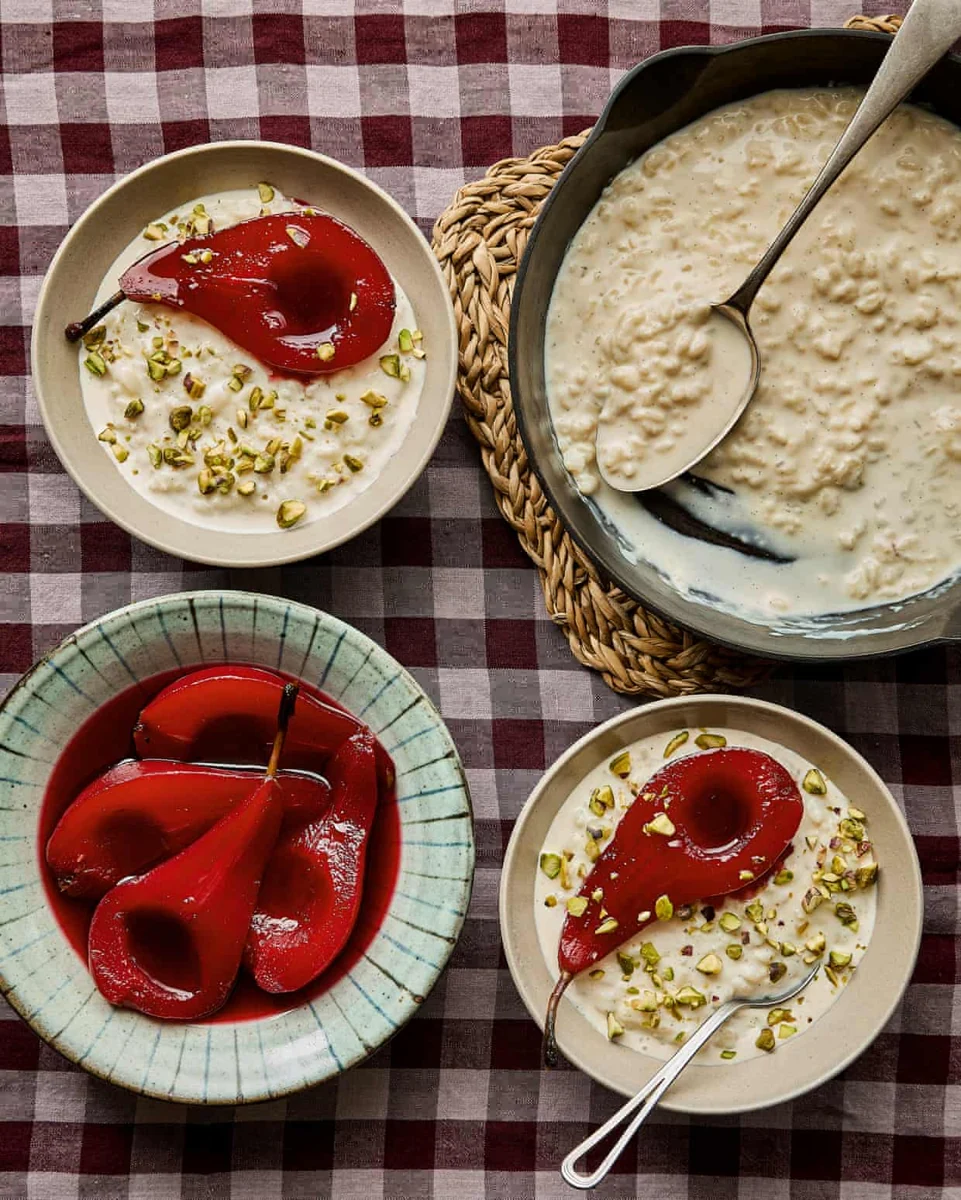
Helen Goh's rice pudding with hibiscus-poached pears, published by the Guardian, combines two preparations that work on different schedules. The fruit is made ahead and served cold, while the pudding reaches the table warm. Hibiscus supplies acidity and a vivid red colour; milk, cream and short-grain rice provide a soft background. The central idea is therefore more specific than adding fruit to rice pudding: the dish depends on a contrast in temperature, texture and sweetness.
Start with pears that can keep their shape
Goh specifies firm but ripe conference pears, peeled, halved and cored. Fruit at that stage can soften during poaching without disintegrating. The poaching liquid begins as an infusion of dried hibiscus flowers in water, strained before sugar, lemon peel, lemon juice and a little salt are added. The flowers are not left in the finished syrup. Their job is to colour and flavour the liquid through which the pear halves will cook.
Gentle cooking matters more than a rigid timer
The original method gives approximately 20 minutes for poaching, while explicitly noting that the fruit's ripeness will change the timing. A knife should enter the pear easily, but the halves still need to remain intact for serving. A round of baking paper helps keep their surfaces in contact with the liquid, and occasional turning promotes an even result. This is a useful example of a recipe where observing the ingredient matters more than treating the suggested number of minutes as an automatic finish signal. Reporting context: The Guardian
Chilling is an active stage of the recipe
The pears cool in their syrup and then spend at least four hours in the refrigerator, preferably overnight. Goh explains that the longer rest deepens both colour and flavour. That makes the fruit a natural preparation for the previous day. It also creates the intended serving contrast without requiring the cook to cool a freshly poached pear at the last minute. The syrup remains important during the rest, rather than being discarded as soon as the fruit is tender.
Rice and aromatics need a different rhythm
The pudding uses short-grain rice, with arborio or sushi rice suggested, cooked gently in whole milk. Cardamom, lemon peel, bay and vanilla give the milk its fragrance. Stirring becomes more frequent as the mixture thickens, reducing the chance that the bottom catches while the rice finishes cooking. Sugar is added later, and cream follows after the pan is removed from the heat. The pods, peel and leaves are taken out before serving, leaving their flavour in a smooth pudding.
Keep the final texture loose
Goh warns that rice pudding thickens as it stands. Her intended consistency spreads gently across a shallow bowl rather than holding a stiff mound. Each serving receives a cold pear half, a little extra cream and chopped toasted pistachios. The nuts supply the crisp element missing from the soft rice and fruit. The published recipe serves six and provides the complete quantities. Its most useful planning lesson is to separate the make-ahead fruit from the warm pudding so the finishing stages remain simple.
Frequently asked questions
Which pears should I buy so they hold their shape?
The recipe calls for firm but ripe conference pears. They should soften in the poaching liquid while retaining their shape, rather than breaking down before the dessert is assembled. The Guardian
Should I serve the pears hot or cold with the rice pudding?
The intended contrast is chilled pears with warm, creamy rice pudding. Hibiscus gives the fruit a tart flavour and deep red colour against the rice's aromatic, softer character. The Guardian
Sources and editorial notes
This article compiles the linked reporting. Allegations, projections and research findings retain their original qualifications; this page does not represent independent field reporting or expert medical review.
- The Guardian (reporting)
November 17, 2026: Replaced repeated summary and FAQ templates, added source attribution and image description, and clarified the distinction between source publication and site edits. This editorial update is not an independent fact-check certification. November 23, 2026: Added source-linked reader questions and answers based on the reporting already compiled in this article. These questions are editorial selections, not measured search queries. November 24, 2026: Revised the FAQs to prioritise reader impact and practical questions using the cited material. The original reporting date is unchanged.