Anthropic’s first-day share price rose above its offer price but fell back from the opening surge, according to the Guardian. The useful distinction is between money raised in the offering, the market value of the company and the sustainability of its operating business. Strong revenue growth does not resolve the separate questions about computing costs and losses. The Guardian
What the first trading day actually showed
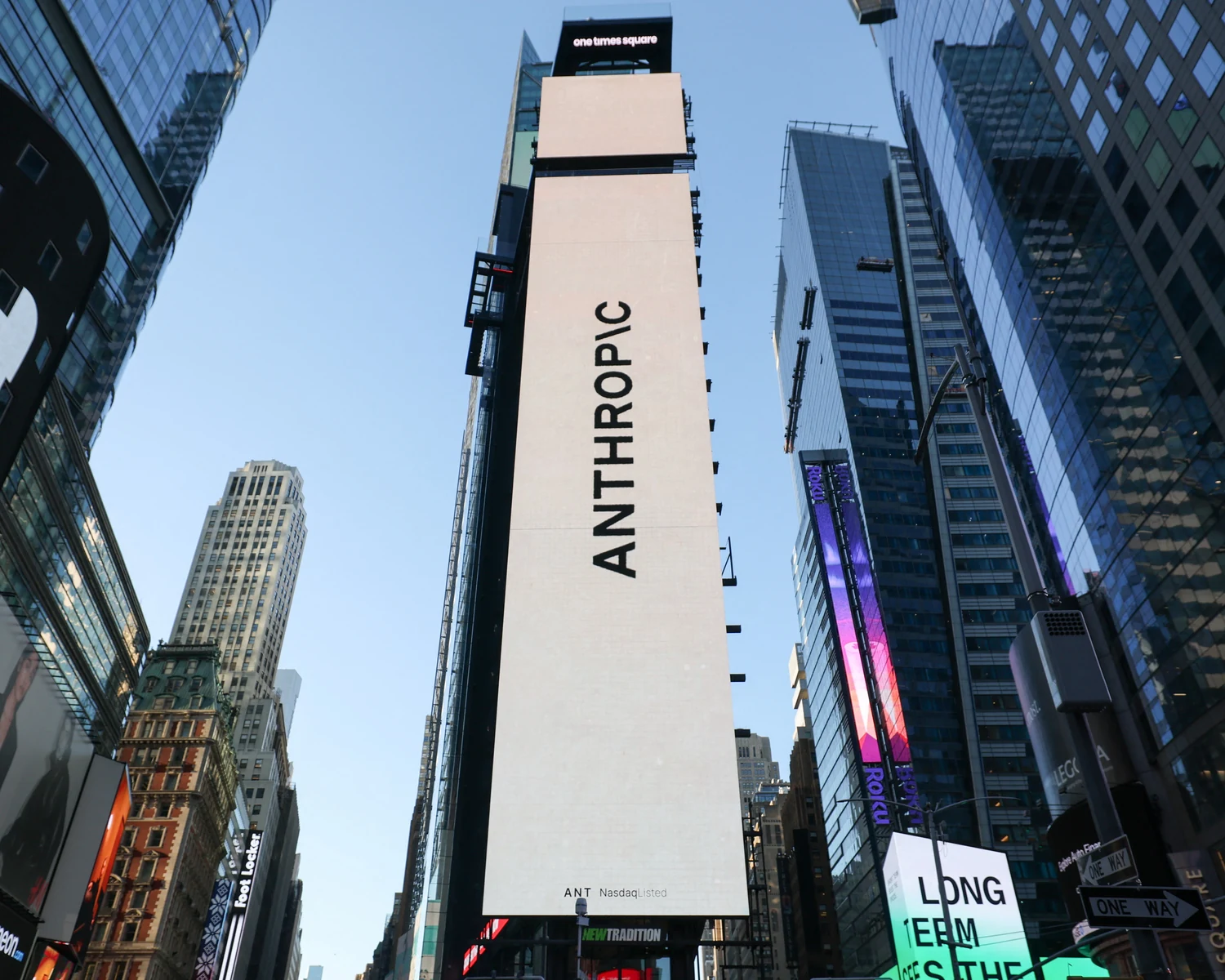
Anthropic closed its first day of trading on the US stock market about 17% higher than its initial public offering price. At the close of market on Thursday, Anthropic shares were trading at just over $97 with a nearly $1.3tn total market capitalization, $1.75tn fully diluted.
While the final share value was higher than the IPO price of $83, it marked a dip from an early high of $111.50. The firm’s shares initially soared 34% when trading got under way on its US market debut on Thursday, valuing the company at more than $2tn. Nonetheless, Anthropic’s ranked among the biggest stock market flotations in history. The artificial intelligence startup, founded in 2021, became one of the most valuable publicly traded businesses in the world.
How much capital the offering raised
“Today puts the company in a stronger financial position, and in doing so only strengthens our resolve to do the right thing,” said Anthropic’s chief executive, Dario Amodei, who rang the Nasdaq opening bell.
Anthropic announced late on Wednesday that it had sold 980m shares to underwriters, an upsized offering that raised $81.3bn, surpassing the previous record set by SpaceX’s initial $75bn fundraise in June.
Revenue growth and the profitability question
The company has seen explosive growth in revenue every year of its existence – sometimes more than 1,000% – according to its investor prospectus, filed at the end of October. Anthropic brought in $16.2bn in the first six months of 2026, up from $4.6bn in revenue for all of 2025.
“You’ve seen an astronomical growth rate in terms of the top line,” said Evan Schlossman, a principal at Neostellar, a publicly traded venture capital firm. “The question investors are going to be looking at leading up to the IPO, and once it’s public, is what happens to that growth rate.”
Anthropic has also lost an enormous amount of money. In the first half of 2026, the company reported losses of $80bn, though that was largely due to a one-off charge. Losses grew to $104bn in the first nine months of 2026. The firm expects its costs to balloon as it works to secure more compute, which refers to the processing and computational power provided by arrays of semiconductor chips often located in datacenters. It is the resource that powers generative artificial intelligence and Anthropic’s single largest expense, about $18.8bn in the first nine months of 2026.
“The development of frontier AI models requires substantial investments of compute resources, capital, and human capital to conduct large-scale training runs that may span weeks or months and cost many millions of dollars,” the company’s executives wrote in the prospectus.
How the market and analysts reacted
US stocks slumped at the end of trading, a potential sign that Anthropic’s mammoth IPO wasn’t enough to alleviate concerns over the AI industry’s volatility. Most of the major chipmakers’ stock prices closed the day lower than they started. While Nvidia hit its sixth day of losses after its latest earnings call, other players like Micron and Broadcom also saw their share prices decline.
The company’s listing serves as a bellwether for the multitrillion-dollar artificial intelligence boom as the first frontier lab to be publicly traded. Wall Street investors and the entire global tech industry are watching closely how it fares on the public market.
Anthropic’s stock market debut makes it the first firm focused entirely on AI “uncluttered by an ad business or a rocket business” to be publicly traded, analysts at Yorkville Ives said.
“Anthropic’s IPO is a big near-term win for the tech sector and should help restore some investor confidence that the AI Revolution growth thesis is not waning,” Yorkville Ives analysts wrote in a memo.
The company beat competitors like OpenAI to launching on the US stock market. However, the IPO comes amid uncertainty as the industry braces for any additional impact or fallout from the recent Nvidia scandal that led to the resignation of its founder and chief executive, Jensen Huang.
There is “huge volatility in the market”, and investors are going to be looking at how sustainable the company’s AI growth is, said Schlossman. Investors are also keen to see how important Anthropic will be in the larger AI ecosystem. The company has focused primarily on enterprise customers rather than individual consumers. Anthropic’s Claude code product has proved popular with software engineers.
Risks disclosed by the company
Anthropic has disclosed in great detail all the ways its AI models may pose a danger to humanity – including being used to develop bioweapons or deepen repression around the world. Amodei has called for a slowdown on the development of the most advanced AI models after employees expressed concerns that the companies were building them irresponsibility.
Frequently asked questions
How did Anthropic's closing price compare with its IPO price?
The shares finished the first session at just over $97, about 17% above the $83 offering price. They had traded as high as $111.50 earlier, so the closing gain was smaller than the initial surge. The Guardian
How much money did Anthropic raise in the offering?
The company sold 980 million shares to underwriters in an enlarged offering that raised $81.3 billion. That is money raised through the IPO, a different measure from its roughly $1.3 trillion closing market valuation. The Guardian
Sources and editorial notes
This article compiles the linked reporting. Allegations, projections and research findings retain their original qualifications; this page does not represent independent field reporting or expert medical review.
- The Guardian (reporting)
November 23, 2026: Corrected section boundaries, removed extraction debris and repeated summary text where present, and clarified source attribution or image descriptions. This is an editorial repair of the cited reporting, not independent reporting, product testing or specialist fact-check certification. November 23, 2026: Added source-linked reader questions and answers based on the reporting already compiled in this article. These questions are editorial selections, not measured search queries.