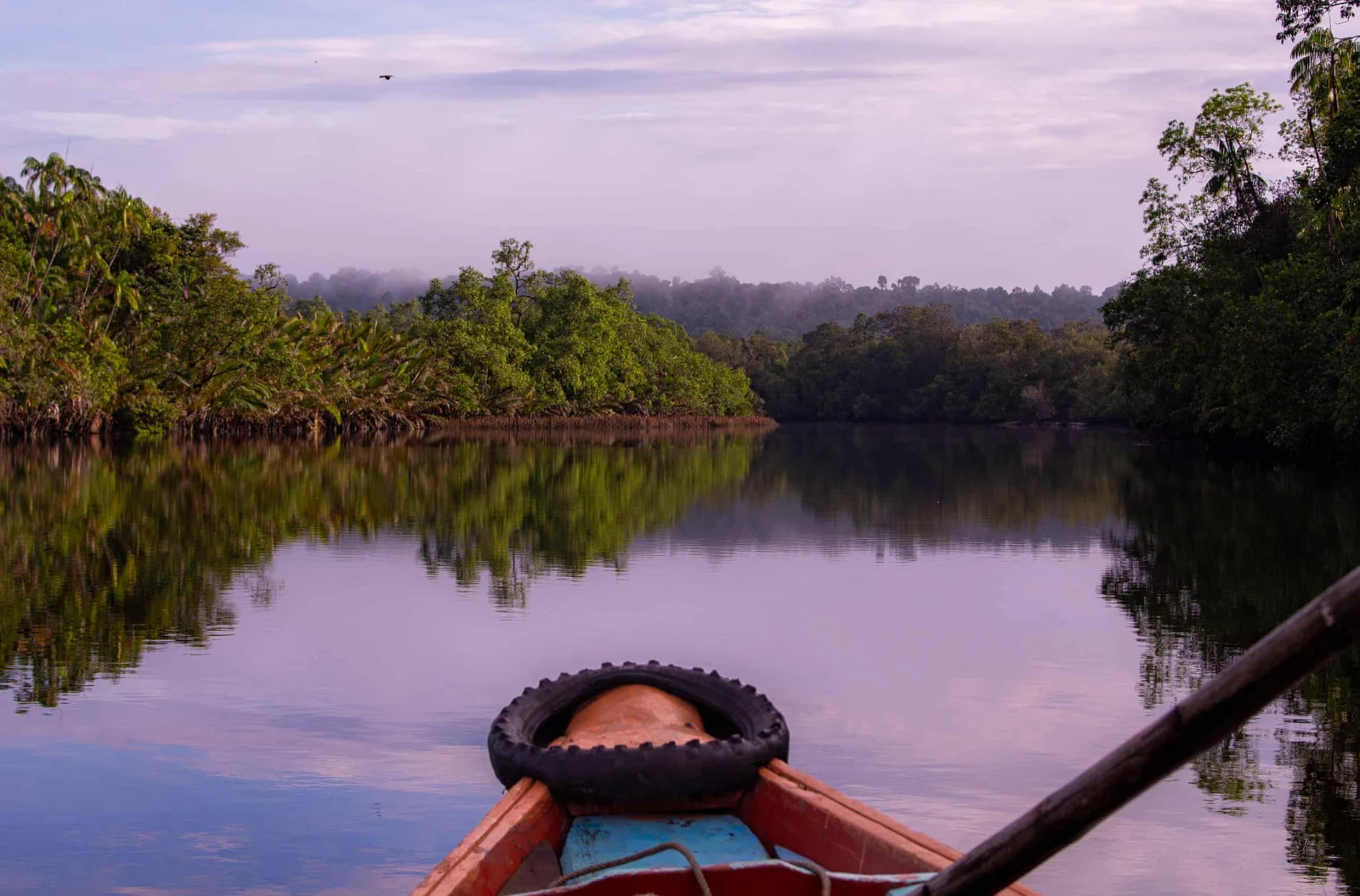
Dawn on the Preak Piphot River, heading into the Cardamom Mountains. Photograph: Jonnie Bayfield
A Guardian journey follows the Preak Piphot River from Chi Phat before a 15-kilometre overnight trek in Cambodia's Cardamom Mountains. The community's ecotourism programme combines forest guiding, a jungle camp and local knowledge of an exceptionally rich wildlife corridor. The Guardian
Key facts
The guides describe neak ta, protective spirits associated with natural places, and point out a shrine above the river. The Guardian
After the motorboat stage, the group transfers to smaller rowing boats and then walks into the trees. The Guardian
The overnight stop consists of covered sleeping platforms, an outdoor kitchen and a small pool fed by a waterfall. The Guardian
A forest journey built around its community
A Guardian travel account follows an overnight trek from Chi Phat into Cambodia's Cardamom Mountains, beginning with a boat journey along the Preak Piphot River. The trip combines wildlife, local spiritual traditions and the work of a community ecotourism project. The writer's encounters are reported experiences rather than guaranteed sights. The underlying story is how people once dependent on logging and hunting are finding paid roles in guiding visitors through the same landscape.
Chi Phat's project supplies the organisation
Wildlife Alliance helped establish the community initiative in 2007. Its official material describes ecotourism as part of efforts to reduce pressure on the forest and support alternative livelihoods. In the Guardian journey, guides, boatmen and a cook organise the route and the overnight camp. The cook, known as Mr Crab, previously drove trucks for loggers. That specific career change makes the economic argument tangible: conservation becomes part of earning a living, rather than only an instruction to stop using resources. Reporting context: The Guardian
Spiritual rules shape conduct in the forest
The guides describe neak ta, protective spirits associated with natural places, and point out a shrine above the river. They explain expectations about speech, taking things and asking permission within the forest. These are local beliefs presented through the people who practise them, not claims the visitor needs to verify as supernatural facts. The report shows how sacred associations can give certain places additional protection alongside the work of government rangers and conservation organisations.
Progress is slow and physically demanding
After the motorboat stage, the group transfers to smaller rowing boats and then walks into the trees. Humidity, roots, fallen trunks and approaching wet-season rain shape the day. A stream provides a break for lunch before the final section to camp. Those details are useful because a relatively short distance on paper can conceal a much more demanding journey. The experience depends on terrain, heat and the group's pace, not simply the number of kilometres advertised.
The camp offers shelter rather than a hotel
The overnight stop consists of covered sleeping platforms, an outdoor kitchen and a small pool fed by a waterfall. The cook prepares meals over a fire, and heavy rain hits the metal roof after dark. The writer describes birds, butterflies, monkeys and a large orb-weaving spider along the route, while more elusive species remain possibilities rather than confirmed encounters. The forest's interest comes from many small observations, not a checklist guaranteeing elephants or other rare animals.
The approach and return require time
Chi Phat lies in the Koh Kong region, described in the report as roughly six hours by bus west of Phnom Penh. The featured overnight walk covers about nine miles, or 15 kilometres, with boat travel forming another part of the approach. Mobile reception disappears during the river journey and returns as the group nears the community on the second day. The writer finishes drenched and blistered after rain. Those practical details are more informative for planning than the distance alone: transport, humidity, an overnight camp and a wet return all form part of the actual trip. Reporting context: The Guardian
Booking through the people who host the visit
The article disclosed assistance from the Cambodia Tourist Board and the Chi Phat community and reported a five-day package of roughly $350 per person, including guides, food, accommodation and treks. Current arrangements need checking directly. A community-led booking also clarifies who supplies the services and explains how the visit contributes locally. For travellers, the attraction is a guided stay within a living landscape whose wildlife, spiritual traditions and economic choices remain closely connected. Reporting context: The Guardian
Reporting and further reading
Sources and editorial notes
This article compiles the linked reporting. Allegations, projections and research findings retain their original qualifications; this page does not represent independent field reporting or expert medical review.
- The Guardian (reporting)
- www.wildlifealliance.org: Chi Phat Community-Based Ecotourism In Chi Phat, Wildlife Alliance and the community are working together to preserve the environment while providing exciting and unique experiences for visitors. (reporting)
November 17, 2026: Replaced repeated summary and FAQ templates, added source attribution and image description, and clarified the distinction between source publication and site edits. This editorial update is not an independent fact-check certification.