A Guardian travel writer describes arranging a week of individual French conversation lessons after local language schools had no space. The tutor, Anna, was found through Apprentus and charged €19 an hour, compared with a quoted €60 for school-arranged private tuition. The Guardian
Key facts
Abbs found Anna, a political-science student at the University of Rouen Normandy, through Apprentus. The Guardian
Student politics, Senegalese history, local streets and everyday situations became subjects for French conversation. The Guardian
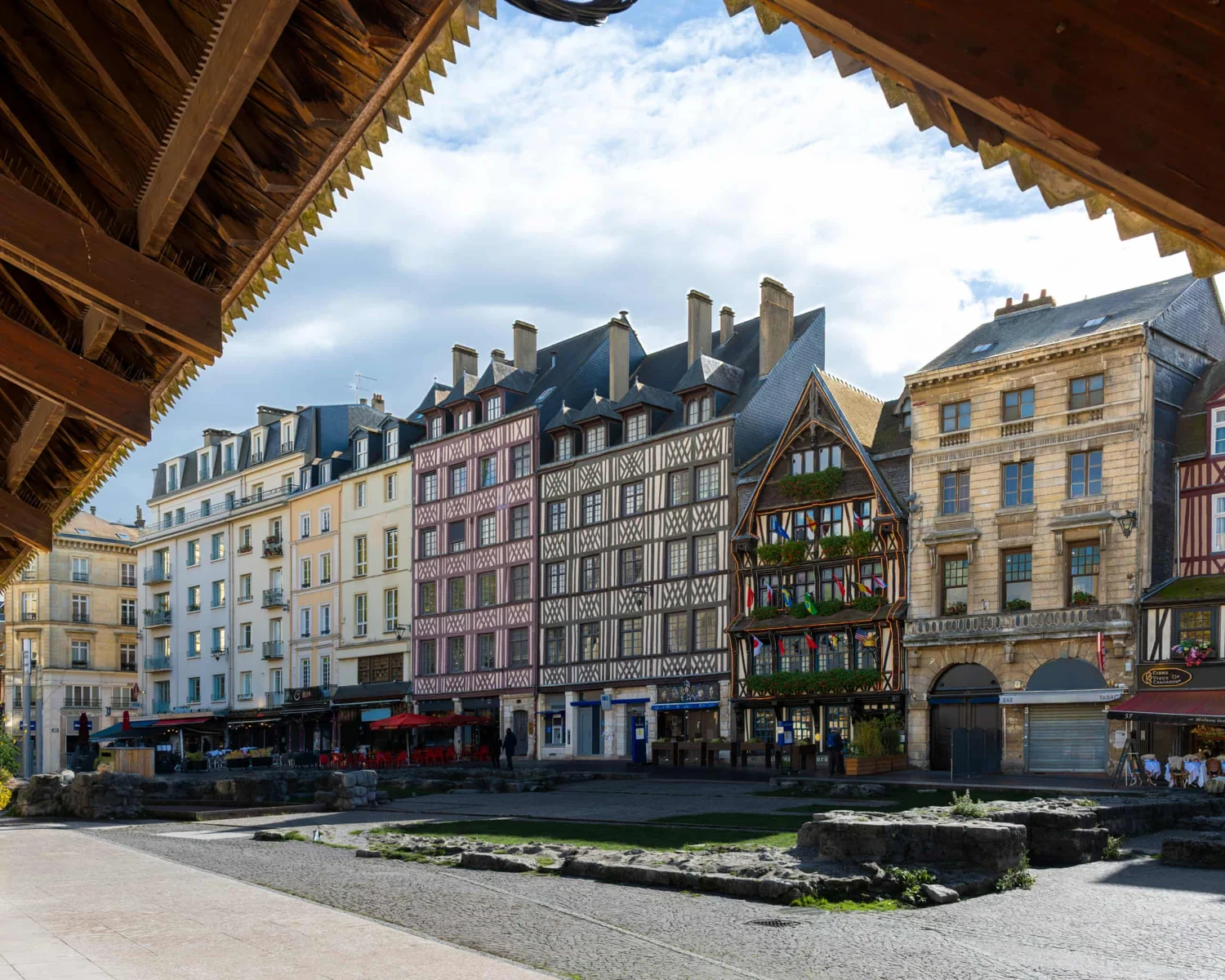
The riverside paths along the Seine, medieval streets and Place du Vieux-Marché supplied changing settings without requiring constant transport. The Guardian
A language course built around a city
Writer Annabel Abbs describes a self-organised week of French conversation in Rouen after finding formal language-school places unavailable. In her Guardian account, the alternative was a personal tutor, two hours a day and lessons held largely while walking. The result is one traveller's experience rather than a controlled comparison of teaching methods. It nevertheless offers a concrete model for an intermediate learner who wants a short break to include sustained conversation as well as sightseeing.
The tutor changes the economics
Abbs found Anna, a political-science student at the University of Rouen Normandy, through Apprentus. She reported paying €19 an hour, compared with the €60 hourly price quoted for private tuition through a language school. Ten hours over five days therefore created a substantial difference in the teaching budget. Anna was new to the platform and had expected to help schoolchildren with homework. Their arrangement developed through direct discussion, rather than arriving as a standard packaged adult-language course. Reporting context: The Guardian
Conversation supplies the route
The pair began near Saint-Maclou church and used the city as their classroom. Student politics, Senegalese history, local streets and everyday situations became subjects for French conversation. Anna could explain difficult grammar in English when necessary, while correcting the learner as they walked. Wet weather moved lessons into tea rooms, including Dame Cakes. This method made the content responsive to the people and places encountered, although its suitability clearly depended on the tutor's language skills and the learner's existing ability to converse.
Rouen provides several kinds of classroom
The riverside paths along the Seine, medieval streets and Place du Vieux-Marché supplied changing settings without requiring constant transport. An outing to the Musée des Beaux-Arts added art to the conversation; the museum's official information also confirms its substantial collections and free permanent displays. The travel account's value is not that every learner must reproduce the same walk. It shows how a compact city can supply prompts for repeated, meaningful speech beyond a textbook exercise.
Independent practice fills the remaining hours
Abbs limited the one-to-one sessions to two hours a day, then read a French novel, listened to French broadcasting and sought opportunities to speak with people around the city. That made the tuition part of a wider period of immersion. Her reported breakthrough was being able to continue speaking along the Seine without repeatedly stopping to search for words. It was a confidence milestone in her own account, not a promise that another visitor will achieve fluency within a week.
A previous classroom course shaped the experiment
Abbs contrasts Rouen with a previous winter language-school stay in Montpellier. There, she spent three hours each morning in a class of 12, listening as other learners worked through exercises. She felt the arrangement offered less progress than she wanted for its cost. That is her assessment of a particular course, not a finding that group teaching is generally ineffective. It explains the priorities of the Rouen experiment: more time speaking, individual correction and the freedom to use the city itself, while drawing on French she had first studied years earlier. Reporting context: The Guardian
The budget depends on a complete set of choices
The trip combined an apartment reported at under £60 a night with a Newhaven-Dieppe ferry and onward train connection. Abbs put the combined return ferry-and-train fare at £65 and her six-day total, including food, transport, tuition and accommodation, at a little over £600. Those are the prices for her arrangement, not a current package quote. The transferable idea is to discuss teaching expectations first, then build transport, lodging and daily practice around the hours actually needed. Reporting context: The Guardian
Reporting and further reading
Sources and editorial notes
This article compiles the linked reporting. Allegations, projections and research findings retain their original qualifications; this page does not represent independent field reporting or expert medical review.
- The Guardian (reporting)
- mbarouen.fr: Musée des Beaux-Arts The Museum (reporting)
November 17, 2026: Replaced repeated summary and FAQ templates, added source attribution and image description, and clarified the distinction between source publication and site edits. This editorial update is not an independent fact-check certification.