A Guardian feature explores Santuário do Caraça, a roughly 40-square-mile nature refuge in Brazil's Minas Gerais state. Guided walks cross bamboo forest and high-altitude grassland, where rare plants and birds survive within a landscape heavily shaped by mining. The Guardian
Key facts
Biologist Marcelo Vasconcelos leads the writer towards Pico da Canjerana through ground affected by a fire two years earlier. The Guardian
Caraça began as a mission station around 1770, and its former seminary now provides accommodation. The Guardian
The report recalls the 2015 dam failure that killed 19 people and the 2019 Brumadinho disaster that killed 272. The Guardian
Biodiversity beyond Brazil's familiar gateways
A Guardian journey through Minas Gerais follows mountain wildlife, historic towns and community tourism in a state strongly associated with mining. Its centrepiece is Santuário do Caraça, a private reserve of roughly 40 square miles where Atlantic forest gives way to high-altitude grassland. The account presents ecotourism as one possible economic alternative to extraction. It does not suggest that a few guided trips can by themselves resolve the state's industrial or environmental conflicts.
A guide makes small species visible
Biologist Marcelo Vasconcelos leads the writer towards Pico da Canjerana through ground affected by a fire two years earlier. Finding the rare carnivorous plant Drosera graminifolia provides a specific sign of survival. The journey also includes a planalto hermit hummingbird and a sighting of the rock tapaculo, a species Vasconcelos helped identify earlier in his career. These encounters belong to the reported visit. Their significance lies partly in expert interpretation: a small plant or elusive ground bird can otherwise pass unnoticed.
The reserve combines forest and an older institution
Caraça began as a mission station around 1770, and its former seminary now provides accommodation. The writer describes breakfast cooked on a large wood-fired surface and maned wolves coming to the chapel area, where they are fed. Those observations explain the particular experience offered by this site, including its human-managed element. They should not be mistaken for a guarantee of an entirely unmediated wildlife encounter or a promise that any visitor will see the same animals. Reporting context: The Guardian
Mining is present throughout the route
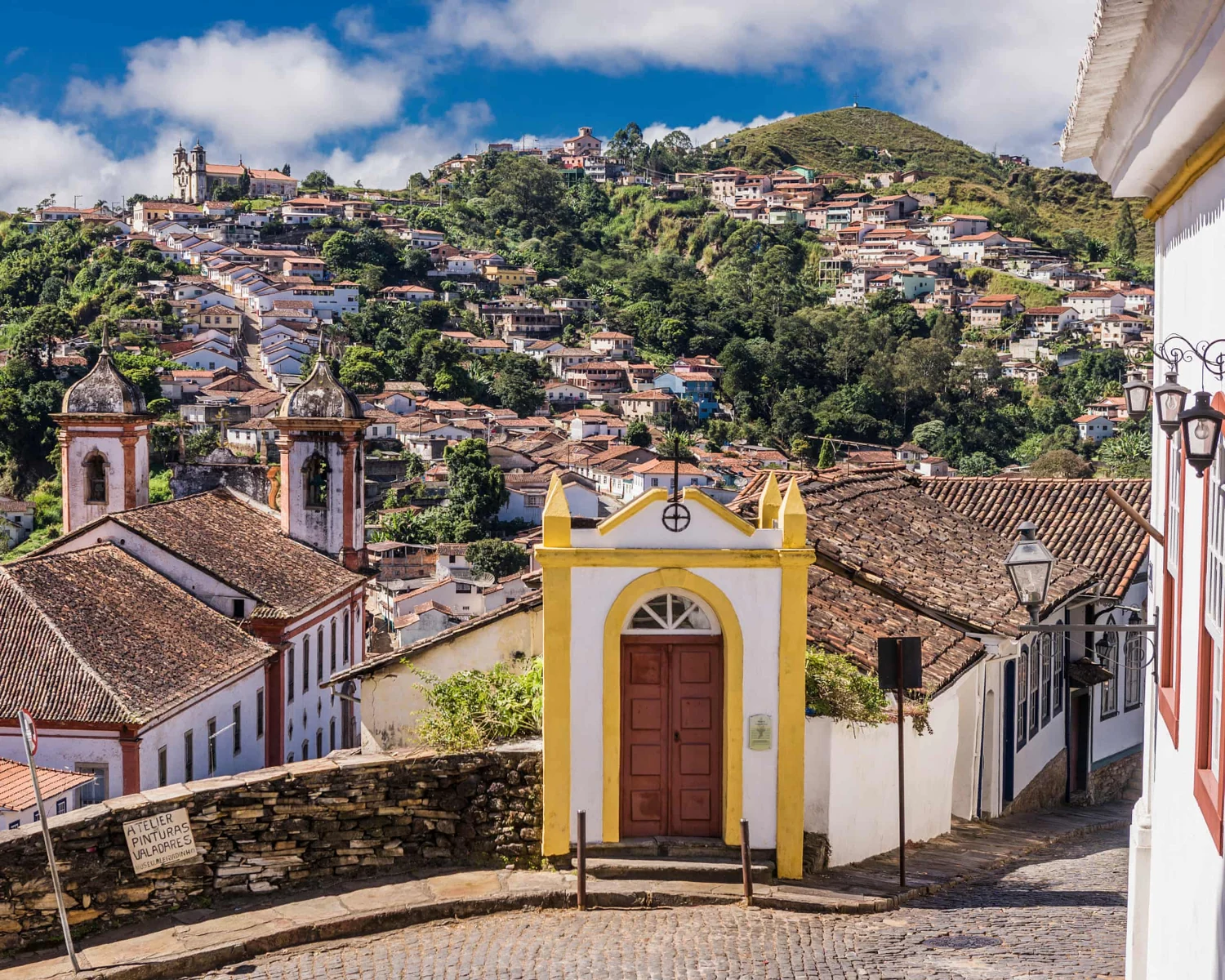
Roads carrying ore trucks connect the natural and cultural stops. The report recalls the 2015 dam failure that killed 19 people and the 2019 Brumadinho disaster that killed 272. Those events give the discussion of alternative livelihoods its urgency. Ouro Preto then supplies a different view of mining's legacy through the wealth of its eighteenth-century churches and the work of artists Aleijadinho and Mestre Ataíde. Architectural splendour and the history of extraction cannot be separated from the labour that produced that wealth. Reporting context: The Guardian
Art and community visits widen the itinerary
Inhotim combines contemporary art with botanical grounds, while other stops include a bee sanctuary and an agroforestry farm. A visit to a quilombo community brings the history of slavery into the present through local guides and family memory. The writer follows a host to a former estate associated with her ancestors' enslavement. That is a specific community account, not material to turn into atmospheric scenery. A respectful itinerary needs time and context for people explaining their own history.
Ouro Preto makes the social history visible
The churches of Ouro Preto contain work by Aleijadinho, the son of an enslaved African woman and a Portuguese builder, and painter Mestre Ataíde. The writer notes African and mixed-race faces in Ataíde's ceiling paintings, placing the art within the complicated society that produced it. The later quilombo visit makes that history more personal through descendants explaining an estate from which their ancestors escaped. Reading the two stops together gives the itinerary a fuller purpose: the wealth displayed in gold-covered churches and the memories carried by local families belong to the same regional history.
Building a trip around local knowledge
The journey was hosted by Sumak Travel and Viare Travel, and the article disclosed a five-night tailor-made programme starting at £1,050, with selected meals and activities. Flights were separate. Those figures describe the reported offer and require checking before booking. The strongest reason for specialist guiding is apparent in the narrative itself: the value of the trip comes from understanding rare species, local livelihoods and difficult history, not simply moving between attractive photographs of forest and colonial buildings. Reporting context: The Guardian
Reporting and further reading
Sources and editorial notes
This article compiles the linked reporting. Allegations, projections and research findings retain their original qualifications; this page does not represent independent field reporting or expert medical review.
- The Guardian (reporting)
- www.inhotim.org.br: Visite o Inhotim Mapa Artistas Galerias Obras a céu aberto Obras em galerias Destaques Botânicos Jardins temáticos Rotas Novidades do Acervo (reporting)
November 17, 2026: Replaced repeated summary and FAQ templates, added source attribution and image description, and clarified the distinction between source publication and site edits. This editorial update is not an independent fact-check certification.