Key facts
The problem was emotional: earlier defeats had sometimes turned a difficult game into a dramatic loss of control. The Guardian
Rankings are a moving accumulation rather than a prediction of the next champion, but the margin shows how quickly Andreeva has moved from promising teenager to a player with a realistic path to No 1. The Guardian
Andreeva became only the third player after Serena Williams and Iga Swiatek to win the WTA Finals without dropping a set. The Guardian
A shaky service game does not become a collapse
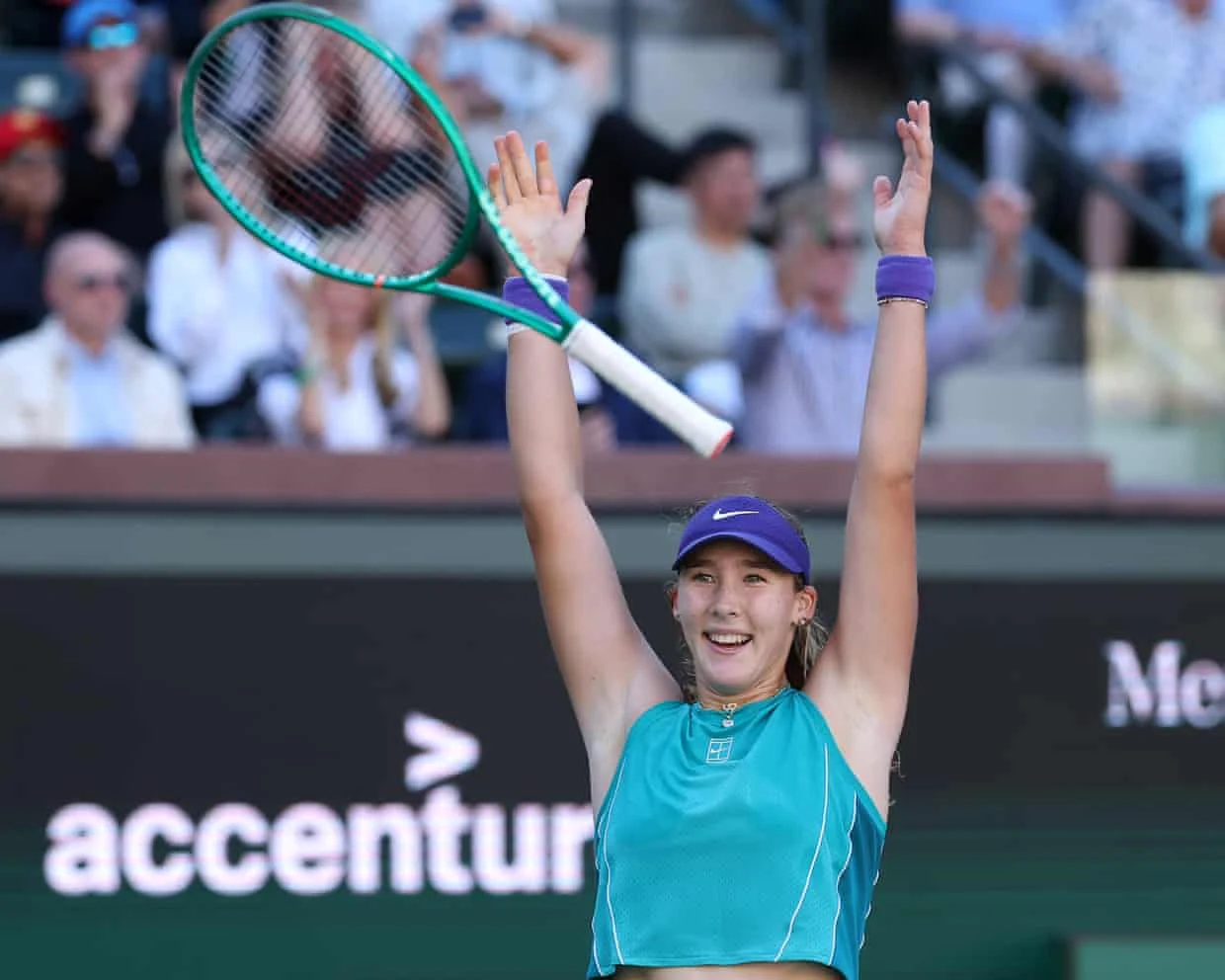
Mirra Andreeva defeated Elina Svitolina 7-5, 6-3 to win the WTA Finals at Indian Wells. The match turned when Andreeva served for the first set at 5-4 and opened with two double faults followed by two unforced errors. She lost the game, but immediately recovered the break and regained control. The Guardian presents that response as the clearest sign of the 19-year-old’s progress.
Composure has become part of her game
Andreeva’s athleticism and variety were already visible. The problem was emotional: earlier defeats had sometimes turned a difficult game into a dramatic loss of control. In this final she showed no visible spiral after the double faults. Recovering immediately did not mean the pressure disappeared; it meant she managed the next points instead of replaying the previous ones.
The season changes her position in the sport
The victory follows Andreeva’s first grand-slam title at Roland Garros. She will rise to a career-high No 2 ranking, only 293 points behind Elena Rybakina at the start of the next season. Rankings are a moving accumulation rather than a prediction of the next champion, but the margin shows how quickly Andreeva has moved from promising teenager to a player with a realistic path to No 1. Reporting context: The Guardian
A rare record accompanies the title
Andreeva became only the third player after Serena Williams and Iga Swiatek to win the WTA Finals without dropping a set. She is also the third teenager after Chris Evert and Maria Sharapova to win the event on her debut. Those comparisons describe an unusual achievement, but they do not erase the practical work behind it: managing long rallies, responding to an opponent and sustaining focus through a tournament’s later rounds.
The final carried a political context
Svitolina and other Ukrainian players have not shaken hands with Russian opponents since Russia’s invasion of Ukraine in 2022. At the trophy ceremony, Svitolina left the stage after her runner-up speech rather than joining trophy photographs. Andreeva still congratulated her on the tournament and season, and Svitolina acknowledged the words. The ceremony showed how an ordinary sporting ritual can carry the unresolved context of war. Reporting context: The Guardian
A prize and a practical joke about driving
Alongside the trophy and prize money, Andreeva received a Mercedes. Asked whether she could drive, she admitted that she does not yet have a licence and joked that members of her team could act as chauffeurs. The moment lightened the ceremony, but the larger message was serious: after a year of emotional and competitive growth, Andreeva begins the next season with both a ranking target and a new expectation to handle pressure at the top.
Frequently asked questions
Who won the Andreeva–Svitolina final, and what was the score?
Mirra Andreeva won 7-5, 6-3 at Indian Wells. The title completed the breakthrough season described in the report and brought a new career-high ranking. The Guardian
How did Andreeva recover after failing to serve out the first set?
After losing her service game at 5-4 through double faults and errors, she immediately broke back. The report highlights that recovery as evidence of composure during the match, rather than a claim that she felt no pressure. The Guardian
Sources and editorial notes
This article compiles the linked reporting. Allegations, projections and research findings retain their original qualifications; this page does not represent independent field reporting or expert medical review.
- The Guardian (reporting)
November 17, 2026: Replaced repeated summary and FAQ templates, added source attribution and image description, and clarified the distinction between source publication and site edits. This editorial update is not an independent fact-check certification. November 23, 2026: Added source-linked reader questions and answers based on the reporting already compiled in this article. These questions are editorial selections, not measured search queries. November 24, 2026: Revised the FAQs to prioritise reader impact and practical questions using the cited material. The original reporting date is unchanged.