A report by His Majesty's Inspectorate of Constabulary says mistakes in retrospective facial-recognition searches could lead to wrongful identification or arrest. It highlights particular risks for people from ethnic-minority groups. The Guardian
Key facts
The inspection concerns retrospective facial recognition, which compares an existing image with stored pictures to generate possible matches. The Guardian
Auditors identified blurred photographs and images containing several faces among the material uploaded for searches. The Guardian
The inspectorate warned that errors could fall disproportionately on people from ethnic minorities. The Guardian
Inspectors identify weaknesses in police safeguards
A police watchdog has warned that retrospective facial-recognition searches can expose innocent people to wrongful investigation or arrest when officers act on suggested matches without enough checks. The Guardian reports that the inspection identified problems in image quality, bias, data retention and oversight.
The technology was recognised as useful for investigating crime, but inspectors called for stronger national standards and governance to ensure that its output is handled appropriately.
Retrospective searches have a specific purpose
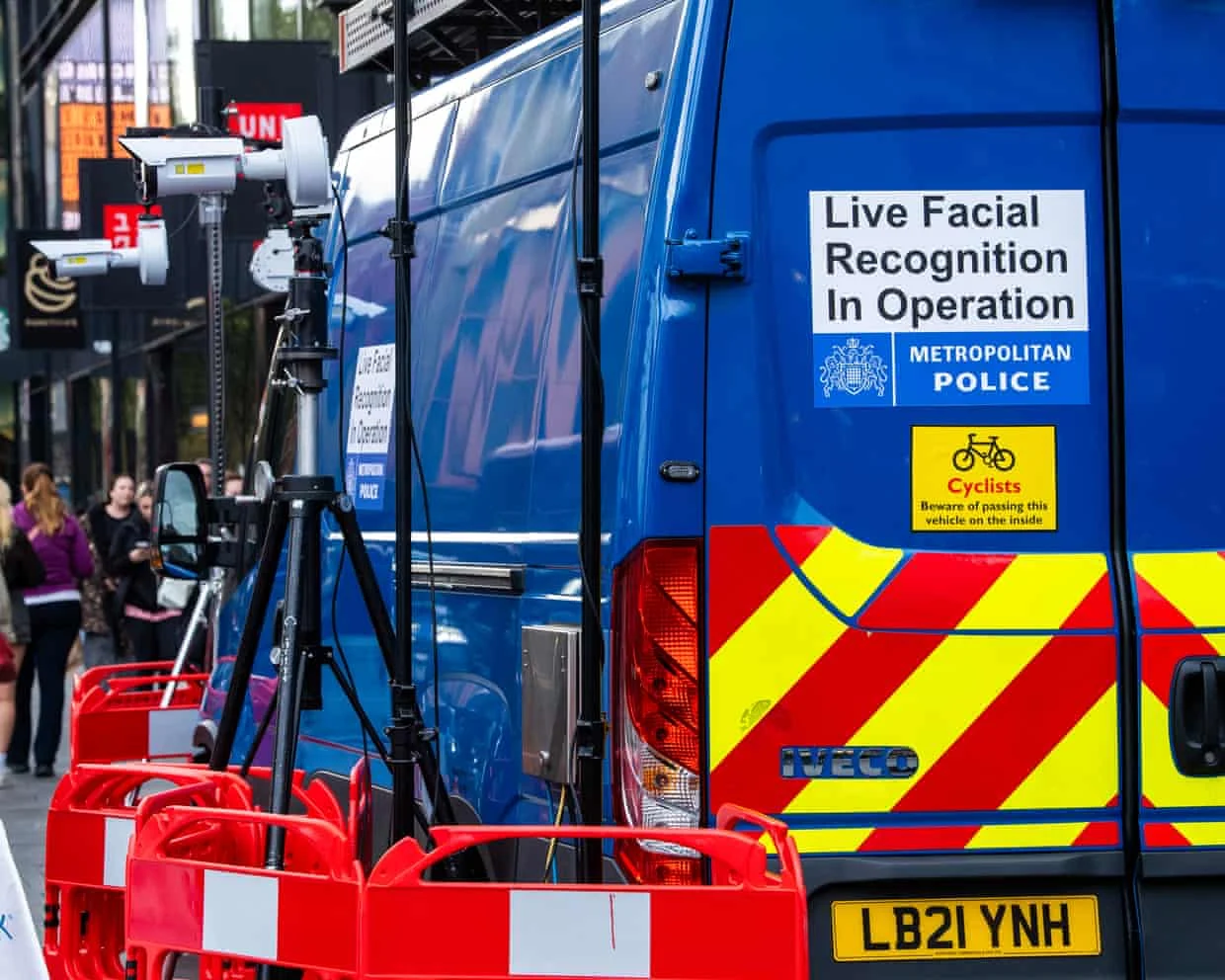
The inspection concerns retrospective facial recognition, which compares an existing image with stored pictures to generate possible matches. It is distinct from live scanning in a public space. A potential match can help investigators decide where to look next, but it does not establish that the person committed an offence. The report found that this distinction was not consistently understood by officers using the results.
Poor images weaken the process
Auditors identified blurred photographs and images containing several faces among the material uploaded for searches. A technically sophisticated system cannot make unsuitable input automatically reliable. The quality of the starting photograph, the conditions under which it was taken and the choice of reference image all affect how a suggested match should be interpreted and what corroboration is necessary.
Bias creates unequal exposure
The inspectorate warned that errors could fall disproportionately on people from ethnic minorities. If investigators act on those suggestions without sufficient checks, a technical disparity can become a real encounter with police. Human review needs to examine the underlying evidence rather than simply approve the computer's answer. The report described cases in which reliance on a result led to inappropriate investigative action.
Retained photographs raise another question
Inspectors also found custody images that should have been deleted. Accuracy and lawful retention are separate safeguards: an accurate search can still raise concerns if it uses material that should no longer be held. The report called for stronger governance and a clearer statutory framework, noting that legislation has not kept pace with the technology's development and use.
Police and campaigners differ on the remedy
Police leaders emphasise the system's potential to help solve crime and say it should be used proportionately. Civil-liberties campaigners see the findings as evidence that existing safeguards are inadequate. Both the technical settings and officers' decisions require scrutiny. Public confidence depends on records that allow an error to be reconstructed and challenged, not only assurances that a human remained involved somewhere in the process.
Recording a search helps make it accountable
Big Brother Watch also criticised gaps in logging retrospective searches. Its concern is that someone could become a suspect without understanding that a facial-recognition result started the investigation. A record of the source image, proposed match and subsequent checks would make the reasoning easier to reconstruct and challenge.
Professor Pete Fussey of the University of Southampton emphasised that meaningful human scrutiny is a legal requirement. Merely having an officer view a result does not demonstrate that the person tested it against other information. Inspector Kathryn Stone called for clearer law and stronger oversight, linking continued public support to forces being able to show how safeguards operate. These responses focus on the chain of decisions around the algorithm, as well as its accuracy.
Sources and editorial notes
This article compiles the linked reporting. Allegations, projections and research findings retain their original qualifications; this page does not represent independent field reporting or expert medical review.
- The Guardian (reporting)
November 17, 2026: Replaced repeated summary and FAQ templates, added source attribution and image description, and clarified the distinction between source publication and site edits. This editorial update is not an independent fact-check certification.