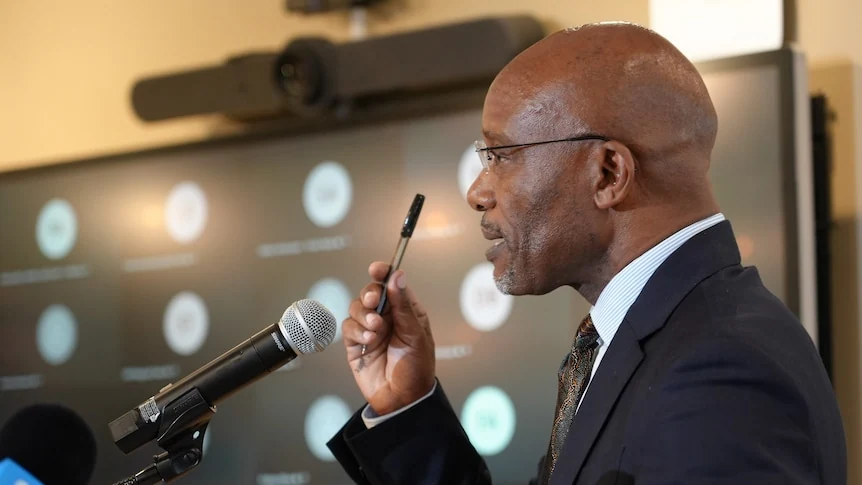
UN Indigenous rights expert Albert Barume has urged Australia's federal government to set minimum national standards, saying state and territory protections are inadequate. He made the comments after a two-week visit that included discussions with Indigenous communities. ABC News Australia
Key facts
First Nations children account for nearly two-thirds of young people in detention, while Indigenous adults make up 37% of the prison population, compared with 24% in 2009. ABC News Australia
Barume challenged the abandonment of treaty processes in Queensland and the Northern Territory and the Victorian opposition's promise to end treaty if elected. ABC News Australia
During his visit, Barume heard accounts of intensified racism and hate speech around and after the failed Voice referendum. ABC News Australia
A UN visitor calls for stronger national safeguards
UN special rapporteur Albert Barume has urged Australia's Commonwealth government to introduce mandatory national minimum standards for Indigenous rights. His preliminary findings follow a two-week visit involving discussions with First Nations communities. ABC News reports that he was refused access to youth detention centres in Queensland and the Northern Territory. Barume argues that inconsistent state and territory protections undermine Australia's international commitments and leave fundamental rights vulnerable to political change.
Imprisonment figures frame the concern
First Nations children account for nearly two-thirds of young people in detention, while Indigenous adults make up 37% of the prison population, compared with 24% in 2009. Barume criticised tougher bail and sentencing policies and the failure to raise the age of criminal responsibility. His assessment connects those outcomes with dispossession, racism and unequal access to services. The figures describe a large and growing disparity; his proposed response treats that disparity as part of a wider rights problem rather than an isolated criminal justice statistic. Reporting context: ABC News Australia
Treaty processes reveal the problem of durability
Barume challenged the abandonment of treaty processes in Queensland and the Northern Territory and the Victorian opposition's promise to end treaty if elected. He wants national standards consistent with the UN Declaration on the Rights of Indigenous Peoples so that protections do not depend entirely on successive state governments. Such legislation would establish a federal baseline, although the visit itself does not alter Australian law. The recommendation asks the Commonwealth to assume a stronger role when local policies conflict with the rights it has undertaken to protect.
Racism and representation feature in the findings
During his visit, Barume heard accounts of intensified racism and hate speech around and after the failed Voice referendum. He said some people had interpreted the result as permission to reject Indigenous rights more broadly. He also called for a national representative voice for First Peoples. These observations concern the social and political consequences reported to him, rather than a new referendum proposal announced by the government. They sit alongside his argument that protecting rights requires institutions able to withstand shifts in public and political opinion.
Women's safety and community strengths
The rapporteur expressed particular concern about missing and murdered Indigenous women and children and the number of children in out-of-home care. Women described being misidentified as perpetrators when seeking help for violence and fearing that reporting abuse could lead to child removal. At the same time, he recognised progress in community-controlled organisations, ranger programmes, language revitalisation and native title. His account therefore identifies existing Indigenous-led institutions as foundations for improvement while questioning gaps in protection and access to assistance.
Canberra responds before a formal UN report
Attorney-General Michelle Rowland's office welcomed the visit and pointed to protections in federal and state laws, common law and the constitution. Barume met Indigenous Australians Minister Malarndirri McCarthy and requested a meeting with the prime minister. His formal findings are due before the UN Human Rights Council in September 2027. The next stage is therefore a detailed international report and Australia's response, rather than enforcement of a binding judgement. The disagreement concerns whether existing safeguards work consistently enough and how much responsibility the Commonwealth should take for addressing their failures. Reporting context: ABC News Australia
Sources and editorial notes
This article compiles the linked reporting. Allegations, projections and research findings retain their original qualifications; this page does not represent independent field reporting or expert medical review.
- ABC News Australia (reporting)
November 17, 2026: Replaced repeated summary and FAQ templates, added source attribution and image description, and clarified the distinction between source publication and site edits. This editorial update is not an independent fact-check certification.