Key facts
A draft food and agriculture deal would remove some post-Brexit checks affecting exporters and importers. BBC News
The Guardian reports that European students' tuition fees remain a sticking point, with the EU linking the prized food and emissions agreements to treatment of its students. BBC News
Burnham has reaffirmed the 2024 manifesto commitments against returning to the single market, customs union or free movement before the next election. BBC News
A summit approaches with several agreements unfinished
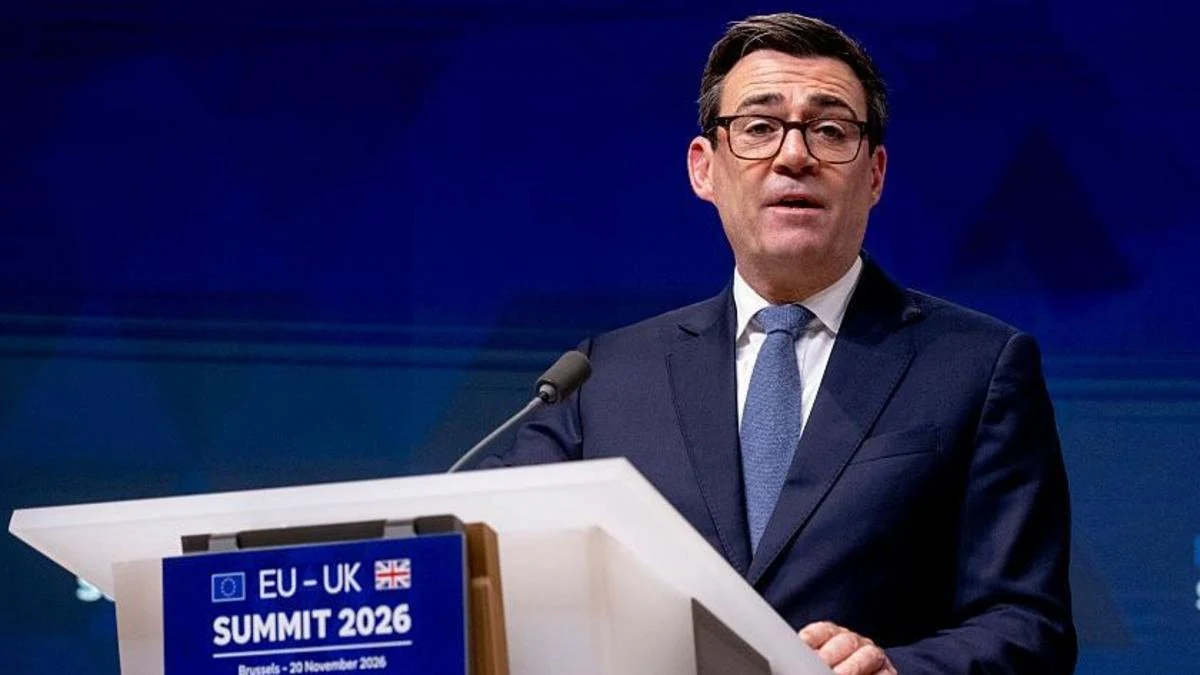
Prime Minister Andy Burnham says a mutually beneficial UK-EU agreement is possible ahead of a summit on 20 November. BBC News reports that food trade, energy and youth mobility form the immediate agenda. Speaking after meetings in Ireland, he argued that closer cooperation could reduce costs and support growth, while warning that talks might continue until the final moment. Draft texts have circulated, but the existence of drafts does not mean the complete package has been agreed.
Food checks and emissions trading offer practical changes
A draft food and agriculture deal would remove some post-Brexit checks affecting exporters and importers. Separate texts address emissions trading and a scheme for young people to travel and work. The government forecasts eventual annual benefits of £5.1 billion. That projection is an estimate of future economic gains, not money already received or a guarantee that each household's shopping bill will fall by a stated amount. Different elements operate through different rules, businesses and periods of implementation. Reporting context: BBC News
Tuition fees complicate the package
The Guardian reports that European students' tuition fees remain a sticking point, with the EU linking the prized food and emissions agreements to treatment of its students. Asked about discounts, Burnham acknowledged requests on both sides but did not confirm acceptance. This illustrates why a package can remain difficult even when negotiators agree on its broad economic purpose. The distribution of benefits and concessions matters alongside the headline ambition for a reset.
Labour keeps limits for the current parliament
Burnham has reaffirmed the 2024 manifesto commitments against returning to the single market, customs union or free movement before the next election. He has also said longer-term options should be examined. Those positions describe different time horizons. The current negotiations build on agreements reached under Keir Starmer in May 2025 rather than beginning the relationship again from nothing. Distinguishing the immediate package from a later strategic debate helps assess what the government is actually asking parliament and the public to consider now. Reporting context: BBC News
Political parties disagree about the destination
Conservatives oppose alignment they regard as surrendering Brexit freedoms, while Reform argues that accepting EU rules could constrain independent trade policy. The Liberal Democrats want a single-market and customs-union relationship, describing the present approach as insufficient. The Greens favour eventual full membership. These are disagreements over the desired relationship itself, not simply whether the government should negotiate competently. Burnham's narrower immediate plan must therefore satisfy parties and voters who judge closer cooperation against very different long-term goals.
A further phase could reach migration and security
The Guardian reports that officials are also discussing a later reset agenda involving migration, law enforcement, touring artists and recognition of qualifications. Access to European information systems is among the UK's interests. Those discussions are prospective and should not be reported as completed concessions at the coming summit. The immediate test remains whether the food, energy and mobility package can be concluded within the government's stated limits, followed by scrutiny of the actual obligations and implementation dates rather than the promise of benefits alone.
Frequently asked questions
What could the planned UK–EU package change for travel and trade?
The expected agreements covered food and agriculture checks, emissions trading and youth mobility. Several elements were still being negotiated in the report, so the package's practical effects depended on the final terms. BBC News
Does the £5.1bn forecast mean my shopping bill will fall now?
No. It is an estimate of eventual economic gains, not money already delivered or a guaranteed reduction in an individual shopping bill. Different parts of the agreement would work through different rules and timescales. BBC News
Sources and editorial notes
This article compiles the linked reporting. Allegations, projections and research findings retain their original qualifications; this page does not represent independent field reporting or expert medical review.
- BBC News (reporting)
- The Guardian (reporting)
November 17, 2026: Replaced repeated summary and FAQ templates, added source attribution and image description, and clarified the distinction between source publication and site edits. This editorial update is not an independent fact-check certification. November 23, 2026: Added source-linked reader questions and answers based on the reporting already compiled in this article. These questions are editorial selections, not measured search queries. November 24, 2026: Revised the FAQs to prioritise reader impact and practical questions using the cited material. The original reporting date is unchanged.